By Sunday, Oct. 4, Julie Jasinski had figured out what Madison wanted to hang on its walls: Swedish recipes.
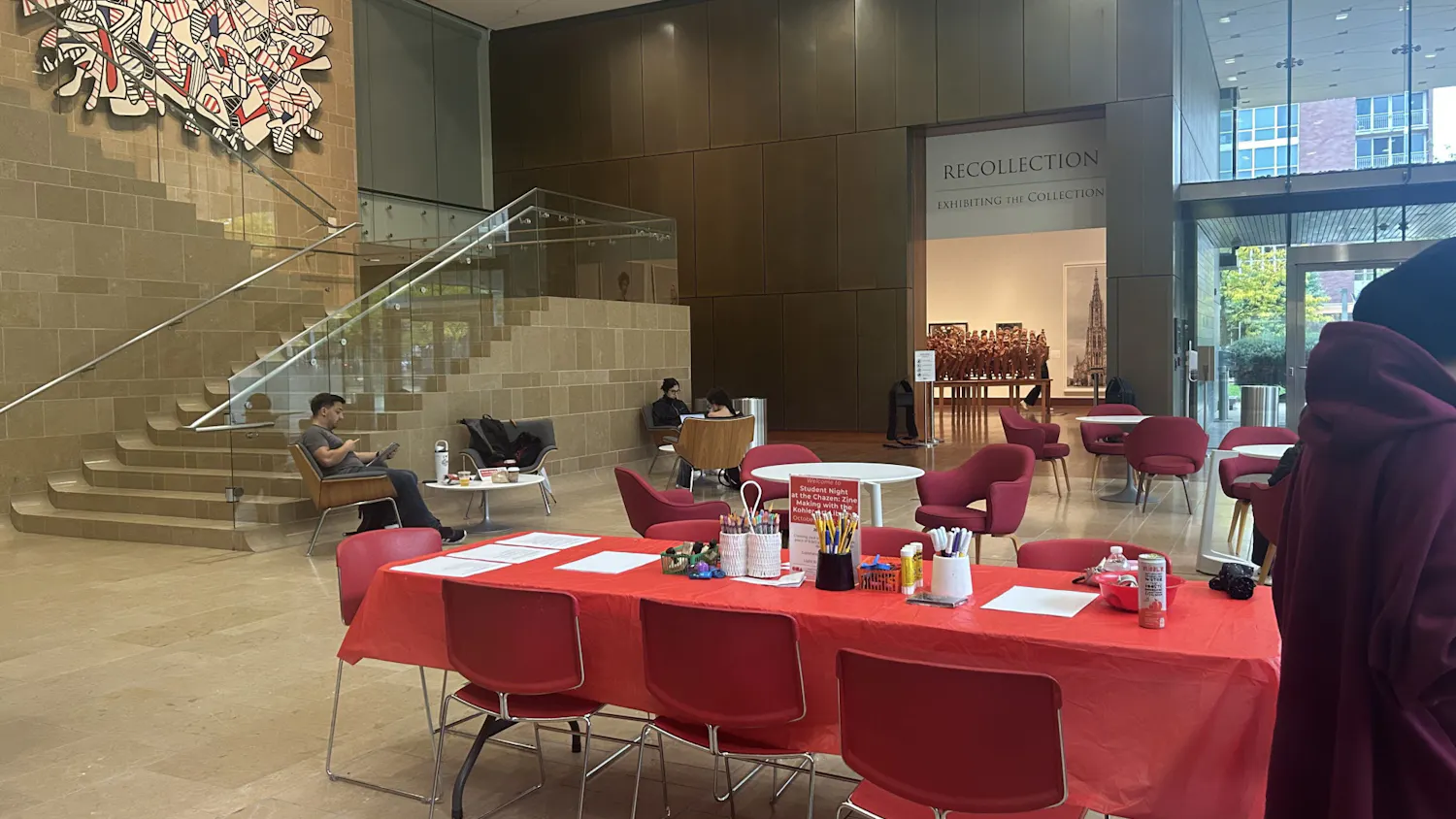
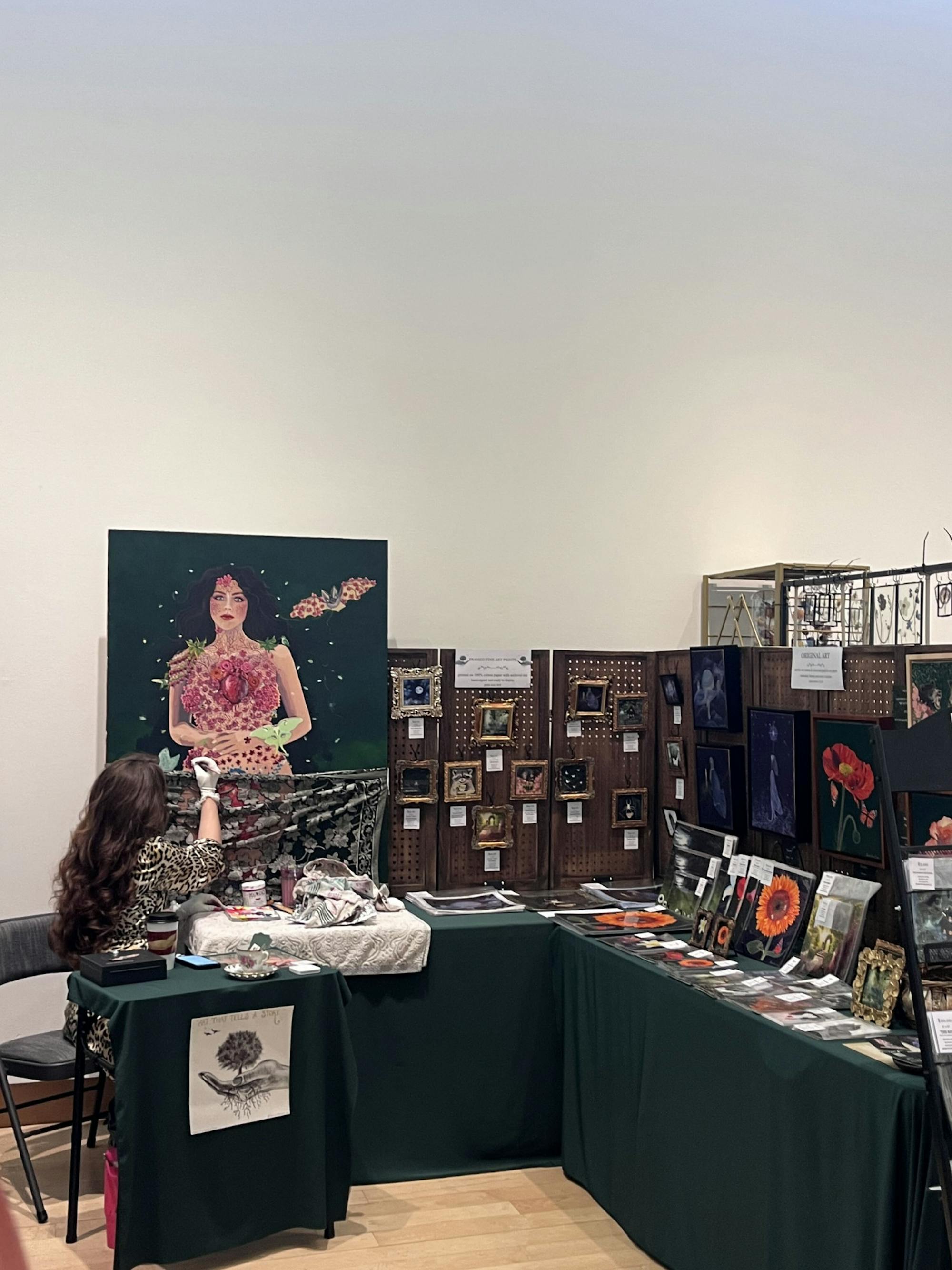
Forty-nine vendors — painters, potters, printmakers, jewelers, woodworkers and a bean-to-bar chocolate maker among them — filled both floors of the Madison Museum of Contemporary Art for their annual Art Market Oct. 3-4.
Jasinski sold three framed collages made from the pages of vintage cookbooks, each one crowded with Swedish dishes. In a part of Wisconsin with deep Scandinavian roots, the recipes carry a particular familiarity.
“They remind people of their families,” Jasinski told The Daily Cardinal.
More than 1,000 people came through the market on Oct.3, alone, Amy N. Hendricks, the museum’s chief of staff, told the Cardinal; the whole weekend drew about 2,000 last year.
“The museum used to hold the market for years,” Hendricks said, “...and we relaunched it in a similar format in 2024.”
In a contemporary art museum, a market of mugs, magnets and earrings invites a question: What is a handmade thing for? Three of the makers who stopped to talk had varying answers.
For Jasinski, who runs Fork and Frame, the answer is memory, and a little appetite. Previously a chef, she left professional kitchens but wasn’t ready to stop working around food.
“I wanted to do something creative and food-related,” Jaskinski said.
During the pandemic, she looked at the numerous boxes of older cookbooks she owned and decided they needed a second life. She began cutting them apart and rearranging the pieces, each art piece built around a theme: Italian cooking, apple dishes and baking.
She noticed cookbooks from the 1940s and 1950s are almost entirely black and white, with low-quality photographs, so she began using wallpaper as a colorful background behind the cookbook clippings.
The frames around the pieces come from secondhand stores. Some have corkboards behind them so they can double as bulletin boards.
According to Jasinski, the baking-themed ones sell best. Though she no longer works in professional kitchens, food still gives her a way to connect with people.
“I still can create conversations about good eating,” Jaskinki said.
For Geoff Staub, who paints as Geoff Paints Stuff, the answer is witness.This is his second year at the market.
“I like the downtown location among UW students, especially on homecoming weekend, when many arrive with their parents,” Staub told the Cardinal.
At his table, one painting depicts his husband, a deaf gay man whom Staub described as having built a successful life while continuing to face discrimination.
“He hears with his eyes,” Staub said. The phrase also describes the way he approaches his art.
Another painting depicts a gay man modeled on St. Sebastian, a martyr Staub links to the AIDS epidemic.
“It’s about the bigotry, persecution and ridicule gay people face in the United States, and about the people who have died — from disease, from violence, from hate crimes,” Staub said.
Staub also shared that he decides on the topics of his art depending on the message he wants to communicate through the painting and his chosen subject.
For Wendee Gardner, the answer is joy, and it took her a while to say so.
Gardner makes functional ceramics at Joy Lab Ceramics. She was a first-timer at the market, and it was her first season of selling her work.
“Pottery piles up,” Gardner said. “At some point, you have to decide what to do with it all. I think my family and friends might have had enough at this point.”
Each piece takes many steps. She wedges the clay to work out air bubbles, which can explode in the kiln; rolls it into slabs and cuts shapes with cookie cutters; designs patterns on a computer, prints them on vinyl and hand-paints two or three layers of glaze before a final firing.
A member of the Stockbridge-Munsee band of Mohican Indians, she has recently started working beadwork into her ceramics as a way of bringing that part of her heritage into her work.
“I haven't seen anybody else doing that, and I'm just really into it right now,” Gardner said.
Gardner studied art at UW-Madison, and she remembers the pressure she faced while in school.
“I felt a lot of pressure as a student to make art that had a deep meaning, maybe a social or political kind of resonance,” she said.
Now she thinks of her work in terms of what people can use in their everyday lives to bring them joy.
“I’ve accepted that it’s okay to make things that are beautiful,” Gardner said.