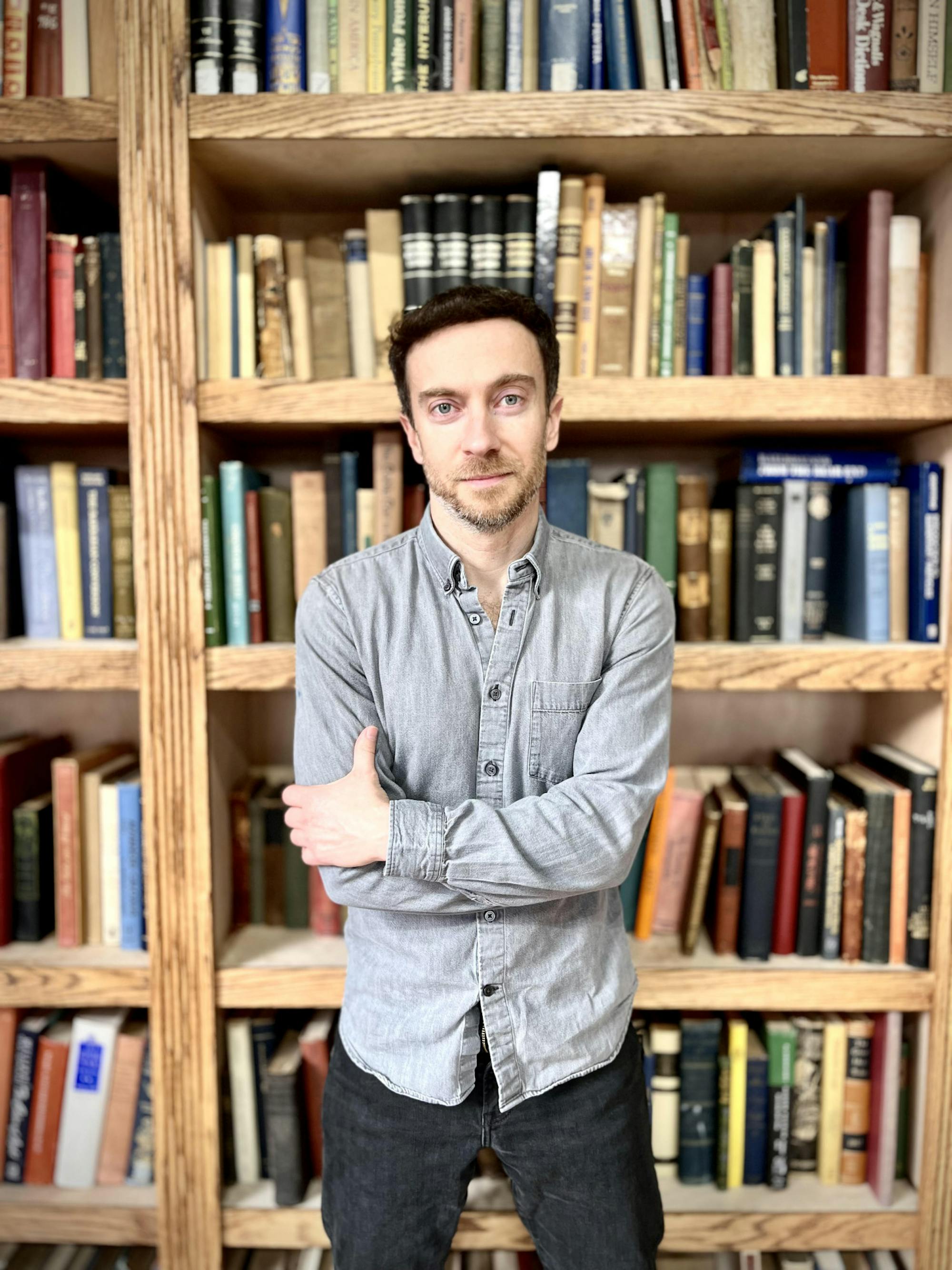
“Custodians of Wonder,” by Eliot Stein, senior journalist and editor at the BBC, leads readers through 10 chapters exploring traditions full of love for various crafts and traditions, personal stories and fascination where readers can travel to 10 different countries.
Stein said six of the stories are original, and the other four are expanded versions of stories he wrote for BBC Travel in his column, “Custom Made.”
In an interview with The Daily Cardinal, Stein talked about his passion, process in writing the book and the love these custodians brought to each tradition.
This interview has been edited for clarity and brevity.
How do you feel about this book becoming the Go Big Read for UW Madison?
I'm incredibly honored and humbled that it is this year's Go Big Read. I'm thrilled, and I hope everyone who picks it up finds some small piece of it that resonates with them. I've tried to cast a pretty wide thematic and geographical net. There's something about the book that reminds each of us of where we each come from and the sort of small pieces that make us who we are, and our families and our cultures. So whether or not you have a connection to Mali or Japan or southern India, maybe in reading these stories you can find something that speaks to you in some personal way. I hope that anyone who reads the book finds something in it that helps enrich their sense of the world. But I'm so thrilled that the university chose the book. And I'm thrilled to come this autumn, and I can't wait to meet you and other students and answer any questions that people have.
What inspired you to write this book?
I created a column for the BBC years ago, all about vanishing traditions and people maintaining them, and that column was called Custom Made, and that was really the inspiration for this. So, before moving to New York, I was based in Berlin, and I was traveling all around the world, doing these types of stories. And the column kind of took off, and one of the stories in the column won a big award. As part of that, I was able to go meet with a bunch of literary agents, and I had always had in the back of my mind that these types of stories might be nice one day to be put into a book.
Why choose the name Custodians of Wonder?
Custodian to me means someone who is safeguarding something. They're keeping, preserving and maintaining something; they're keeping something healthy and alive. Why is pasta pasta? Why go to such great lengths to make something so intricate when it’s the same three ingredients as what you might buy in a store? But the wonder to me is about what these things represent and why we as people choose to do these things. The custodians are a reflection of the people who have dedicated themselves to preserving something much bigger than themselves. What's so beautiful about these people and the traditions is that they're serving a larger purpose. They're serving an entire world and giving something to a community. That's what ultimately makes this book sing. It's not just a guy who blows a horn out of a watchtower. It’s someone who divulged that their life's dream is to pass this tradition on.
What story of all the ones you wrote in this book impacted you the most?
Different ones sort of affected me in different ways. I have a personal connection to the one in Germany and the one in Sardinia because I used to live there. I have a very personal connection to the story set in England because bees touch on something that has happened to me and my family, but in a very different way. The one in Cuba affected me quite a lot afterward, just because I happened to be in Cuba at a very desperate time in that country's history. As an American, it's tough to…be in Cuba and realize how much your country has impacted the well-being of the people who live there. It's one thing to be in a place where people might not have the same level of income as in other countries, but it's another thing to see a country where the people themselves will volunteer that they're very desperate, and that was a very hard thing for me to witness, and something that really struck me and was hard for me to navigate. So, that's reflected in the chapter, and as a journalist, it is essentially just to hold a mirror to these places, these cultures and these people, and be honest about that. Different stories affected me in different ways. Some personally, some more emotionally.
Where did you hear about these traditions? Was it through word of mouth, or did you find these online?
It depends. So for the Sardinia one, I lived in Sardinia for about two and a half years, and I wrote a guidebook to Sardinia, and I heard whispers about this sacred, impossibly difficult type of pasta while I was there. And, we journalists may not know much, but we can recognize a good story when we hear it, and so that's one that I instantly clocked and kind of filed away. The one in India, I, years ago, read a small blurb in a local Indian newspaper. The most remarkable thing I found in this story was the Mali one, where there was one day where I literally went through each of the UNESCO World Intangible Cultural Heritage traditions, and there are 678 of them. And I found that of the 678, [the story in the book] was the only one that has been maintained within a single family throughout its existence. And so, I followed this chain from this 13th-century tradition in Mali and Guinea to an email address for a man who lives in Medford, Massachusetts, and I sent this person an email that I'd never met before. And within 30 minutes of sending that email, he called me and the first thing he said was, "I've been waiting for an email like this for more than 20 years.” A few weeks later we had our visas and we were on a plane back to Bamako, Mali, and we caravanned over the border with this extended family to this 200-person remote village, and that's how that story came about. There's no one way. Some of it is word of mouth. Some of it is perseverance. You find things that are interesting to you, and you file them away. And when the opportunity comes about, you pursue them in the best way you can.
What story was the most difficult for you to write, and why?
They were different in different ways. I mean, for one of them, I did a 33-kilometer overnight pilgrimage to taste this pasta. The other thing was that I had a newborn infant son when this book came about, and so I have the world's most amazing, loving partner who kind of made this all possible, but [this book] was difficult in different ways. I think some logistical, some health, some personal, and some, you have to walk a fantastically far way to even report the thing.
At what point did you feel like the story was complete and ready to just go out into the world?
There's a great saying in journalism: when you ask the same question enough times, and you start getting the same responses, you have your answer. So, when I could anticipate the answer to something because enough people had told it to me, and those people told me something very similar, I knew that I had found the truth or as close to the truth as possible. The most important thing was not to tell a beautiful, ugly, or complicated story, but to tell the right story. Once I had researched these stories pretty thoroughly, I wanted to lean on local experts. The writing part was the easiest. It was making sure that I had enough ammo to write the story. That's the challenge as a journalist.
If you could describe this book in like a sentence, what would it be?
Ultimately, it's about why human beings do the things that we do. If you take a look at any of these traditions in the book, no one's forcing them to do these things. There's a modern steel bridge that crosses the Apurimac River in Peru. You don't need to risk your life and dangle over a grass-woven bridge. There are millions of types of soy sauce. You don't need to build these impossibly difficult, time-consuming kioke barrels and spend four years growing soy sauce. Or wake up at 7 a.m., slip on an apron and make the world's rarest pasta, or hike 33 kilometers to taste it. It's about why we do these things, and that's the magic of the book. It's about what we believe in fundamentally, because that's what separates us from every other species. That's what makes us who we are. There's a person who embodies a place, and these are the people who embody a place, and so it's examining who we are, what we believe in and what makes a place a place.
What's something that students would find surprising about the book?
What I'm trying to do with this book is to not so subtly jolt you away from a screen and remind you that there are things out there that make us who we are that have existed for a really long time. And though these things rarely get a whisper, but they matter in some subtle way. My hope is that when you read this book and go through these chapters, you can hopefully reflect on, or realize something about yourself that you might not have realized about your own background.
Who do you want to thank for this book?
There wouldn't be a book without, first of all, the custodians themselves. I never went anywhere and I never would ever go anywhere or write a story where I wasn't invited. My job as a journalist is not to make anyone uncomfortable. So these are people who wholeheartedly invited and welcomed me in. So this book would be nothing without them first. Oftentimes I stayed with families, in some cases the extended families that I profiled, the communities who helped contextualize why these things matter to them. I mean, when I say that the book is a love letter, it's a love letter to the people profiled in it and to the communities. And my wonderfully patient partner, as this would not have been possible without her as well.
I hope anyone who reads the book finds something in it that helps enrich their sense of the world. But I'm so thrilled that the university chose the book. I’m thrilled to come this autumn, and I can't wait to meet you and other students and answer any questions that people have.