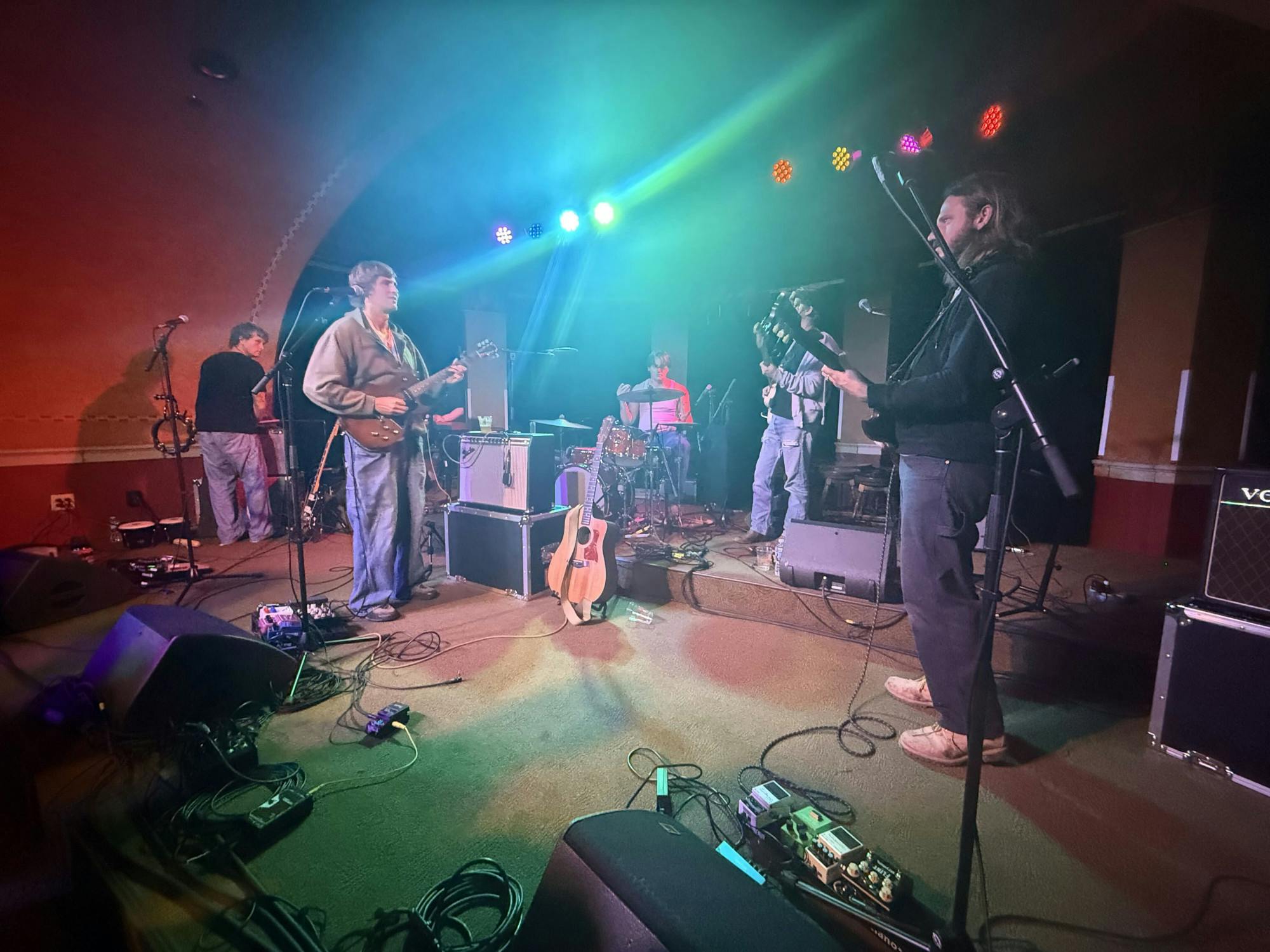
Filling the walls of Der Rathskeller is a unique blend of warm acoustics, gentle piano and light drums, all wrapped in muted neon lighting. At a moment's notice, these sounds build into more intense drums, distorted guitars and melodic synths. Each song has a stylistic unpredictability that makes the overall sound experimental.
Dutch Interior’s sound filled Der Rathskeller on Friday, Sept. 18 in a concert hosted by the WUD Music Committee. The LA-based band performed after opener Racecourse, who caught the audience’s attention with their clash of electronic synths, hazy guitars and soft vocals.
Dutch Interior kicked off their 2026 tour earlier in September with a varied setlist displaying their versatile discography. Their lighthearted, unconventional shows include a guitar strummed with a screwdriver, a wooden guiro and intense musical improvisation.
The band is unique in both performance and music. Their style is fluid, but their sound is distinct. They don’t limit themselves to one genre but instead blend together indie, country, folk and rock music.
Dutch Interior’s six members use pieces of themselves and their relationships with each other to create their music. Their individuality, along with the group's collective sound, sets them apart from other bands as they don’t limit themselves to one genre.
When they perform live, they switch vocalists depending on the song. The number of vocalists varies, as does the type of instrument.
Dutch Interior’s variety extends to the switches they make from studio to live versions. In songs like “Say Anything” and “Sweet Time,” there’s heavy guitar improvisation that doesn’t exist in the studio versions of their songs. It adds to the element of spontaneity and casualness the band carries when performing.
Even if the live song has little improvisation, each one has a different cadence, bringing new life to the songs.
One standout song that sounds different live than on streaming is “Fourth Street” from their most recent album “Moneyball,” which leans into a rock sound. The song includes soloing over distorted guitar which gives the sound a very classic rock feel. The melody has a bittersweet tone and with single notes layered on top, the song becomes both electric and melancholic.
Guitarist and vocalist Noah Kurtz’s verses include soft guitar, which makes the vocals more prominent. Yet, in the live version, the guitars in “Fourth Street” are heavier, especially during the instrumental section from verse to verse. This amplified the song and enveloped the whole room as audience members bobbed their heads and swayed to this particular banger.
One of my personal favorite songs they played, “Cannibal Song” sung by Jack Nugent, starts with soft vocals that overshadow the minimal guitar in the background. As the verses progress, the instruments build.
First comes a shaker and bass guitar, followed by the drums, then more guitars. Suddenly, the tone switches halfway through the song into one more distorted, a distinct contrast from the quieter instruments at the beginning. The song then ends as it begins in a more acoustic and slow manner.
The switch from a slow melody to indie rock halfway through aligns with the band's experimental style, which works for them and their audience very well.
Dutch Interior creates an atmosphere similar to cozying up on a couch as it snows. Originally, the band was supposed to play on the Terrace, but due to poor weather, they moved inside. I think the band playing inside added to the atmosphere of the performance as they are the type of band one listens to during a storm.
As seasons change in Madison, so too does the music students listen to. After seeing Dutch Interior live, I can affirm that they’re the perfect band to transition from the summer into the vibes of fall.