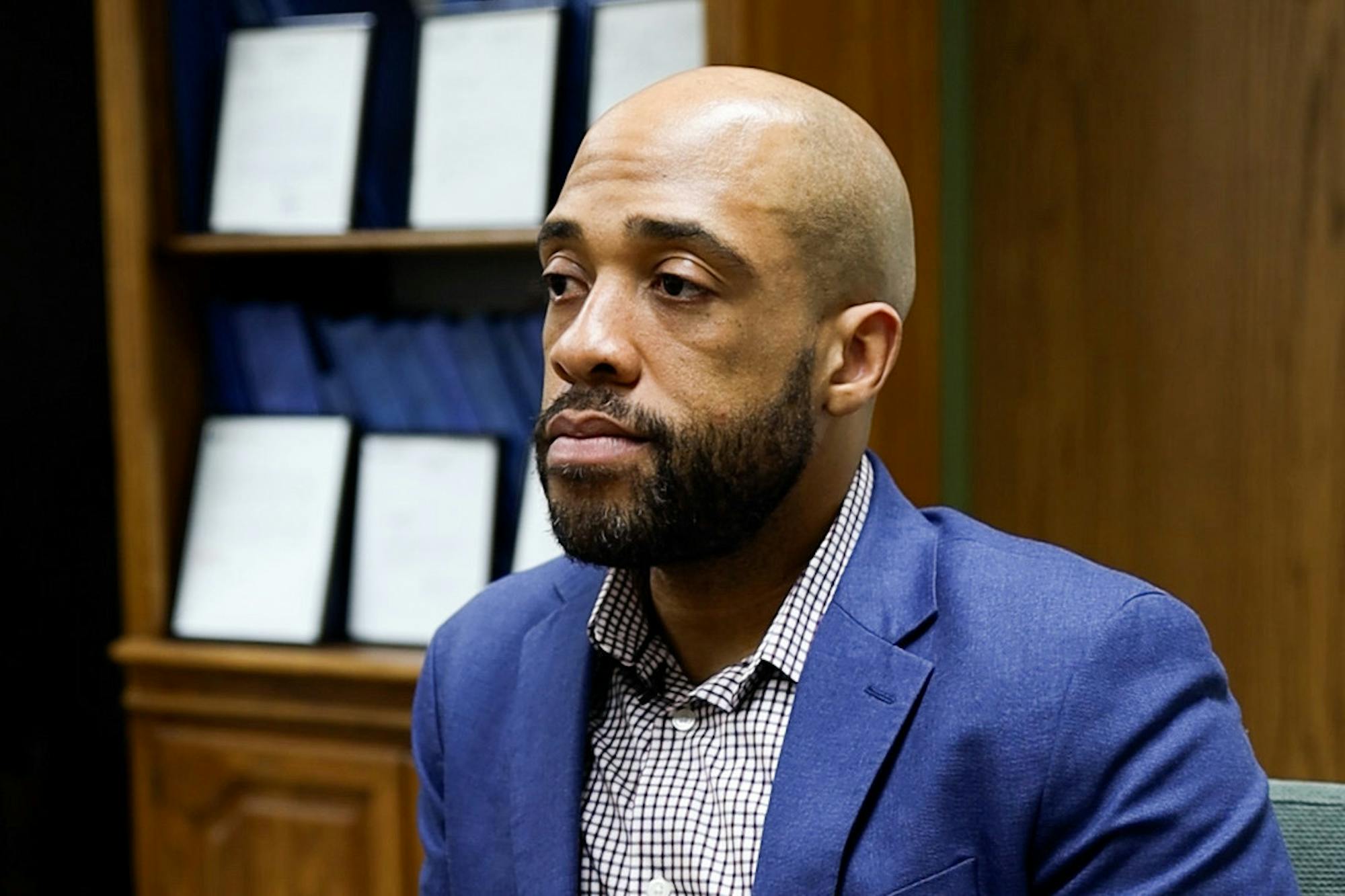
Democratic gubernatorial candidate Mandela Barnes discussed his affordability, healthcare and artificial intelligence data centers policies while emphasizing the importance of youth voter turnout in an interview with The Daily Cardinal on April 8.
The Milwaukee native previously served in the state Assembly from 2013 to 2017 and as lieutenant governor alongside Gov. Tony Evers from 2019 to 2023. He then ran in the 2022 Senate election but narrowly lost to Republican U.S. Sen. Ron Johnson.
Barnes believes his campaign experience sets him apart, citing his “front row seat” victory in 2018 when he and Evers defeated the “most powerful incumbent in the entire country” — former Gov. Scott Walker — a well-established Republican who briefly ran for president in 2016.
Despite his experience, Barnes is campaigning “as if nobody's ever heard of [him] before.”
The Democratic primary is wide open. A recent Marquette University Law School poll found state Rep. Francesca Hong, D-Madison, a progressive endorsed by the Democratic Socialists of America, and Mandela Barnes, the only candidates polling above 10%, at 14% and 11%, respectively. But, the poll found that 65% of voters remain undecided.
Republicans, on the other hand, have a clear frontrunner in U.S. Rep.Tom Tiffany.
Tiffany, who currently represents Wisconsin's 7th congressional district, received President Donald Trump’s endorsement earlier this year.
As his likely opponent in the general election, Barnes called Tiffany “out of touch,” arguing Tiffany has “aided and abetted the president every step of the way,” particularly on tariffs.
Barnes believes Trump’s tariffs hurt family farmers and small businesses across the state, saying they can “no longer pass on costs to consumers.”
Affordability
Freezing utility rates is a key policy for Barnes, who also proposed rate caps to help residents struggling with rising energy bills.
Barnes said “the money we spend on energy has gotten so out of control,” adding that Wisconsin is “so behind a curve when it comes to renewable energy production compared to our Midwest neighbors.”
Experts, however, question the legality of a utility rate freeze. Wisconsin utilities are regulated by the state’s Public Service Commission, which is required by law to approve rates that cover the “just and reasonable cost” of providing service.
Without structured rate-setting, maintenance of system quality and reliability may be at risk.
Connecting rising living costs to wages, Barnes also criticized Wisconsin’s $7.25 minimum wage as “absurd,” arguing that getting more money into the pockets of residents will make life more affordable.
Healthcare
Barnes has pledged to expand BadgerCare, saying the large pool of uninsured people makes it more expensive for everyone else.
As of 2023, approximately 4.9%, or about 282,900 Wisconsin residents, were uninsured, with the national uninsured rate at 8.2% in 2024.
“We're only one of 10 states that has yet to expand our Medicaid program under the Affordable Care Act. This is 15 years too long,” he said.
Data centers
Throughout his campaign, Barnes said he has encountered “very few” people who are excited about data centers, yet recognizes there can be benefits to the state if done right. He called for a study to help understand any negative impacts.
According to a recent poll, 69% of registered voters in Wisconsin believe data centers’ costs outweigh their benefits. Barnes said Wisconsin needs to have a "comprehensive set of standards” surrounding data centers.
Beyond these policies, Barnes said he considers the younger generation vital to his candidacy, pointing to 2022, when Wisconsin led the nation in youth turnout in the November midterms.
“The voice of young people won't just be reflected in this campaign. It will be reflected through governing,” he said.
The primary election will take place on August 11.