If you listen closely to members of the University of Wisconsin-Madison student body on a Monday morning as they wake up to their alarms, you will hear a collective groan. Another early start to a long week ahead. With an even closer look, you can catch a glimpse of some of the usual suspects:
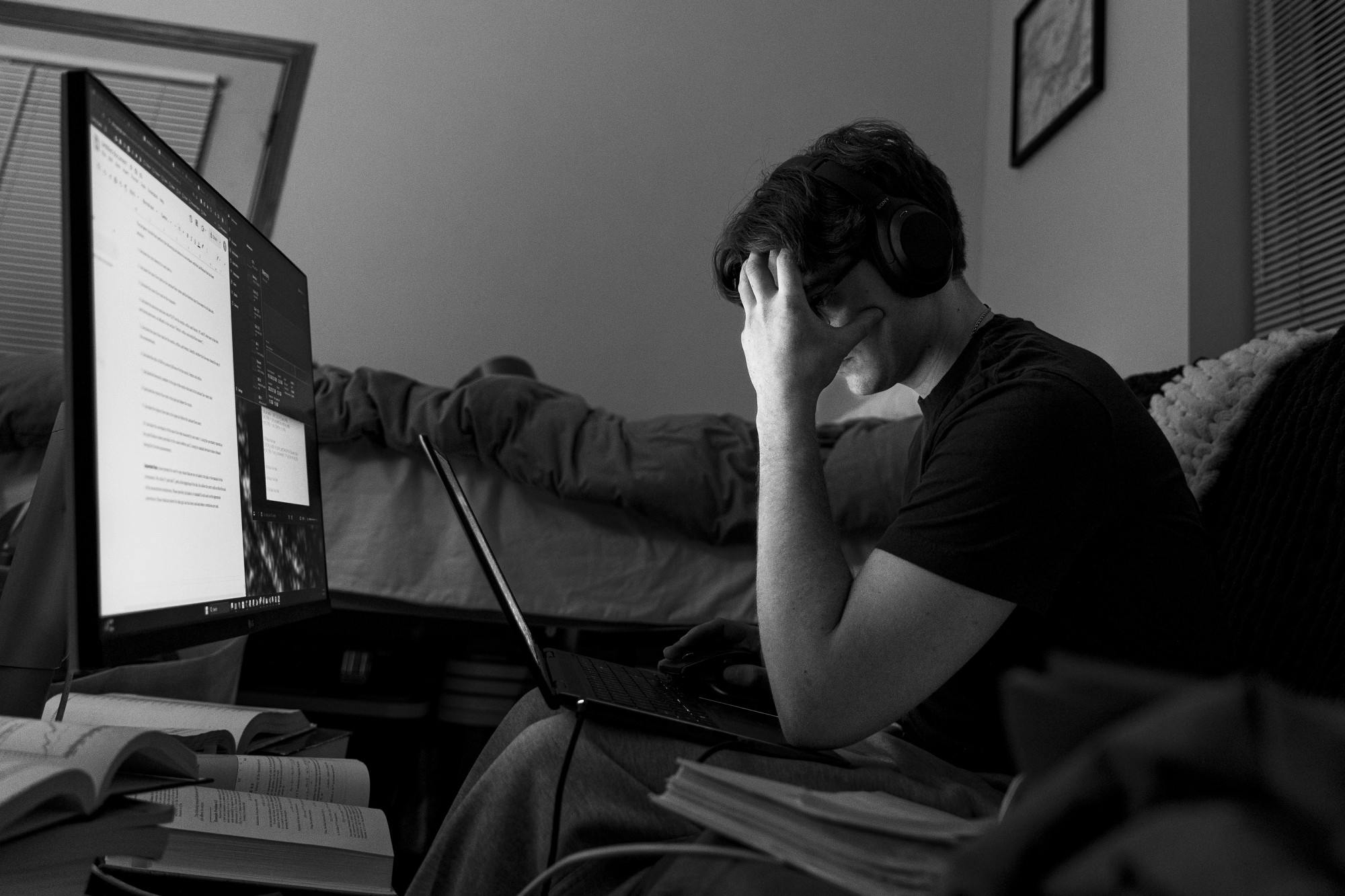
Chemistry major Charlie fell asleep at 1 a.m. after submitting his lab report at midnight. Sunday night is always a cram for him; he's trying to stop waiting until the last minute, but he hasn't figured out how to do that yet. He snoozes his alarm five times before getting up.
Ari, the art student, has a big critique in class today. She stayed up late and woke up early to get some more work done on her drawing — and she's got bloodshot eyes to prove it.
Kendra, the comp-sci major, never fell asleep. She has a project due at midnight on Monday, and she plans to skip all her classes to keep working on it. She has downed three energy drinks in the past twenty-four hours.
However, Phoebe, the physics student, is an anomaly. She wakes up bright-eyed and well-rested. She turns off her 9 a.m. alarm clock, ready for the upcoming week after a restful weekend. She feels a sense of hope and excitement that most students lose by junior year and certainly don’t feel on a Monday morning. She brews a cup of coffee and eases into the morning, reading, feeling motivated and focused. The question is... how does she do it?
A majority of students do not relate to this steady sense of motivation. Many would claim to be experiencing burnout: the exhaustion of physical or emotional motivation due to prolonged stress. For college students worldwide, this seems unavoidable, an inevitable part of a successful student's life.
What drives students to success isn’t just their internal motivation, but the same pressure and external stress that contributes to burnout. Most students view stress as a necessary motivator. If they didn't have the fear of a deadline, stress of grades or maybe even the impending doom of grad-school applications over their heads, what would motivate them to study hard, to do homework thoroughly or to pull an all-nighter for a project?
Modern universities play a large part in putting this pressure on students to sacrifice their personal lives and identities for academics. Many students feel like they must be productive 24/7 in order to stay afloat and on par with their peers, and feel guilty when they can’t manage. This leads to students staying in to study, which quickly turns into cancelling plans for projects, to skipping the gym to finish your to-do list and eventually holding off grocery shopping for one more week because you just don't have the time.
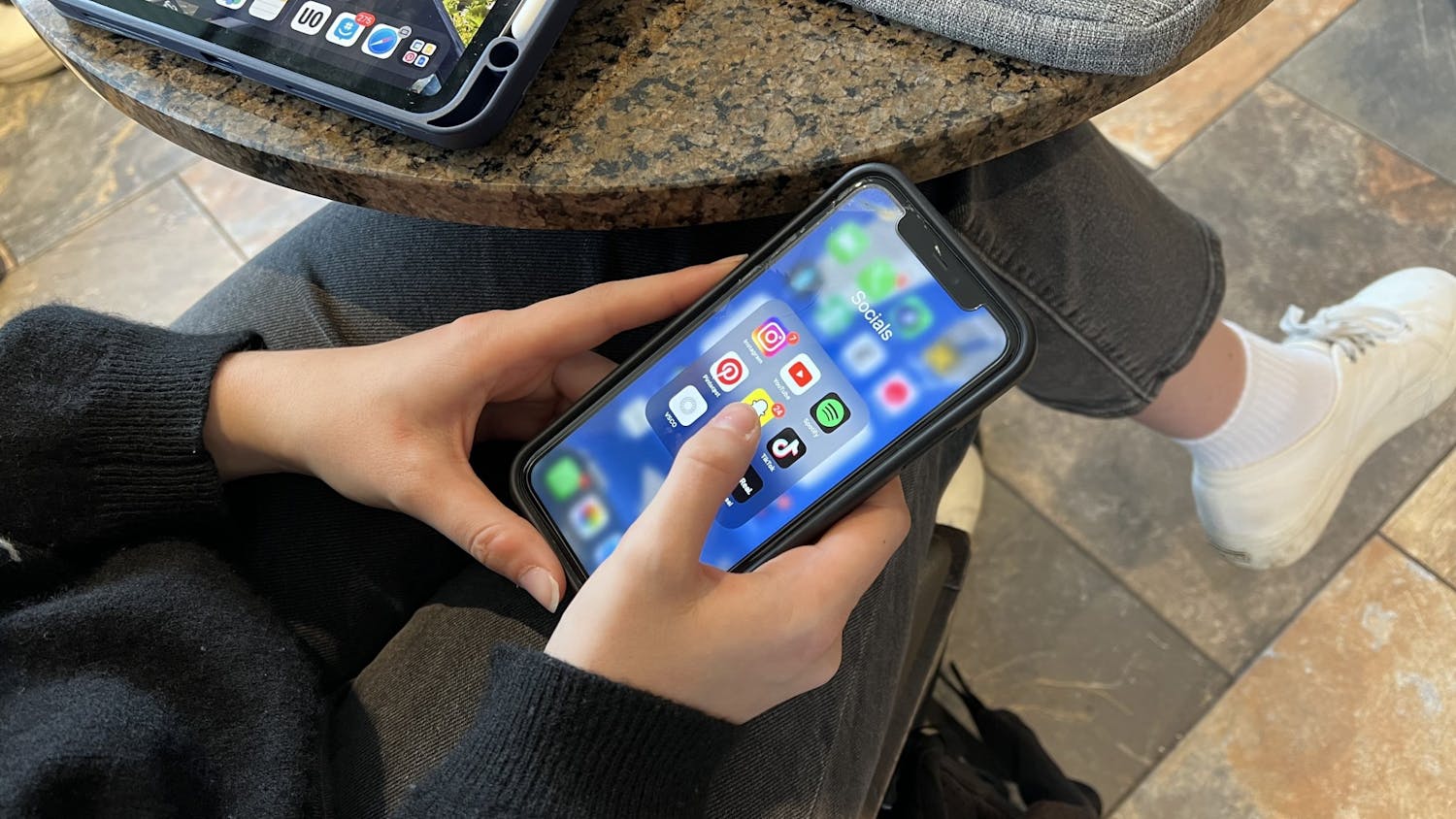
Campus wide technology and interfaces, meant to make students’ lives easier, have only strengthened the expectation that students (and professors) are always “logged on,” and can be communicated with at any point. The harm is not in the fact that students stay up late to turn in assignments, but in that the line between when students are expected to be productive and when they can relax is fading. The cost of the convenience of not having to turn in a paper homework assignment in class is the loss of separation between student’s academic and personal lives.
Students have Canvas and Outlook installed on their phones, so even exam scores sent out at 10 p.m. on a Friday night can make or break the mood for an entire weekend. Additionally, professors are able to send out 3 a.m. emails with important information, further contributing to the expectation that we are always logged on; creating a person who is now inseparable from their academics and the stress that comes along with it.
One could even argue that due dates set to midnight, especially on weekends, pushes the harmful cycle of sacrificing hours of the day that shouldn't be regulated by school-mandated activities. Before Canvas, midnight deadlines would’ve been unthinkable. Now, they are routine. Of course, students could always finish the assignment early. But chances are, you are already burnt out, and after a long day of class, you need to spend your free-time with some rest and relaxation — like staring at your wall or staring at your phone while trying not to feel guilty about all of the homework you should be doing.
Students don't get to clock out and drink a beer on the porch after a long shift. Instead, they drink a beer on the porch and talk about how they really should be writing that essay by now. When students can find a way to separate between when we expect ourselves to actually be productive, and can truly relax without guilt, then, and only then, can they effectively resist burnout.
There are many rules that students, like Phoebe, use to rid the feeling of being always logged on: not doing homework after 9 p.m. or on weekends, not responding to emails outside of business hours, or even simple things like not having Canvas or Outlook downloaded on mobile devices. Phoebe does not sacrifice her social life or hobbies for her academics, and she tries to see herself outside of her label as a student — but even she admits that this is not always easy.
Picking up a few healthier habits, or even switching one’s mindset to allow more time for real rest and relaxation is important and vital to not burning out. We cannot be logged in all the time. We can not always attempt to be productive. We cannot bear stress and surrounding pressure at all times. Instead, one must imagine Sisyphus relaxing. We have resisted this relaxation because we think that if we grit our teeth and bear it to the end of the semester, everything will work out; however, if we let our motivation-battery recharge, we could get more done in a shorter amount of time.
Students must release themselves from the 24/7 expectation of productivity so that, when Monday morning comes, they feel well-rested and caught up for the week ahead: motivated from something internal and passionate, not from the dread of an upcoming deadline in an endless semester.
Rachel Gerhardt is a Junior studying Astronomy-Physics, Physics, & Philosophy. Do you agree that technology pushes students toward burnout? Send all comments to opinion@dailycardinal.com