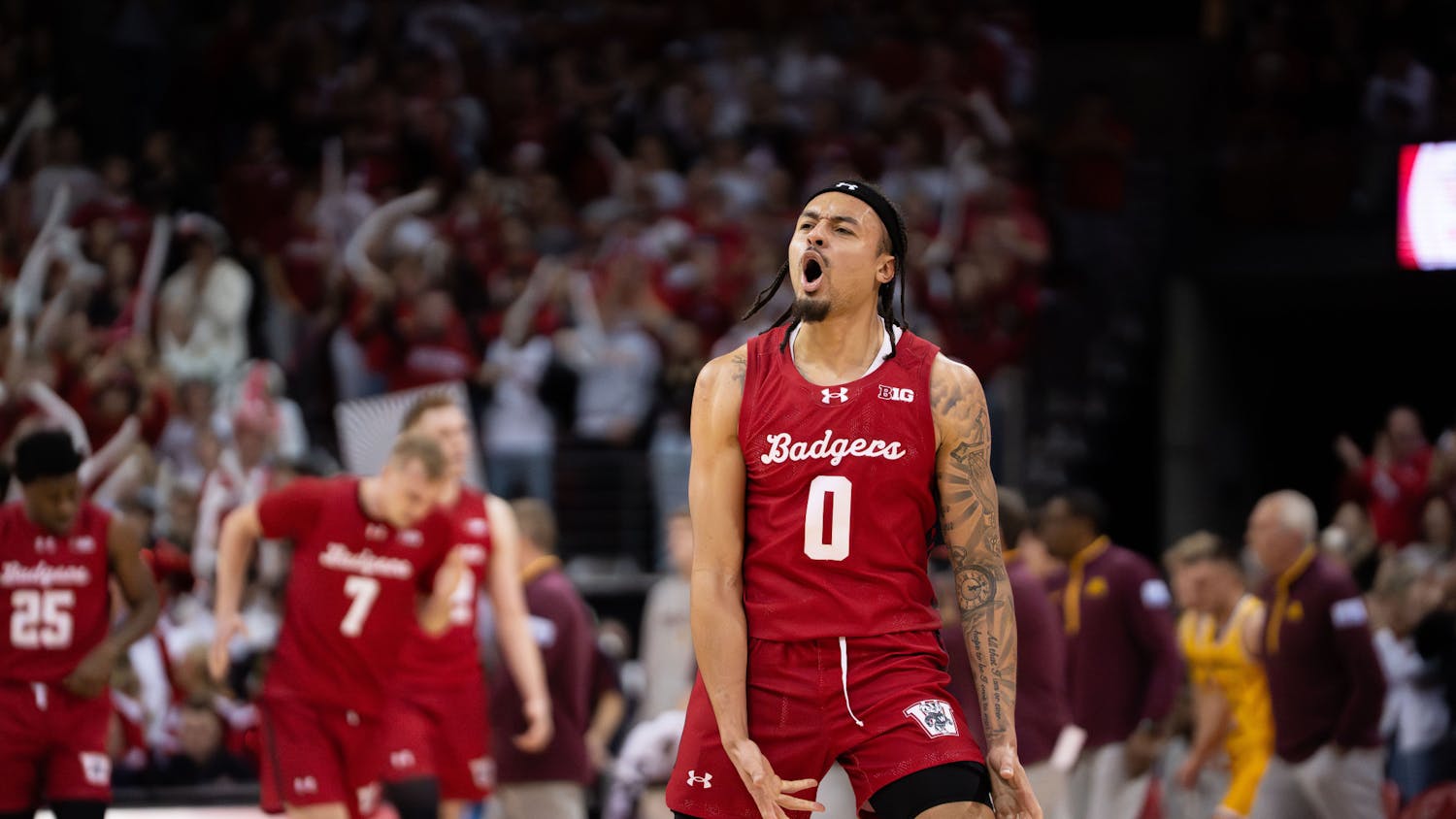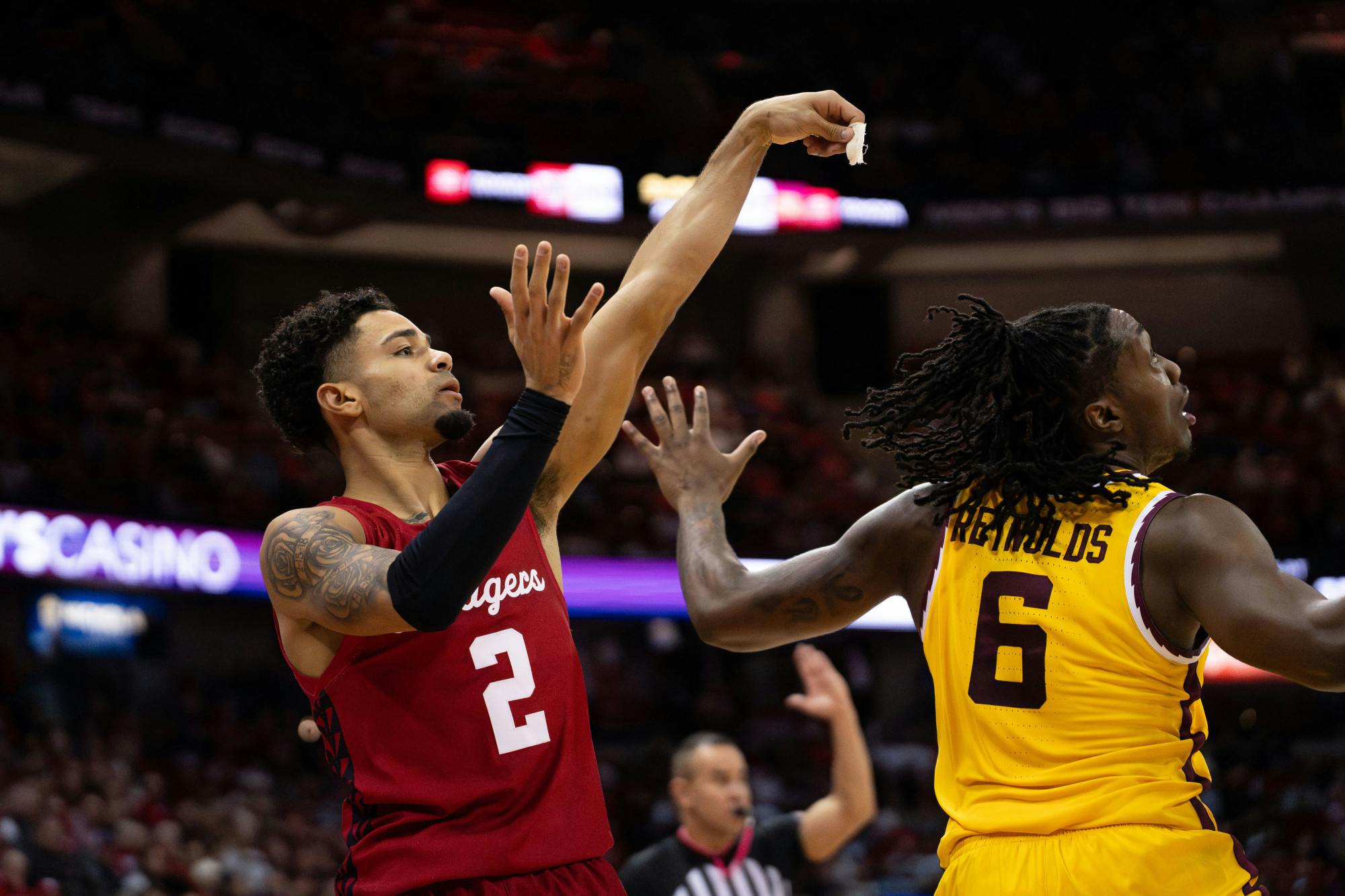
The Wisconsin Badgers have been hovering around the edge of national college basketball media attention for most of the 2025-26 season, lacking the consistency to earn national spotlight status — until now.
The Badgers are talented, competitive and dangerous, and with back-to-back upset victories over top 10 ranked opponents — then-No. 8 Illinois and No. 10 Michigan State — the Badgers reached No. 24 in the AP poll last week, though they fell out of the latest rankings.
March Madness bracket experts currently project Wisconsin as a six or seven seed in the NCAA tournament. More important than anything national media pundits say, however, is that teams are no longer viewing Wisconsin as a mid-tier team in the Big Ten, but rather as a legitimate tournament threat.
Wisconsin’s game at Illinois was the type of game that can shape a season. In a hostile environment against a top 10 opponent, Wisconsin turned in one of their best offensive performances of the year. The Badgers connected on 16 3-pointers — shooting 44% from behind the arc — and showed great ball security by committing just four turnovers. On the defensive end, Wisconsin forced Illinois to commit 14 turnovers and were able to convert defensive pressure into fast-break points.
Not only did Wisconsin play well, but they also showed tremendous poise throughout. As the game progressed into overtime, the Badgers showed no signs of panic, and in tense moments, confidently took care of a talented team.
The Badgers built on their win at Illinois just three days later, putting together a dominant game against Michigan State. Wisconsin displayed everything a good college basketball team demonstrates: great tempo and offensive continuity and intense defensive effort.
Nick Boyd led the way again with 29 points, controlling the game from the start. John Blackwell continued his strong play with another 24-point performance, and Nolan Winter recorded a 10 point, 11 rebound double-double as the Wisconsin bigs provided solid interior presence to complement the Badgers' perimeter attack.
Earlier this season, Wisconsin shocked a then-No. 3 Michigan team on the road. More than a month later, what once appeared to be a random upset now looks like a clear trend.
As the level of competition has increased for Wisconsin, so has the Badgers’ level of play. With three AP top 10 wins, Wisconsin has proven they can beat anyone.
But the opposite has also been true, and immediately following those two huge wins, Wisconsin lost to unranked Ohio State on the road, providing a perfect illustration of their inconsistent play this year. The setback indicated that while Wisconsin is currently one of the most dangerous teams in the Big Ten entering March, they may also be one of the most unpredictable. Wisconsin promptly rebounded with a solid victory over Iowa on Sunday.
At their peak, the Badgers play beautiful, efficient offensive basketball, with few turnovers and strong physical defense. In particular, Wisconsin's proficiency from behind the arc has shown they can stretch defenses and create driving lanes for their guards — especially Boyd and Blackwell. When Wisconsin is hitting their outside jumpers, it’s extremely difficult for opponents to defend them.
The emergence of Boyd as a dominant force on the offensive end has been instrumental in Wisconsin reaching their upside. Boyd has been a revelation for the Badgers, another extremely impactful transfer portal addition for Greg Gard. Boyd’s performances against Illinois and Michigan State are prime examples of his ability to take over games in various ways, including driving to the hoop, spacing the floor properly and being a calming presence during crucial possessions at the end of the shot clock.
Blackwell complements Boyd nicely by providing consistent scoring through his reliable, back-to-back 24-point scoring efforts during the Badgers' two statement victories, along with adding paint presence and perimeter defense to a team that is typically identified for their ability to shoot from long distance.
Current bracket projections put the Badgers in the six-to-seven seed range, which would make them a dangerous match-up for a 1-seed in the tournament’s opening weekend.
With respect to the Badgers' postseason ceiling, there is no question they have the potential to cause some noise. The question for Wisconsin is if they will be able to find the consistency to maintain their stretches of excellence. If the Badgers can bottle up the version of themselves that shot 44% from deep against Illinois, created turnovers, took care of the basketball and held Michigan State to 36% shooting, — then it will not matter which seed they fall to. They will pose a threat to whomever they come across.
At this point in time, the Badgers are at a crossroad in their season. They are currently first out of the top 25, respected throughout the Big Ten and have recently validated themselves as a national presence. Just how good of a team Wisconsin will be has yet to be determined.