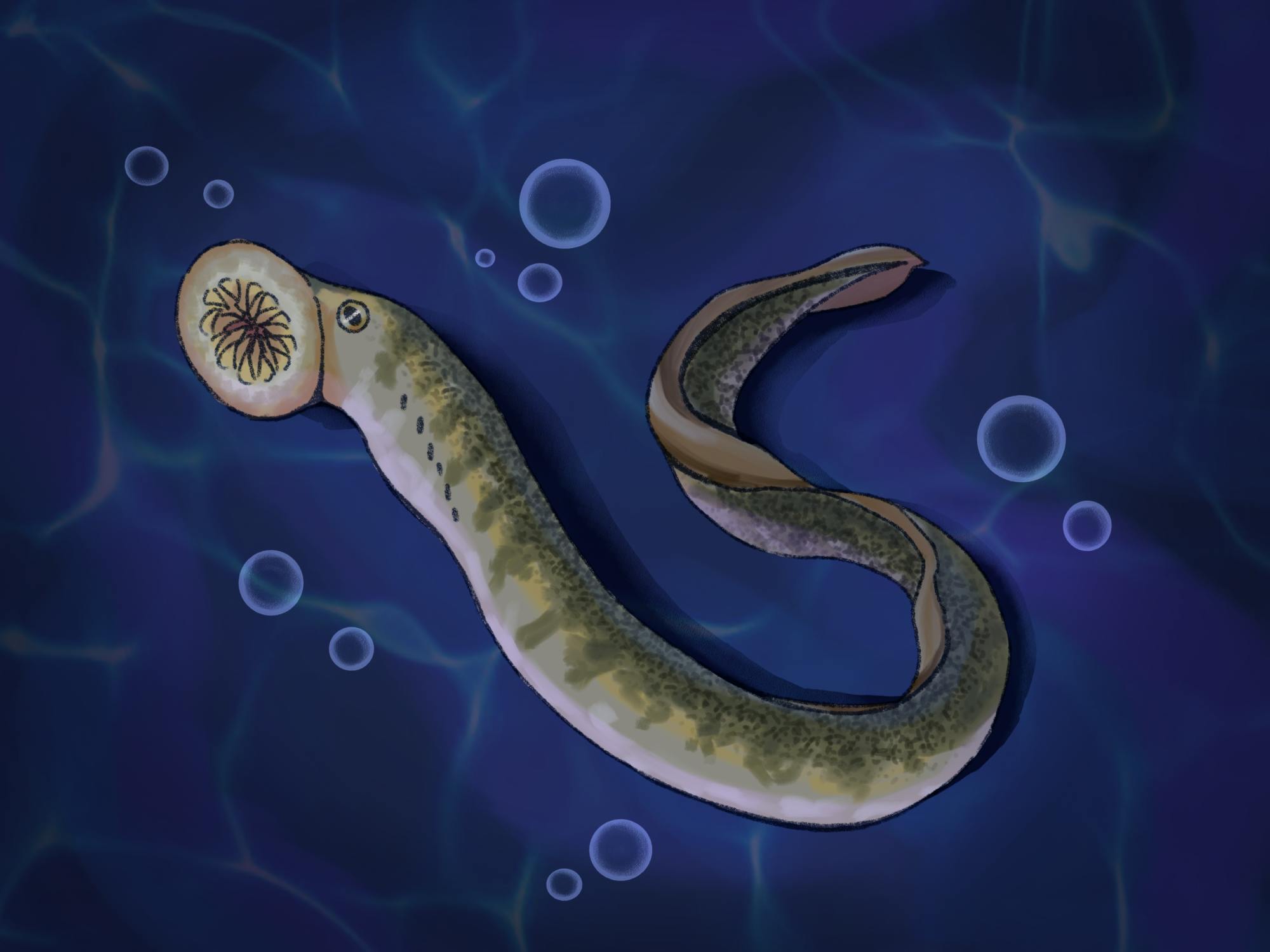
Invasive sea lampreys, grotesque parasites with rows of teeth inside their circular mouths that drain the blood of fish, infiltrated the Great Lakes in the 19th century. They have long been managed by a team at the Great Lakes Fishery Commission (GLFC), whose efforts have stopped the lampreys from multiplying and causing severe damage to native fish populations.
The invasive, parasitic species from the Atlantic Ocean have been in Lake Ontario since 1835. They remained confined to Lake Ontario because they couldn’t pass Niagara Falls — until improvements to the Welland Canal created an opening from Lake Ontario to the rest of the Great Lakes, bypassing the falls. By 1938, invasive sea lampreys were in all of the lakes.
An Oct. 28 newsletter from GLFC said the government shutdown added stress to their federal partners whose employees it contracts for their sea lamprey program, including the U.S. Fish and Wildlife Service (USFWS) and the U.S. Geological Survey (USGS). Though USFWS has continued sea lamprey control unaffected, many USGS Hammond Bay staff were furloughed during the shutdown. There is no public information about the employees’ return on the USGS website. Seilheimer said lamprey control is currently going on as usual, but threats of funding cuts and the government shutdown have contributed to uncertainty in the coming years.
How long have sea lampreys been around?
Tim Campbell, the Wisconsin Sea Grant Invasive Species program manager and specialist, said the biggest problem with sea lampreys is their size. They’re larger than native Great Lakes lampreys, so when they attach to native fish such as lake trout, they often kill them.
There are four native lamprey species in the Great Lakes region, two of which are also parasitic. But sea lamprey evolved to attach to larger fish in the Atlantic Ocean, and therefore suck native fish of their resources. According to Campbell, fish like lake trout are relatively slow-growing fish, so sea lampreys have a devastating effect. In Lake Superior, the lake trout population declined 95% from sea lamprey and overfishing and was only declared recovered in 2024.
“When you get a bunch of sea lamprey killing slow-growing fish, it can crash the population,” Campbell said.
A population crash of native Great Lakes fish would significantly impact fishery earnings. The Great Lakes fishery is currently worth $5.1 billion annually and supports 75,000 jobs. Before sea lamprey control, sea lampreys killed 100 million pounds of fish annually and predation of native fish by sea lampreys significantly contributed to both ecosystem and economic collapse in the Great Lakes region.
In 1958, the United States and Canadian governments formed the GLFC, which established a sea lamprey control program. This funding for this program is contributed 69% by the U.S. and 31% by Canada, and the program contracts employees from federal agencies such as the USFWS and USGS. GLFC’s control program has reduced sea lamprey populations by 90% in most areas of the Great Lakes.
How does the GLFC control sea lampreys?
According to Seilheimer, two main lampricides are used for lamprey control: TFM and Bayluscide. TFM is more commonly used and works by disrupting the energy metabolism of sea lamprey larvae. Other species are not harmed by TFM or Bayluscide because they metabolize them fast enough that the chemicals don’t do damage, Seilheimer said.
Campbell said the streams where the larvae spawn only need to be treated every 3-5 years, following the sea lamprey adult life cycle. Treatments are often scheduled for the spring, when the adults reproduce.
Barriers and traps are also a large part of the GLFC control program. Barriers like dams are used to block adult lampreys from going upstream to spawning areas, or juvenile lamprey from getting to the open lake. Traps are used similarly and can be paired with a barrier, Seilheimer said.
Sea lamprey control is essential to keeping the population down. Campbell said when people weren’t doing collaborative field work and there were fewer treatments during the COVID-19 pandemic, the sea lamprey population skyrocketed.
“If we’re not doing the work, then their [sea lamprey] populations rebound,” Campbell said.
Lindsay Pfeiffer is the science editor for The Daily Cardinal.