Last spring, I set our to watch every movie that has ever won the Academy Award for best picture, from 1927's ""Wings"" to 2009's ""The Hurt Locker."" I recently accomplished my goal, and plan to continue viewing every best picture winner in the future. Here are my five favorites from my Oscar marathon––at least until something new comes along.
(Derek's full ranking of every best picture winner from best to worst can be found here)
1. Casablanca
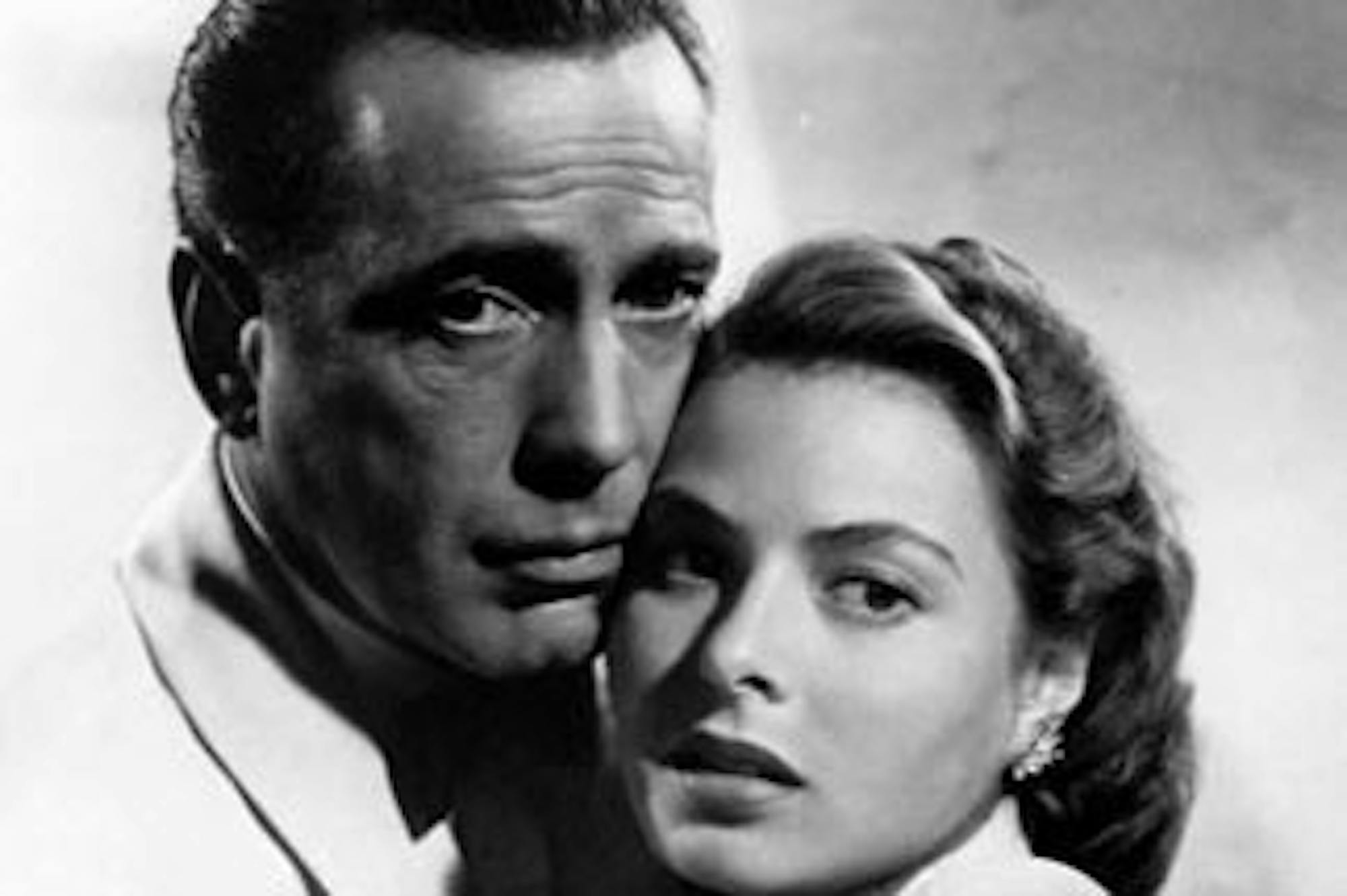
This film is considered by many to be the greatest screenplay ever written. The dialogue in ""Casablanca"" is better than any other film I have seen. There are so many classic lines in this movie. From ""Here's Looking at you, kid,"" to ""I think this is the beginning of a beautiful friendship,"" this movie is just dripping with brilliant dialogue. Humphrey Bogart and Ingrid Bergman both bring the dialogue to life with excellent performances. However, it's not merely the dialogue that makes this film great. It also contains an excellent character study and an intriguing love triangle, all on top of the political tensions of World War II. The shadowy film-noir lighting and cinematography add even more to the drama and emotions. As time goes by, this movie remains superb.
2. The Bridge on the River Kwai
Unlike most war movies of this era that supported one side or the other, this film takes a more ambiguous stance and instead focuses on the individuals. Both Japanese and Allied soldiers are both shown struggling to cling to sanity in the Jungle. The battle of wills between British Col. Nicholson (Alec Guinness) and the Japanese Col. Saito (Sessue Hayakawa) is remarkable. The psychological progressions of Col. Nicholson are all expertly portrayed by Guinness, whose performance won him an Oscar for best actor. The movie tells the story in two parallel plot-lines: one cenering on the POWs building the bridge and the other featuring the Allied soldiers (led by William Holden and Jack Hawkins) tasked with destroying it. When the two plots finally converge in the closing scenes it is some of the most suspenseful moments ever put on film.
3. Lawrence of Arabia
This film is four hours long, has no love story, and stars (at the time) relative unknowns Peter O'Toole and Omar Sharif. However, today it is remembered as one of the greatest movies ever made. It is the most epic of all the Hollywood epics. The sweeping cinematography of the desert is beautiful but also makes you feel the vastness of unforgiving wasteland. This film doesn't contain a complex story or a lot of dialogue, but what we do remember are the powerful, quiet, empty passages. O'Toole turns in a stellar performance, striking a delicate balance of portraying Lawrence's bravery and toughness while at the same time alluding to Lawrence's widely believed homosexuality without revealing it, which would have been taboo in 1962. O'Toole's portrayal of Lawrence is, in my opinion, the best performance in any of the best picture winners.
4. Schindler's List
In directing this movie, Steven Spielberg does more than dramatize the events of the Holocaust, he makes us feel like we are actually witnessing these events in a vividness uncommon to non-documentary film. As the first black and white movie to win best picture since 1960, the footage feels as authentic as old wartime newsreels. Liam Neeson (playing the industrialist of the tile Oskar Schindler), Ben Kingsley and especially Ralph Fiennes are all at the top of their games in their respective roles. The emotions in this movie run high throughout, and are almost unbearably overwhelming at the end when we see the thousands of real life Holocaust survivors who were saved by working in Schindler's factory and their descendants gathered at Schindler's grave.
5. Annie Hall
This is by far the funniest movie to ever win best picture. Woody Allen is one of the biggest names in comedy, and he was at his very best during the 1970s; however, this movie is much more than a comedy and contains a thorough analysis of personality and relationships. The story is told through a nonlinear narrative with Allen frequently breaking the fourth wall to explain to the audience what is going on with hilarious asides. Nonlinear narrative had been used before ""Annie Hall,"" and would be made popular by Quentin Tarantino in movies like ""Pulp Fiction"" and ""Reservoir Dogs,"" but the way it is expertly used in ""Annie Hall"" makes the difference between a good movie and a great movie. This movie also features a scene that takes place here at UW-Madison––what more could you ask for?