Free tuition for foster kids OK’d by Assembly
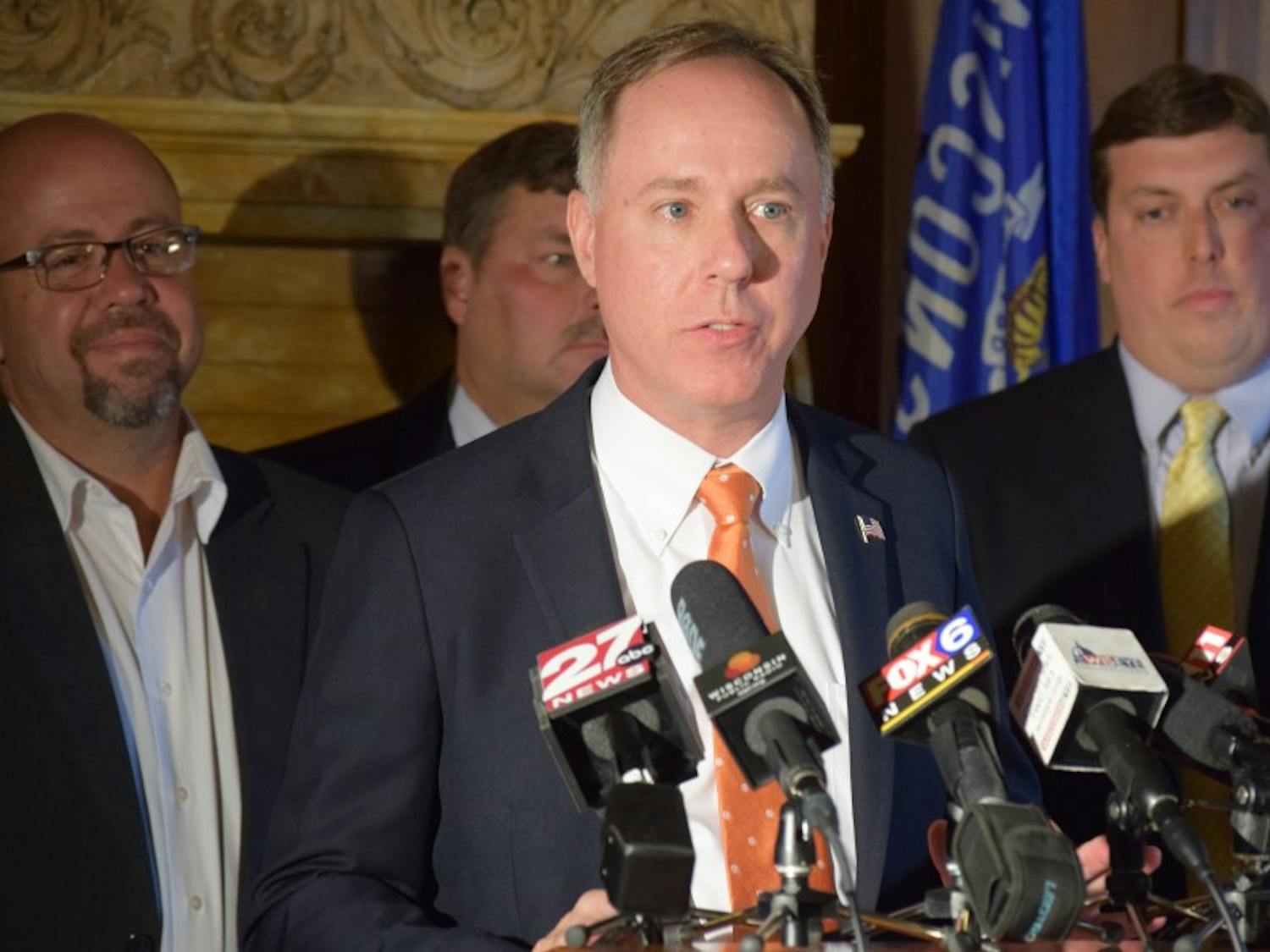
By Andy Goldstein | Feb. 13, 2018Foster children throughout the state would go to UW schools for free under a newly passed Assembly bill.
Foster children throughout the state would go to UW schools for free under a newly passed Assembly bill.
As addiction struggles sweep the region, lawmakers consider expanding veteran mental health services statewide in light of controversies surrounding opioid prescription practices.
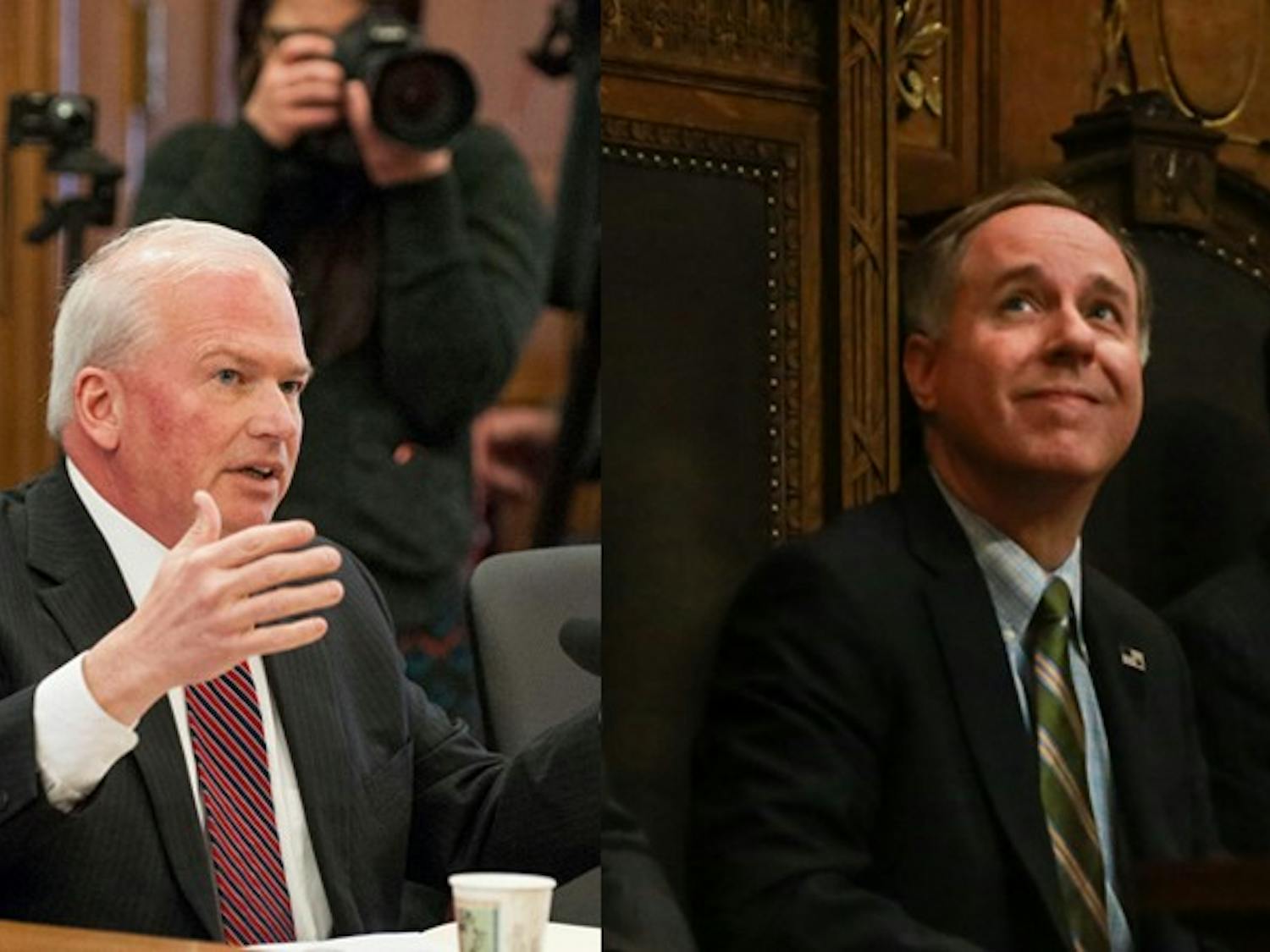
Tim Burns, Rebecca Dallet, and Michael Screnock trade criticisms of their rivals’ political and judicial philosophies leading up to next Tuesday’s nonpartisan primary.
Wisconsin has fewer public employees, working for less pay than in most states, according to the Wisconsin Budget Project. Wisconsin spent 7.6 percent less than the national average on public payrolls in the last fiscal year and is ranked 36th among the 50 states for the number of public employees per population.
Overdose deaths as the result of prescription opioid use rose 600 percent in Wisconsin from 2000 to 2016, according to the Department of Health Services. However, UW-Madison researchers think they have developed a program to curb overdose-related deaths in the state by laying out guidelines for when and how doctors should prescribe opioids. “Reducing the overall supply (of opioids) is important from the population health perspective,” Dr. Randall Brown, an associate professor of family medicine, told the Wisconsin State Journal. The program includes mental health screening to identify and properly treat patients who may be at a higher risk for opioid addiction as a result of conditions such as depression and yearly urine tests.
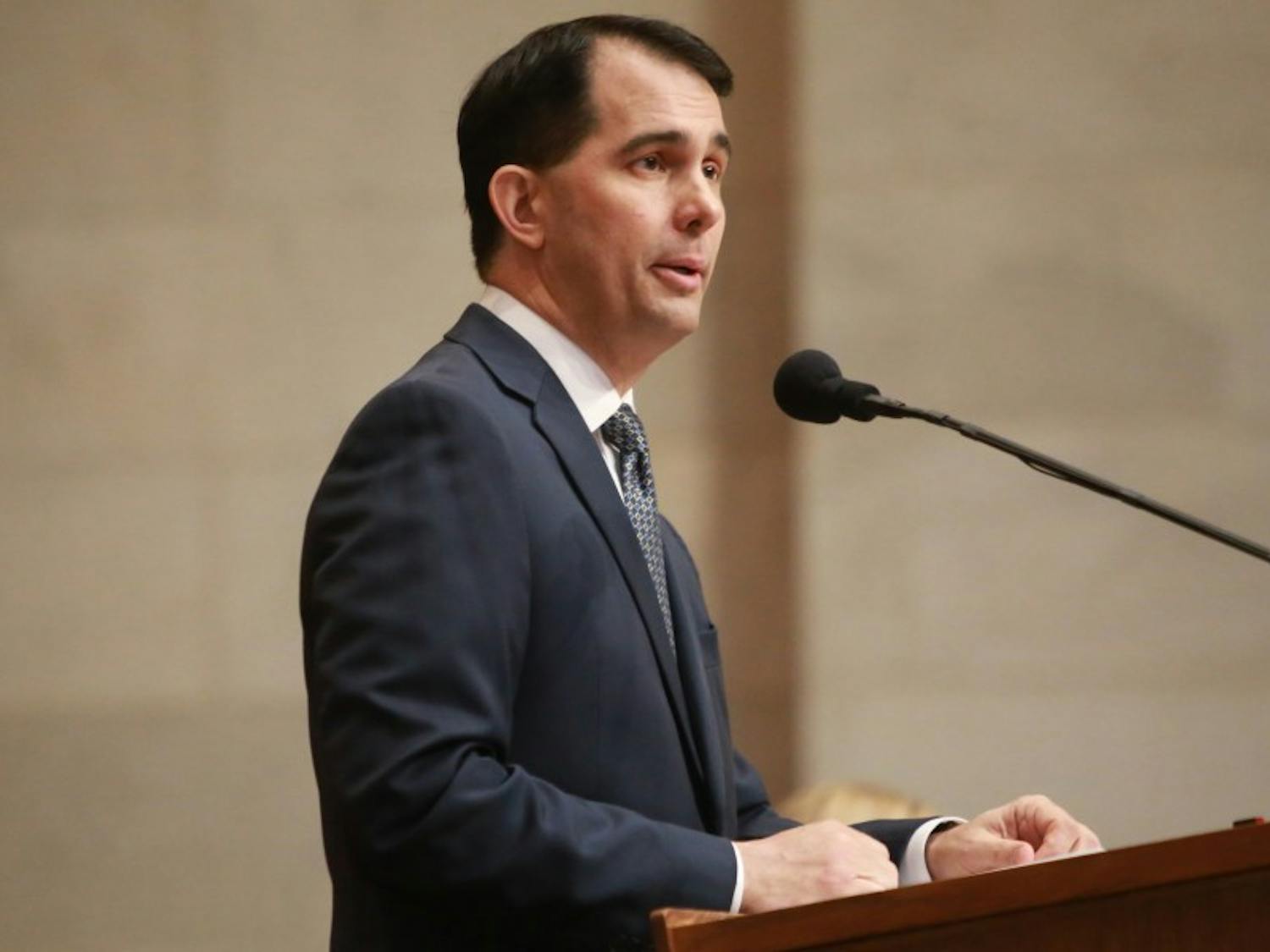
Gov. Scott Walker spoke to students at the College Republicans spring kick-off event, intending to mobilize young conservatives in the midst of a potentially difficult state election cycle.
As state Republicans hope to standardize wage and benefit laws across Wisconsin, Democrats are pushing to give more power to localities.
The state Assembly will likely vote to pass a bill to remove protections for wetlands, marking a win for GOP lawmakers in the continued battle between conservationists and business interests.
Walker proposes a tax incentive package to a fleeing company to keep manufacturing jobs in Northern Wisconsin.
The Perkins Loan Program, which provided $25.4 million in low-interest loans to UW System students, has expired, with seemingly little hope of congressional renewal in sight. The program offered unique financial services to students, offering a comparably low interest rate of five percent and a nine-month grace period after graduation before payments begin, all without requiring any annual funding, as all loans given are provided by those already paid back. “Eliminating this program, to put it clearly, will affect who can and cannot go to college,” said Nick Webber, government relations director for the UW System Student Representatives.
State Rep. Melissa Sargent introduced legislation to abolish state taxes on menstrual products and provide them free of charge in government buildings.
State Rep. Terese Berceau has announced she will not seek reelection after twenty years in the Assembly, setting up a potentially contentious Democratic primary in Madison.
Foxconn Technology Group formally requested Thursday to divert about 7 million gallons of water from Lake Michigan per day.
While public schools in Wisconsin fight for funding, 222 new private schools registered with the Department of Public Instruction to participate in the Wisconsin Parental Choice Program. Students participating in the program use taxpayer subsidies to attend participating private schools.
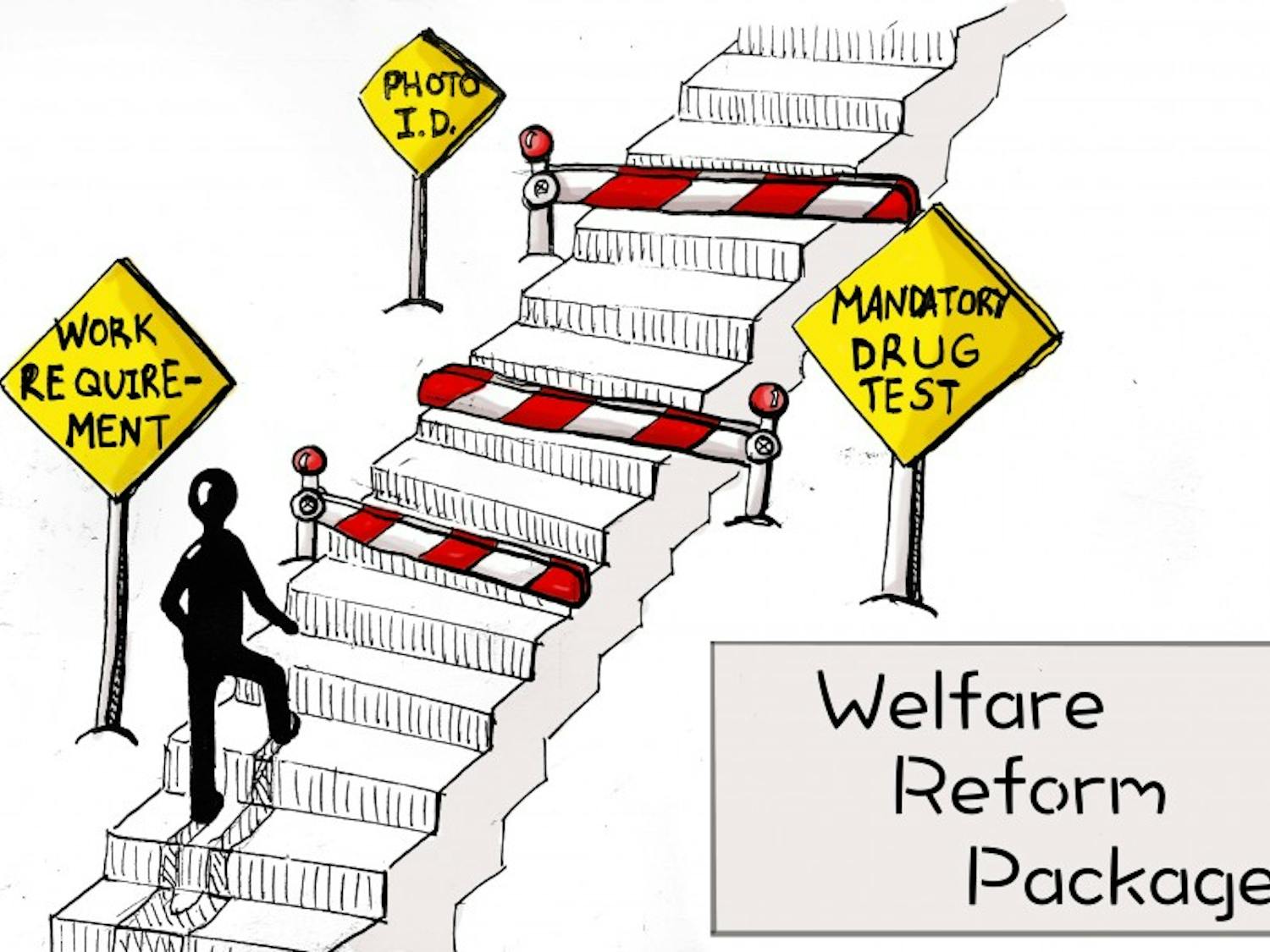
“Public assistance should be more like a trampoline and less like a hammock,” Gov. Scott Walker announced to roaring applause at his State of the State address, introducing a package of new reforms to the welfare system. These reforms would add a series of stricter requirements for Wisconsinites to qualify for welfare and public support, with the goal of easing people off of government dependency and into the mainstream economy. But these policies have more than administrative importance, as they also suggest a unique understanding of what poverty is like, and what sorts of values are assigned to different people grappling with it. To Assembly Speaker Robin Vos, who testified in support of the reform proposals, any good welfare system is one that “promotes accountability, encourages personal responsibility, prevents fraud and abuse,” and “opens the doors of opportunity for people who can work.” Debates within social policy often wrestle with questions of who is considered worthy of help. “Deservingness has historically been tied to ability and willingness to work,” said Marcy Carlson, a professor in the UW-Madison Department of Sociology and researcher at the Institute for Research on Poverty.
After losing their legislators to gubernatorial appointments, two districts will be without representation until November, as Gov. Scott Walker announced he will not call special elections to replace their legislators.
A text-in suicide prevention hotline could receive a state grant to stay open if a new bipartisan bill passes.
The Koch Brothers will put influential fundraising network to use in Wisconsin’s several vital elections.
Foster children could attend state colleges and universities without paying tuition if a group of bipartisan supporters gets their way.
U.S. Sen. Tammy Baldwin, D-Wis., urged the president to push for further a bipartisan infrastructure bill emphasizing American jobs and manufacturing.