It does not take long in the Constitution to reach where the very First Amendment is protected. The United States was founded on the outspoken voices of citizens who were unhappy with the way the government was treating them, and freedom of speech has always been one of its core values. Americans spoke out against their oppressive leaders through newspapers and pamphlets, understanding the fundamental importance of protecting this right to free speech.
For the first time in our country's history, this free press is being oppressed by the president.
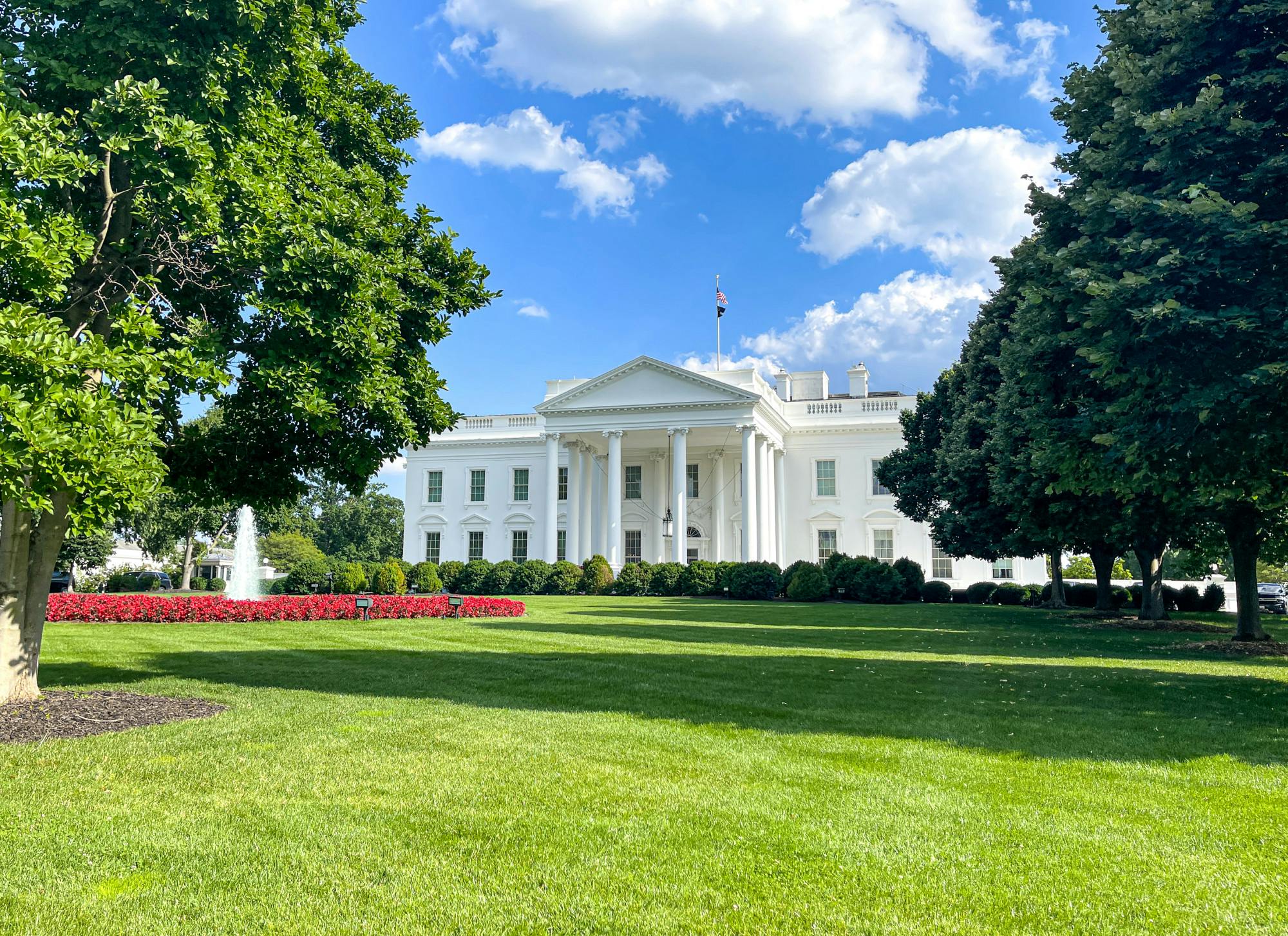
In an attempt to “clean out fake news” from the White House, President Donald Trump attempted to suspend the media license of three major news networks — CNN, MS NOW and Politico — barring them from the White House Press Corps.
For CNN, this is particularly important, as they make up one of the five rotating media members in charge of covering the president, along with ABC, CBS, Fox News and NBC. The barring of CNN upends the normally scheduled coverage of the president, leading to complications in a currently well-oiled machine.
Within the following days, the other four media channels making up the president's coverage decided to suspend their roles out of solidarity with CNN. A court order eventually restored all three of the news channels' access to the White House after a week-long stand off. In response, the White House promoted their own online news coverage dubbed “Trump TV,” according to The Guardian. However, even after the restoration, President Trump greeted CNN reporter Kaitlin Collins with the chilling words: “You should not be here”.
While the damage is mitigated for the time being, the attempted effort should be a major alarm bell for the entire country. Allowing one individual to dictate what can and what can not be reported on is a dangerous — and unconstitutional — precedent to set.
Free speech not only allows us to stay well informed on our government, but gives the citizens ample information to keep the government in check. Events such as Watergate, the Monica Lewinsky Scandal and the Pentagon Papers were all widely reported on by the media, allowing U.S. citizens a transparent view on the operations of the government and ensuring government officials are not taking advantage of their positions of power.
This aspect is even more important now than ever, as President Trump attempts to exert as much unilateral power as he can, issuing executive orders throughout his second term at a faster rate than any other president in U.S. history.
Many of these orders have been met with significant public upheaval, such as his attempted efforts to dismantle birthright citizenship. While the orders are published via government websites and the Office of the Federal Register, the media plays the largest role in reporting the new decisions to the public. Without the media present to broadcast the efforts by the government, the public would be relatively oblivious to the inner workings of the government. This reality is incredibly dangerous, as it takes the power out of the hands of the people, allowing it to consolidate to a single person.
In other words, it is a major step towards totalitarianism.
President Trump has not been one to shy away from comments on dictatorship, with his flaunting comments on being a “day one dictator” when elected or his claim that many Americans are saying “maybe we like a dictator.” While he has repeatedly claimed this is not his goal, it is obvious, whether in name or not, he is attempting to gain significant control over the government, overstepping the checks and balances of congress and the courts.
The major blockade in this way is the media, which he has never shied away from attacking.
Control of the media is usually the largest step towards totalitarianism. If one can control how you are being reported to the majority of citizens, then it is far easier to gain significant public support. Whether intentional or not, the media has become one of the biggest checks on government power. Take this check away and the government becomes significantly freer to do as they please.
Modern examples are not hard to come by. While most Americans would view these countries as inferior, and often significant rivals, they are also the ones who continuously repress their media.
Countries such as North Korea, Turkmenistan and Eritrea, all most likely viewed in American’s minds as less advanced or less “free” then the U.S., top the Committee to Protect Journalism lists of countries with the most media censorship.
While the methods of censorship are different in each country, the one unifying quality is the media always portrays the government in a positive light, usually based on a myth-like interpretation of the central leader.
The media has allowed the individual or government to take complete control over the country, often rigging elections or staying in power indefinitely.
With President Trump’s emphasis on his cult of personality, with the “Make America Great Again” movement becoming a defining factor to his presidency, as well as Jan. 6th marking a definitive time he attempted to keep power over the country, the parallels between the U.S. and other countries are becoming scarily clear.
The media, often the powerful instrument of the citizens, may be one of the last lines of defense.
While the initial court order and the overall reaction by other media channels is a positive response to quell the potential risk, it is absolutely imperative as a country we protect the free speech rights of these networks. Regardless of an individual's thoughts on the quality of media being produced or the growing concern for biases, it should be universally acknowledged that the role of media is necessary for our countries functioning.
Without the ability for these news channels to cover the most influential person in the country, if not the world, it gives too much power to a figure who already seems set on acquiring as much unilateral influence as he possibly can.
It is our responsibility as citizens to protect the media’s inherent rights, in order for them to aid us in protecting our own.
Maxwell Goldberg is a sophomore studying history and legal studies. Do you agree that restricting press access threatens Americans' ability to hold their government accountable? Send all comments to opinion@dailycardinal.com