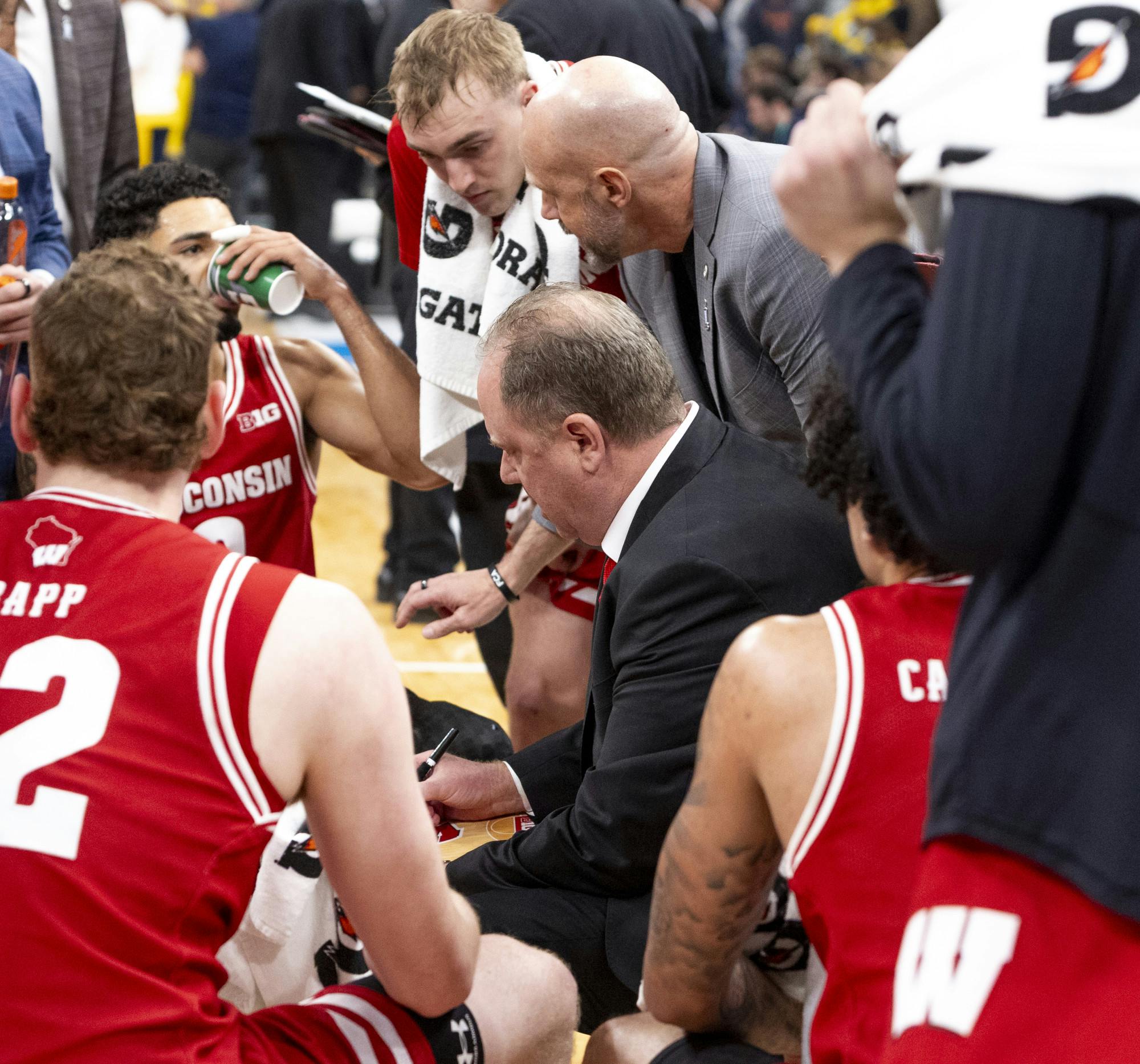
Wisconsin Athletic Director Shawn Eichorst and men’s basketball Head Coach Greg Gard spoke at UW Now Live: The Future of Wisconsin Athletics on Sept. 22 about how Badger athletics is navigating a constantly changing era of name, image and likeness (NIL).
Wisconsin Athletics has had a couple of tumultuous years navigating its strategies, especially in revenue-generating sports in the era of NIL —, including two consecutive losing seasons from the football team.
Eichorst, a Wisconsin native, returned as the athletic director in July. He was a senior director in Wisconsin’s athletic department from 2006 to 2011 and later led athletic departments at Miami and Nebraska. Most recently, he served as deputy athletic director and chief operating officer at Texas from 2018 to 2026.
He opened the event by saying that coming home was special to him and education remains the most important foundation of college athletics.
How the model changed
Eichorst walked through how court cases expanded the financial benefits schools can offer to athletes.
A 2015 O'Bannon ruling made full cost of attendance a permissible benefit up to $5,000 a year, in addition to the scholarship awards. A 2021 Alston decision added academic benefits of approximately $6,000 a year. A House settlement, which resolved a class-action antitrust lawsuit against the NCAA and the major conferences, now allows schools to pay athletes directly for their publicity rights, implement a revenue-sharing model and set new roster limits.
Eichorst named the main sources of “chaos” in the current college sports landscape — the combination of transfer mobility, weak regulations on third-party NIL deals and an artificial marketplace
He said the balance has tilted too far toward athlete mobility.
“Whether that pendulum has swung too far to the other side? I think it has in some ways,” Eichorst said at the event.
He warned that frequent transfers will eventually show up in graduation numbers of a college athletic program.
“We’re going to have a day of reckoning in the next couple of years when we see these transactional moves,” Eichorst said. “When you move once, it’s hard to graduate. If you move twice or three times, it's really hard to graduate.”
Gard, who has served on national committees, shared the concern. At Wisconsin, he said academics are “not negotiable.”
Greg Gard’s four buckets
Gard broke down his four sources of roster construction, ranked by priority, into retention, high school recruitment, the transfer portal and international recruiting.
Player development has been the program's cornerstone for the 25 years he has been involved, and it depends on players staying long enough to build knowledge, strength and experience on the court.
“That development only happens if they're back year after year and we're able to stack days and years upon each other,” Gard said. “So the retention piece is always our priority number one when we enter the postseason.”
Gard said his staff looks for players who want to be at Wisconsin beyond transactional reasons.
“There has to be tangible motives behind it, and getting your degree and having an experience at Wisconsin sits at the forefront of that,” Gard said.
Gard referred to the transfer portal as a net positive, having had successes with portal pick-ups in recent years. He acknowledged the importance of the transfer portal but admitted he didn’t want to completely rely on it when it comes to building a roster.
International recruiting has made up a good portion of Gard’s most recent recruitment.
Six of the 14 players listed on the 2026-27 roster come from outside of the United States. Gard said NIL has opened international recruiting wider than ever in college basketball history, along with the game’s increased exposure globally. International players, he said, are becoming “more willing to travel and more willing to come to the US.”
Through all of it, players still have to fit the program’s culture.
“We often say when you come to Wisconsin, you become us," Gard said. "We don't become you.”
Gard attributed the program's consistency to staying tied to what built it, pointing to Wisconsin's 25 NCAA Tournament appearances in the last 27 tournaments.
“We are anchored to our traditions and our culture that have made our program specifically so strong for so long,” Gard said, describing the balance as “old school principles, but having a new school approach.”
The team started practice on Sept. 23, with nine newcomers and six returners. Gard said the Badgers are geared with bigger players than last season, trading what he compared to a four wide receivers set for “two tight ends and a fullback.”
Fans and non-revenue sports
Both stated fan interest has held up. Eichorst called it “super strong,” and Gard said the men’s basketball season ticket renewals remain in the mid to upper 90% range.
Gard acknowledged fans have had to adjust to new names on the roster, especially at Wisconsin.
Gard said the shift is bigger for Wisconsin than other programs, since its players have historically stayed four or five years.
When asked how Wisconsin will protect sports that don't generate revenue, Eichorst said the department is committed to a broad-based program.
“I feel good about where we are from a financial perspective and a commitment perspective,” Eichorst said. “I do worry about that at other places that have to make certain judgments that we may not have to make.”
Eichorst said athletics makes up about 5% of the university's budget, but its visibility is 10 to 20 times that. He said the public rhetoric about the teams doesn’t reflect their day-to-day reality, but was optimistic about the months ahead and acknowledged the work it will take.
“We do hard things here,” Eichorst said. “That's what we do. That's what Wisconsin's all about.”
Gard, who was also born and raised in Wisconsin, closed by praising his new boss.
“If I'm a fan on the outside, I'm extremely excited and extremely grateful to have somebody like Shawn leading our department,” he said.