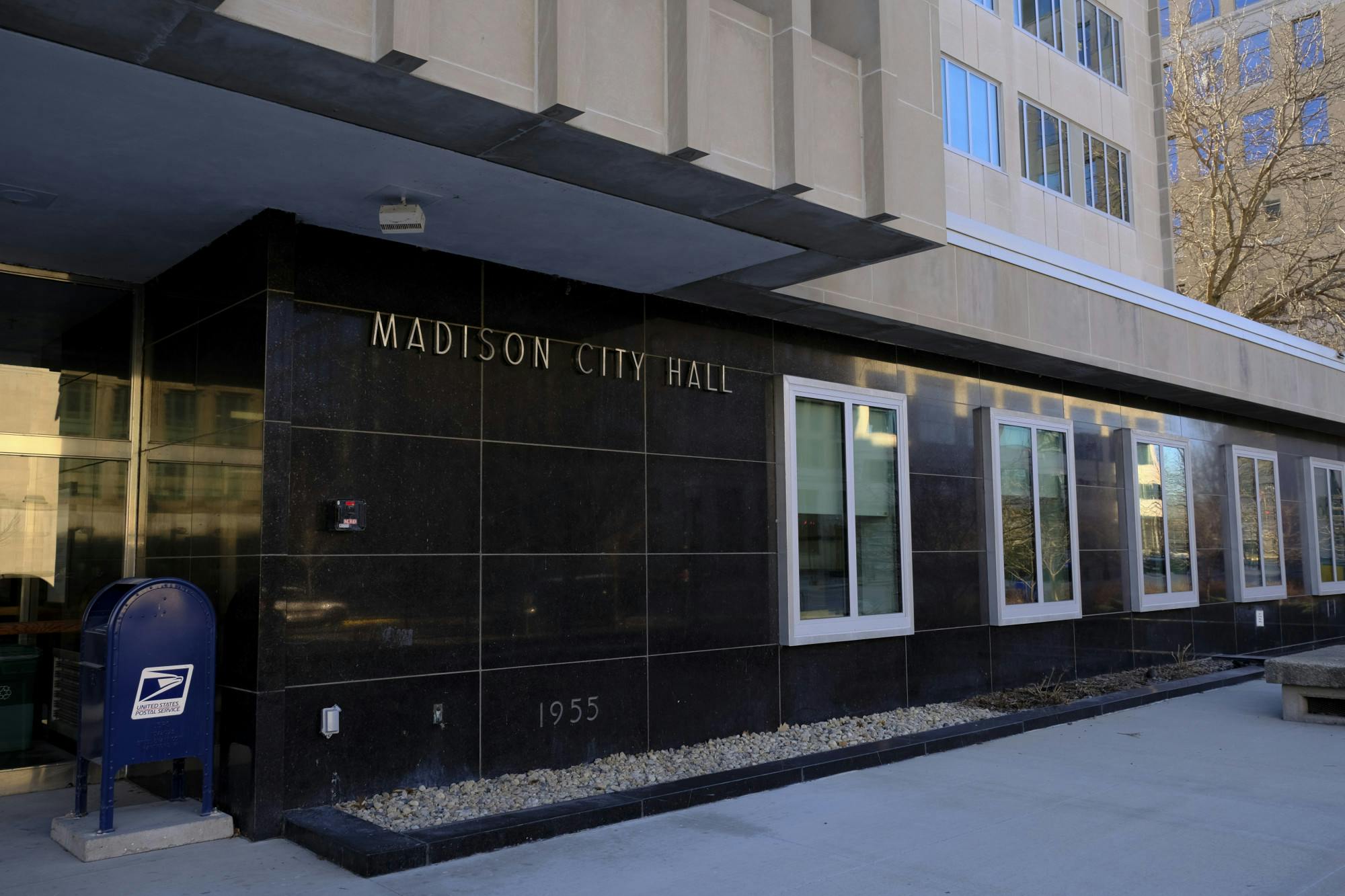
City of Madison officials are preparing to cut nearly $7.2 million from the 2027 operating budget in order to comply with state guidelines limiting municipal spending.
Officials are projecting that the city’s 2027 cost-to-continue budget — the amount of capital necessary to keep funding city services, bills and paychecks — will exceed the maximum amount allowed as calculated under state law. City agencies must cut their budgets or lose nearly $9 million in state financial aid.
City of Madison Finance Director David Schmiedicke told The Daily Cardinal refuse collection, community services, city job training and childcare programs could all be reduced.
A common council website post outlined what agencies will do to achieve a 2% budget reduction in their July 17 initial budget requests. The guidance halts excess budget requests and blocks hiring for already vacant positions — a situation District 8 Alder Ellen Zhang said will cause “more pressure” on city workers.
“Departments will have fewer new programs and services available as they deal with the challenge of maintaining current service,” Zhang told the Cardinal.
The Madison city budget is split in two separate sub allocations — a long-term, big-ticket, bond-sale-funded ‘capital budget’ and a short-term, day-to-day, ‘operating budget.’ The capital budget is funded by bond sales, while the operating budget relies on a combination of state and federal grants, service charges, fees and voter-approved tax-increase referendums — though local property taxes make up the largest share.
The operating budget supports day-to-day city operations such as employee paychecks and civil services.
The operating budget also funds local public transportation. While some states — including Illinois, Arizona and Washington — allow regional transit authorities (RTAs) to levy a transit-fund tax — thereby freeing funds within the operating budget — Wisconsin state law does not allow RTAs to do the same.
In 2009, Democratic Governor Jim Doyle signed Wisconsin Act 28, giving RTAs the power to fund public transit by levying a sales tax. Before RTAs could begin collecting revenue, Governor Scott Walker repealed their taxing power in the 2011 state biennial budget, Act 32.
The act also limited property tax increases, instead anchoring taxes to net increase in construction.
The budget cap joins former Gov. Tommy Thompson’s 1990 Expenditure Restraint Incentive Program (ERIP) — a state program incentivizing voluntary spending restraint in exchange for state financial assistance currently. It also capped the amount cities and municipalities could spend on services in exchange for Act 10.
During the budget engagement session, District 10 Alderwoman Yannette Figueroa Cole said she’s worried about the impact the cuts could have on employment quality for city workers, and stressed the amount of pressure businesses are already under due to a lack of workers.
“Currently, the city is operating with a staff that is short about 200 positions to do the regular work,” Figuora said. “The idea that to have to cut more positions when we don’t already have so much need to fill vacancies worries me more than to have to cut jobs right now.”
Madison city leaders were able to stave off a budget crisis for 12 years, but were unable to stop a long-term structural budget deficit formed. Facing a $22 million deficit in the 2025 budget, voters passed a one-time $20 million referendum that raised property taxes by an average of 2.7% and funded city services.
Going forward, city leaders created a five-year budget plan giving officials a framework to plan for future deficits.
“We expect there to be these deficits every year, and then we have to look at options to close the [deficit],” Schmiedicke said. “We do have a significant fund-balance that we can use. There’s some ‘special charges’ we can look at, but in the case of this budget, [we’re] about $7 million above the expenditure restraint limit.”
Zhang said despite the effects on service, most effects will be indirect to students.
Despite the challenge, several alders expressed confidence in city divisions’ abilities to plan and adjust to accommodate the shifting budget during the question-and-answer.
District Five Alder Regina M. Vidaver praised Madison Public Works Director Charlie Romines, who she said during the 2024 budget crisis suggested making seasonal city staff members full-time — saving tax dollars while bringing greater stability to the public service.
“We were bringing people in, giving them stable jobs that had great benefits [to stabilize] families,” Vidaver said. “That’s the kind of ingenuity that we have in our staff, and I know that that is what they are going to bring to the table during these challenging times.”
City agencies submitted budget requests to the Mayor’s office for review on July 17th. Requests will be viewable to the public August 3rd on the city website.
“I can only hope — and maybe predict — that things will turn around [in] the next two years after this midterm,” Zhang said. “But until then, we’ll just have to do our best.”
Ted Hyngstrom is a staff writer. He formerly served as the Podcast Editor, and has covered a variety of city and campus issues. You can follow him on X at @NuffTed.