This article aims to expose some of the racial—and racist—dimensions of the recent divestment debate. We are a group of students with diverse affiliations and backgrounds whose research and personal experience involves grappling with racial politics. Our central claim is that reactions to the divestment resolution were shaped by racialized narratives about Arab students, not merely by policy disagreements. We summarize the resolution before exploring how this debate unfolded in a racist manner.
The Resolution
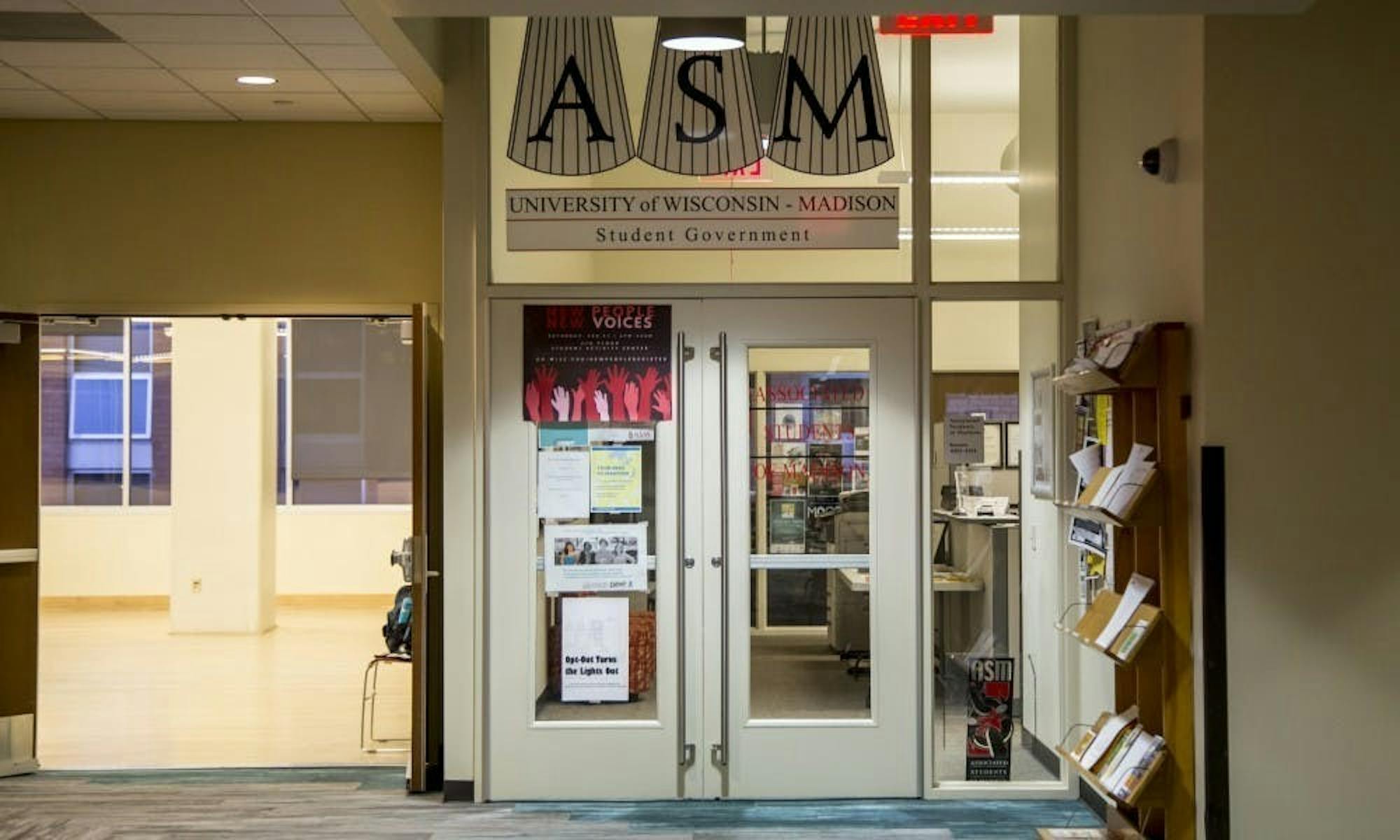
This semester, Assorted Students of Madison passed a resolution making two central demands on the University of Wisconsin systems: (a) divest university money from any industry in violation of Wisconsin anti-discrimination legislation and (b) democratize the investment process by establishing a committee of students, faculty and staff who will provide democratic oversight of the investment process. This would ensure that our university’s investment practices not only comply with ethically responsible standards but also remain responsive to student and faculty voice.
The resolution generated support from over 30 student orgs and multiple community orgs. Student representatives of ASM passed the resolution with overwhelming support (15-5-3).
Despite the intuitive appeal of the resolution, it was met with intense pushback during two rounds of open forum debate. Within an hour of the resolution’s passing, the university administration published a statement expressing their disappointment with the resolution’s passing.
Don’t Miss the Racial (and Racist) Politics
It might be tempting to think that debate over the resolution reflects mere political disagreement. It does not. We need to reflect on the problematic, and unacknowledged, racism shaping these various reactions.
In the first open forum, a student spoke against the resolution arguing that it could jeopardize the flow of weapons to Israel. This wasn’t simply pro-Zionist logic: As he argued, any blockage of military support would be bad news for the West. Why? As he explicitly argued, Arabs are a threat to Jews (and, by implication, Western civilization). Drawing on a quote from Golda Meir, later reiterated by Benjamin Netanyahu, the student said, “If the Arabs put down their weapons today, there would be no more violence.”
The racism is hard to miss. His argument implies that Arabs as such are dangerous and violent. It was met with applause by many of the Zionist students in attendance.
While we can easily see the “violent Arab” trope underwriting his comment, consider a more subtle problem. We can ask: how can this student (and others like him) reduce Arab resistance to unhinged violent impulse, thereby obscuring layers of historical and political context? The short answer: because of a racist double-standard engineered to serve U.S. and Israeli dominance.
Insofar as Arab communities in the Middle East have taken up arms against Israel or the West, their actions are not interpreted as political—say, resistance to Zionism’s violent practices against Palestinians (see the Nakba and the first Intifada) or resistance to the U.S.’s violent imperial interventions in the Middle East (aimed at controlling Middle Eastern oil and subduing nationalist and socialist movements that could thwart these efforts). Rather, Arab people are interpreted as acting on violent, extremist impulses. Zionists and Westerners, on the other hand, are seen as acting on familiar and relatable reasons (e.g., self-defense).
Palestinian poet, Mohammed El-Kurd, points to the racist asymmetry here. Depending on the subject, certain actions are seen as “courageous” or politically understandable (even if tragic). When performed by Arabs, they can only be seen as proof of extremism. El-Kurd writes: “What makes some people heroes is what makes us criminals.”
The injustice—and irony—of this should not be lost on us. The U.S. has been a central imperialist aggressor around the world, the Middle East included—sowing crisis, starving civilian populations, torturing prisoners, dropping atomic bombs, staging coups against democratically elected leaders, invading oil-rich countries under the pretext of “democracy,” lying about weapons of mass destruction, and generally plundering the world’s poor and working class. Yet it distorts this violent legacy, pitting Arabs as the real threat.
Centrally, the trope of the “dangerous other” (usually people of color) serves U.S. and Israeli purposes, giving cover to imperialism and obscuring violence.
This tactic is not new to U.S. racial politics. Immediately following emancipation, white elites devised new mechanisms for controlling Black Americans and restoring the stock of free labor. Central to this effort was the use of propaganda to argue that Black Americans, and especially Black men, were a threat to society. If Black people could be construed as violent and prone to criminality, it would be easier to implement new laws intended to control their movement, incarcerate them, and eventually to use Black convicts as free labor (a practice known as “convict leasing”). This cemented the image of Black Americans as criminals. As Keeanga-Yamahatta Taylor notes, “Assumptions of Black criminality became seamlessly integrated into collective common sense of what constituted ‘the Negro.’”
In his scholarship on this issue, Khalil Gibran Muhammad calls this “racial criminalization.” He writes: “[C]rime itself was not the core issue. Rather the problem was racial criminalization: the stigmatization of crime as ‘black’ and the masking of crime among whites as individual failure. The practice of linking crime to blacks, as a racial group, but not whites…reinforced and reproduced racial inequality.”
Racial criminalization found new expression throughout U.S. apartheid (Jim Crow) and into the era of mass incarceration. As Michelle Alexander argues, “Today mass incarceration defines the meaning of blackness in America.”
These racist tropes serve a powerful function: to control subordinate populations and protect the interests of the powerful. Reducing an entire group to something derogatory and scary increases fear among the racially dominant, providing easy justification to inflict violence, control, and exploitation.
Zionism and U.S. imperialism play similar cards, and those cards are being dealt on our campus. In the divestment debate, a student shamelessly peddled these tropes against Arabs as a way of stifling support for the resolution. This isn’t mere policy disagreement—it is racism.
Problematic racial politics continued into the second open forum meeting. An alumna of the UW-Madison Law School took the stand to argue that Israel is not an apartheid state because she, an Israeli Jew, has an Arab friend in Israel—a statement mirroring the embarrassing “I have Black friends” trope. She also argued that Israel formally allows Arabs to occupy positions of political office—therefore, Israel is not an apartheid state.
Those of us who study histories of racial oppression were dumbfounded (but not surprised) by this shallow and dangerous framing. Inter-racial friendship, as well as the formal right of minorities to run for office, existed in a paradigmatic case of apartheid: the U.S. Jim Crow South.
This individual ended her time by acknowledging that Israel indeed bombs civilian populations, including Palestinian children. However, she assured us, “Palestinian children are raised to kill” (she failed to mention that Israel mandates military service for all citizens, imprisoning those who refuse).
This argument gives cover to the genocide of children. It is shamelessly dehumanizing and dangerous. Meanwhile, it manufactures consent for the formation, maintenance, and mandate of imperial violence.
Moreover, notice a subtle layer of racism beneath her claim. As Mahmood Mamdani has argued, the West’s imperial conquests in the Middle East, and especially after 9/11, helped carve a distinction between the “good Muslim” vs. the “bad Muslim.” The good Muslim is politically moderate and does not challenge U.S. imperialism. The bad Muslim, however, is politically opposed to U.S. imperialism. As Mamdani argues, being an “acceptable” Muslim in the West’s framework is not about one’s religion but about one’s politics—are you aligned with the U.S. or not?
By expressing affinity for an Arab friend while shamelessly excusing the death of Palestinian children, the speaker reveals a distorted distinction between Arabs who are acceptable and those who are punishable. The acceptable Arab does not take up arms. She accepts friendship with the Israeli, and seemingly complies with the terms set by the state of Israel. The unacceptable Arab resists and rejects Israel’s terms—or, in the case of the child, she might resist. The latter Arab is immediately cast into a dehumanized image; her political nuance is erased; her grievance is rendered unintelligible; and she is cast as violently unhinged.
The implicit message is: “know your place—be good, like my Arab friend; don’t resist.”
This reveals the sinister power of what El-Kurd calls the “politics of appeal”—the exhausting standards Palestinians and other marginalized communities must live up to before the West recognizes their humanity. El-Kurd writes: “We are not human, automatically, by virtue of being human—we are to be humanized by virtue of our proximity to innocence: whiteness, civility, wealth, compromise, collaboration, nonalignment, nonviolence, helplessness, futurelessness.”
The Israeli Alumni’s comment about Palestinian children being raised to kill (implying that this justifies the bombing of Gaza) reveals the most debased form of this thinking. The one group the West generally regards as the most “perfect” of all victims—children—is disqualified simply by being born in Gaza.
The Administration is Part of the Problem
Finally, we turn to the administration’s response.
Consider that the aforementioned instances of racism were on full display for students and staff to see. The dean of students, Christina Olstad, was in the room for each hearing: At one point, she teared up during a student’s argument in support of the resolution; later, she hugged one of the ASM reps who read the names of children killed by Israel’s genocide in Gaza. For all of us who have seen Olstad aggressively monitor pro-Palestine student movements, working with the university to punish and control anti-imperialist movements, these displays reflect the height and toxicity of white liberalism.
Despite bearing witness to these open displays of anti-Arab racism, the university remains silent about these indignities. The admin’s public response raised concerns about possible antisemitism but failed to acknowledge racist anti-Arab rhetoric.
Our administration had every reason and opportunity to speak, let alone act, but chose silence. This reveals an embodied hierarchy of value: some students matter more than others. The administration’s silence may also reveal racist apathy. As philosopher J.L.A. Garcia argued, racism often finds expression in apathetic omissions. We are guilty of racism by failing to show enough care for someone on account of their race, whether or not we harbor feelings of ill-will or hostility. Any way you look at it, the administration’s response is unacceptable, though not surprising.
Race and Class at Work
We must also be clear about the material interests at play here. This is a race issue, yes, but race issues are almost always connected to issues of class and capital.
The divestment resolution poses a threat to the profit-motives of the university. A successful campaign could hurt relationships to big donors as well as create precedent for further democratic oversight of university money. The stewards of “big money” across university campuses cannot stomach this possibility. In general, the elites cannot accept the possibility of expanding the reach of democracy into our public institutions. They must keep capital within their control. Hence, they will raise spurious arguments against commonsense resolutions; they will express care for certain students but not others; they will disregard anti-Arab racism; they will send police to brutalize student protestors before they will negotiate over university investments; they will shed liberal tears but repress Leftist student movements—all to protect the status quo. This is about power and profits over people.
It’s still racism—because it reveals a hierarchy of recognition based on race and ethnicity—but there is a pernicious profit-motive under the surface. In this sense, even the statements by the administration condemning supposed antisemitism are hollow. None of us, inclusive of our racial or ethnic backgrounds, are served well or made safer by a university that places capital above collective flourishing.
Conclusion—Beyond Performative Liberalism and Toward Liberation
What is the solution? While the university loves performative DEI initiatives, something more radical is needed. Indeed, surface-level DEI will always seem shallow when the university continues to benefit from the technologies and industries that help subjugate and kill people of color, Indigenous people, migrants, and other historically marginalized groups.
Two things are needed. First, the university should accept the resolution. It is time for ethically responsible investment policies—polices aligned with, rather than in contradiction to, the Wisconsin Idea.
Second, we need a mass movement of students, faculty, staff, alumni, and community partners committed to anti-imperialism, equality, and collective-liberation.
This is a call to move beyond the identity politics we witnessed at the open hearing. Many students are so anchored in their zionist affinities that we wonder how they intend to address the broad range of concerns raised in the resolution—supposing these broader concerns for collective liberation matter to them at all. Recall, the resolution raises concerns about multiple intersectional issues, including ICE’s aggression against immigrants, weapons manufacturers supporting atrocities in Sudan and the Congo, and assaults on indigenous groups. It was sponsored by 30+ groups, representing multiple minoritized and marginalized identities. The safety of Jews on campus is no less important than the safety of others. However, we fail to see how Zionist identity politics offers any solutions, whether it is about protecting Jewish students or supporting the collective liberation and safety of all.
The solution is a world beyond imperialist plunder, supremacy, ethno-nationalism, and militarism—and a university held accountable to the democratic voice of all its students.
The divestment debate shows that racist practices and policies are alive and well on our campus, including in our administration. It has tangible consequences felt by many in Madison and globally. These ideas are being used to stir fear against common-sense, ethically responsible investment policies. Fortunately, we are winning, and this is only the beginning.
Concerned students of UW-Madison