Students and speakers gathered Friday in the Discovery Building to explore a central question posed by TEDxUWMadison: how do the spaces we inhabit shape who we are?
From physical and cultural spaces to digital and psychological ones, speakers emphasized how environments influence human experience and how individuals, in turn, have the power to shape those spaces through their choices.
TEDxUWMadison, an independent student-run organization licensed by national non-profit TED, hosted the event, which brought together experts from fields in architecture, anthropology, business, law and fashion, offering unique perspectives.
Physical spaces transform reality.
Joseph Specter, president and CEO of Frank Lloyd Wright Foundation, explained the profound effect architecture can have on shaping our realities and how famous 20th century architect Frank Lloyd Wright left a remarkable impression.
“I knew how music and theater could transform a room and everyone inside, but standing there in Taliesin [Wright’s estate and own design], I experienced something completely different,” Specter said. “The space was transforming me.”
Specter added that architecture can reflect society. “Architecture doesn't just shape buildings, it shapes the conditions for society itself,” he said. “Today we're still negotiating many of the same tensions as Wright: work-life balance, urban congestion, environmental strain, inequality, technological acceleration.”
Looking back to Taliesin, Specter said he realized the spaces people create for themselves reflect their outlook on life and how they interact with the world.
“The spaces we create become the lives we live, and the decisions we make about space don't end with us, they accumulate,” he said. “They shape the environments that future generations will inherit.”
Specter explained this process enables people to design society together.
“Architecture, ultimately, is about creating space for belonging, and in that very real sense, we are all architects,” he said.
Creating space for others
Inclusiveness itself is a space that must be fought for, said Angela Mudukuti, an international human rights lawyer and women's rights activist.
Mudukuti recounted her journey facing discrimination in her home country, Zimbabwe, and her studies in South Africa that led to her battle for human rights on the international stage.
“‘That is only for white people and girls. Don't do that,’” she recalled hearing as a child. She explained how racial discrimination in Zimbabwe, instilled over generations of colonial British control, shaped the environment she grew up in. “Imagine a world where you are a second class citizen in your own country, where your human dignity, your freedom of movement, your access to opportunities, all curtailed on account of your physical appearance,” Mudukuti said.
Beyond racial discrimination, she said she faced sexism.
“Colonial patriarchy as well, dictated that as a girl, you were worth less than a boy,” Mudukuti said. “Boys had no limits placed on their dreams, and they just had access to everything. That was the space I was in.”
“But this is not a ‘woe is me' story,” Mudukuti continued. “This is a story about empowerment, because the prejudice I experienced inspired me to be a human rights lawyer. It gave me the strength and resilience I needed to do this work.”
According to a study by UNWomen, one in eight women aged 15-49 have been physically or sexually assaulted within the last 12 months globally. Because of this, Mudukuti said she refuses to stop fighting for women’s rights.
“How can we give up in the face of all of this?” she said. “The answer is simple: we can't.”
Mudukuti remains optimistic that through activism and awareness of the spaces we inhabit, humans can strive for equality.
“I want to invite all of us today to remember that this space, it's not my space, it's not your space, but it's our shared space,” she said. “And so ask yourself today and every day, what can I do differently in our shared space. How can I be part of the solution and not the problem?”
Other speakers also encouraged action, highlighting the power that individual decisions hold in shaping both physical and social worlds.
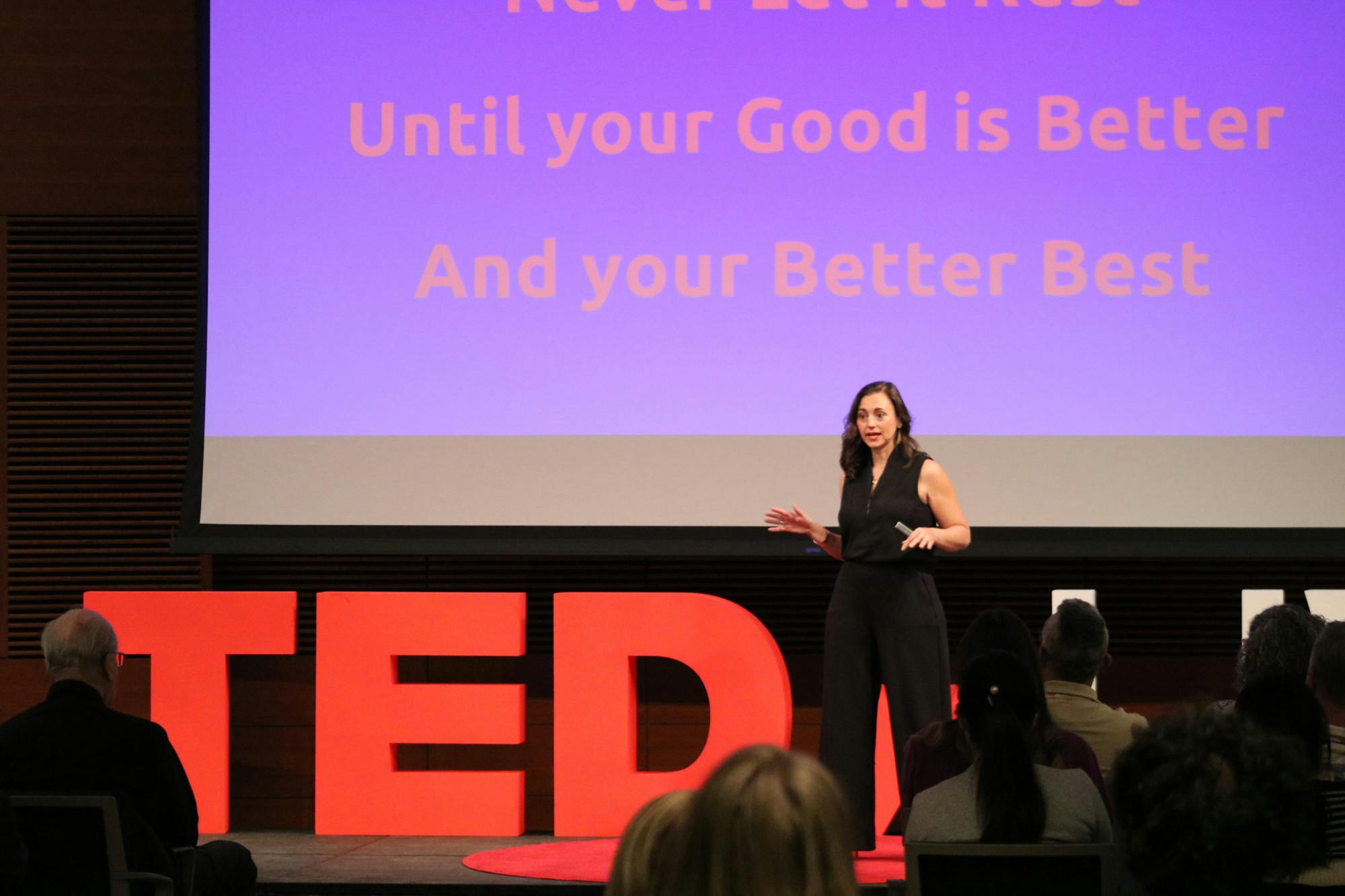
Angela Pacheco, founder and CEO of Good Better Best — a Nashville-based retail company designed to enable healthier, less toxic lifestyles — recounted her personal battle with cancer and subsequent use of space to heal and rethink. She encouraged individuals to think critically about how small, everyday choices can create lasting change.
“Each one of us can make individual decisions, and as you get curious about the things you care about, then you make the change,” she said. “If you leave here today thinking about one thing you care about, get curious about it, share it with someone else, and know that you [all] can live better one decision at a time.”