Wisconsin Technical College System enrollment has risen 18% since 2020. While University of Wisconsin System enrollment remains largely unchanged, more high school students are opting for the two-year hands-on experience that technical schools offer.
WTCS President Layla Merrifield said she is combating the stigma against technical colleges.
“We are really trying to rethink higher education,” Merrifield told The Daily Cardinal. As a less expensive and shorter alternative to four-year institutions, she said WTCS is “determined to no longer be Wisconsin's best kept secret.”
Technical college students told the Cardinal there are many reasons why they are choosing them, including affordability, dual enrollment and their supportive community.
Careers like dental hygiene, law enforcement and firefighting are driven by technical colleges across the state, Merrifield said. Many Wisconsin technical schools have specialized academies for training and hands-on learning that Merrifield said isn’t found anywhere else.
“We are sometimes less understood and less well known, particularly by folks who were educated through the four-year system,” Merrifield said. “The rigor and very high quality of our academics might be a surprise.”
Affordability and job market
In-state tuition for WTCS is currently $4,585 per year, whereas the least expensive University of Wisconsin System school, University of Wisconsin-Parkside, costs $8,658 each year.
Unlike UW System universities, technical colleges are able to tap into local taxes for funding. It’s a funding wrinkle that makes the state unique and is one reason technical colleges spend more per pupil than their four-year counterparts.
In 2021, this meant technical colleges operated with $17,153 per pupil, the fifth-highest mark in the nation, while UW System universities amassed just $15,079 per pupil, good enough for 43rd nationally.
Afton LaMere said he opted to attend Northeast Wisconsin Technical College so he could pay for his associate degree out-of-pocket while staying home and working part-time before he transferred to University of Wisconsin-Madison.
“If you’re unsure about college, [technical schools] are a great place to start because of just how cheap it can be,” LaMere said.
Merrifield said the financial benefits remain even after students graduate. According to WTCS, 92% of graduates are employed within 6 months of graduation, with a median salary of $60,003.
“That’s really appealing for folks who have deep roots in this state, whose families are here, who want to stay in Wisconsin.” Merrifield said. “We are an excellent option at an affordable price.”
Dual enrollment
Dual enrollment allows Wisconsin high school students to receive college credit from technical schools. In the 2024-25 academic year, more than 67,000 Wisconsin high school students dual-enrolled, and each student saved on average $737 on college credits.
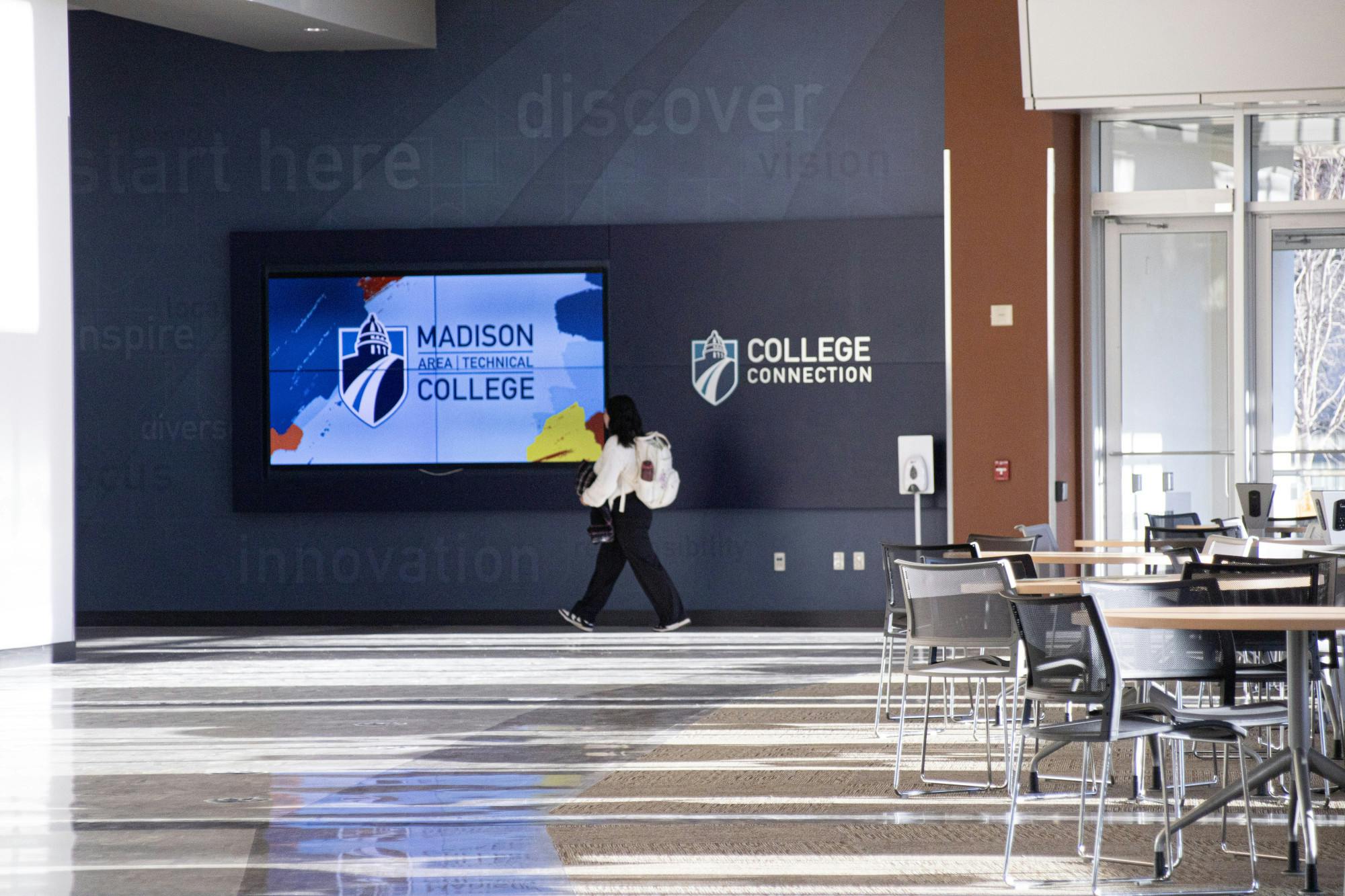
Charles Fiesel dual-enrolled at Madison Area Technical College (MATC) where he received his associate of science degree while he was still in high school. He will now graduate a year early from UW-Madison this spring, and he credits dual enrollment for helping him accomplish that.
“Dual enrollment just really bumps you up basically a year or two,” Fiesel said.
He also said dual enrollment and receiving his associate degree strengthened his college application to UW-Madison.
“It was a good way to get some extra work done ahead of time and give myself a bit of an advantage,” Fiesel said. “I was able to take a lot of classes that I wouldn't otherwise have, which looked really good on my application.”
Community
While affordability, Merrifield said, is the most well-known benefit of technical colleges, she noted the supportive environment makes WTCS stand out.
“Students know when they sign up for a class, that if they don’t show up, that instructor is going to call them, because they care,” Merrifield said. “We have made a real effort to be a comprehensive community.”
Alan Zarzycki, former MATC student, said he chose to go there because of the sense of community he felt.
“You can start off small at a tech school and get to meet people that are like you,” Zarzycki said. “Then you can slowly expand until you transfer to UW-Madison. What better way than to start off small and then go big later on?”
With his small group of friends, Zarzycki said he co-founded the Film Club at MATC which helped him build a bigger community when he transferred to UW-Madison.
“That club sparked my sort of leadership,” Zarzycki said. “It brought down the anxiety of what I could do at UW-Madison.”
UW branch campuses
Similar to technical colleges, UW branches are two-year institutions run by the UW System. These campuses, however, have been closing due to declining enrollment.
Abbey Fischer, campus director at the University of Wisconsin-Eau Claire Barron County branch, said they offer similar benefits as the technical colleges, like affordability and smaller class sizes.
While technical colleges focus on workforce preparedness and hands-on experience, Fischer said branch campuses specialize in arts and sciences and build a foundation for further education at a four-year university. She added the branch campuses should emphasize their associate degrees more to combat declining enrollment.
“The associate of arts and sciences degree that we offer is a great launching pad for anything a student wants to do,” Fischer said. “It really is a broad-based education that helps students explore.”
The UW System announced its eighth branch campus closure, UW-Plateville Baraboo Sauk County, last October. Many faculty said the four-year universities prioritize the main campuses at the expense of the branches, but Fischer said she’s thankful UWEC administration supports the Barron County branch.
Recently, UW branch campuses have been relocating onto technical college campuses to consolidate resources and avoid closure altogether. After the University of Wisconsin-Milwaukee Waukesha branch closed last June, UW-Milwaukee opened a center on the Waukesha County Technical College campus. The University of Wisconsin-Stevens Point Wausau branch will move to Northcentral Technical College in the fall.
“Merging was really a win-win,” Merrifield said. “You're exposing students to more options and cutting costs on both sides.”
Audrey Lopez-Stane is the state news editor for The Daily Cardinal. She has written in-depth on free speech on campus, higher education and elections including the Wisconsin Supreme Court race and upcoming governor primary. Audrey previously interned at WisPolitics and will spend the summer working for Wisconsin Watch. Follow her on X @AudreyLopez2028.