Gov. Tony Evers announced funding for a University of Wisconsin-Madison Nuclear Engineering and Engineering Physics siting study and an Ignite Wisconsin fusion entrepreneurship grant at his State of the State address on Feb. 17.
Wisconsin set a goal to produce 100% carbon-free electricity by 2050. Currently, less than 30% of the state's electricity comes from nuclear energy or renewable sources.
This new legislation commits more nuclear energy — which currently comprises two thirds of Wisconsin’s carbon-free electricity — and financially supports Evers’ desire for Wisconsin to become a “national hub for commercializing fusion energy.”
Nuclear siting study
The siting study, led by nuclear engineering professor and department Chair Paul Wilson, received $2 million in funding and aims to identify new locations for nuclear reactors in Wisconsin. It has a 2027 deadline.
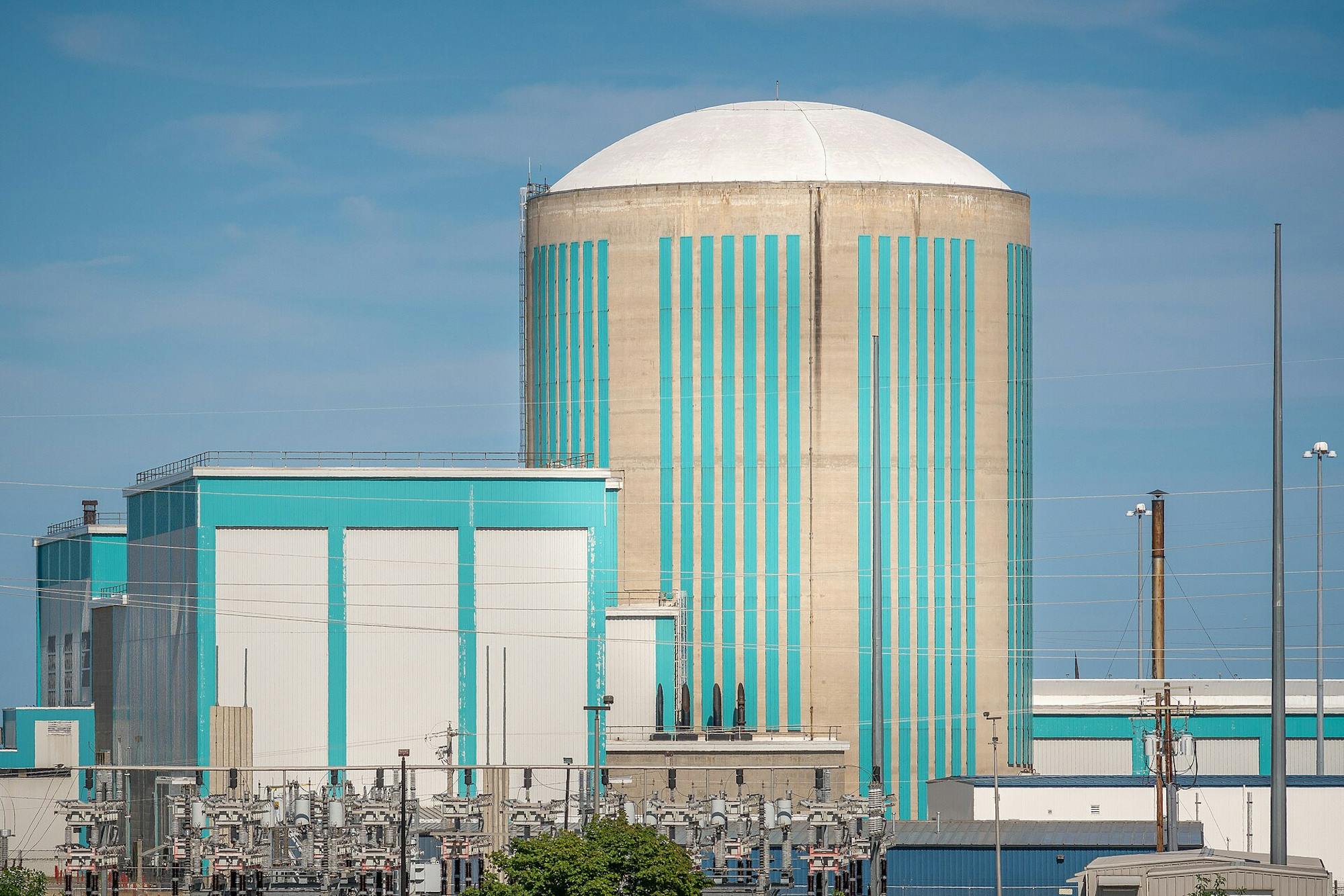
The Point Beach Unit 1 reactor in Two Rivers is the only operational nuclear reactor in Wisconsin, providing 15% of Wisconsin’s electricity. Utility companies WEC Energy Group and EnergySolutions plan to recommission the Kewaunee Power Station, a nuclear power plant originally shut down in 2013.
“The siting study includes looking at nuclear energy systems, anything from similar to today's reactors that are operating to a variety of advanced reactor concepts, including microreactors and other smaller reactors, as well as fusion energy systems in the future,” Wilson told The Daily Cardinal.
The study’s “fundamental approach” involves projecting data onto a map of Wisconsin to identify key sites for nuclear power using Geographic Information System technology.
Factors considered include Nuclear Regulatory Commission technical and regulatory placement requirements, distance from population centers and access to roadways for transportation, nearby transmission lines for grid connection and water for cooling purposes.
Wilson said part of the study will involve engaging with local communities, listening to residents’ concerns and the benefits Wisconsinites are looking for.
The study will involve collaboration across campus and with national laboratories.
There are no preliminary sites selected, nor are there limits on how many sites can eventually be identified.
Why nuclear power?
“Nuclear energy is the largest source of clean power in our country, and it’s a safe, reliable, carbon-free option to power our homes and businesses,” Evers said in his State of the State address.
Unlike coal or natural gas plants, nuclear power plants do not emit gases into the environment while operating.
“There’s no carbon emissions that cause greenhouse gases, there’s no sulfur and nitrous and oxide emissions that cause acid rain, there's no particulate emissions,” Wilson said.
All modern-day nuclear reactors use nuclear fission, which generates energy by shooting a small particle called a neutron into a heavy element, usually uranium, splitting its nuclei apart. The highly energized halves of the original nuclei release heat into a vat of water, vaporizing the water into steam that turns a turbine and powers a generator, creating electricity.
Nuclear energy distinguishes itself from other carbon-free energy sources, like wind and solar, in its reliability.
Based on difficult-to-predict weather conditions, wind turbines and solar panels produce variable amounts of energy that can make sizing transmission lines and routing power challenging. Nuclear power plants, meanwhile, provide a load of energy that is almost always the same — which American grid infrastructure is best suited for.
“Nuclear power plants today will operate at full power levels for eighteen months at a time without shutting down,” Wilson said. “Some of them [operate] two years at a time without shutting down. [Power] is always available regardless of what else is going on, even through severe storms and weather events.”
Additionally, nuclear power ultimately requires less land to produce the same amount of energy as wind or solar plants. But upfront costs are often tens of billions of dollars, with around a five-year wait time before energy can be produced, Wilson said.
“That upfront cost results in still pretty cheap electricity, because the [plant] will operate for eighty or a hundred years, so you can spread the cost over that time,” Wilson said. “But as a company that wants to build one, being able to accumulate all that money at the front can be really challenging.”
The reaction used to produce energy in nuclear fission plants creates a small amount of radioactive waste that is difficult to safely dispose of.
“We know how to manage [waste] on the timescale of a human life. We don't know how to manage it on the timescales that it needs to be managed, which is hundreds of thousands of years,” Wilson said. “We technically have ideas of how to do that, [but] we have not succeeded in finding technical solutions that have the right level of sociopolitical support.”
Wilson said he was excited about the level of bipartisan support and public interest in nuclear energy.
“I've been a professor now for about 25 years, and there's been steadily growing public interest, but in the last six or seven years it has become much more bipartisan [and] stronger across the political spectrum and across demographics,” he said.
Ignite Wisconsin grant
The Wisconsin Economic Development Corporation (WEDC) also awarded a $778,000 Ignite Wisconsin grant to the Wisconsin Fusion Energy Coalition, a local fusion consortium.
Nuclear fusion creates energy by combining two atoms together, not breaking them apart like fission. Though the Department of Energy plans to build grid-connected fusion plants by the 2030s, currently there are none.
John W. Miller, secretary and CEO of WEDC, told the Cardinal the grant benefits “manufacturers, skilled workers, educators and researchers and communities across Wisconsin” in addition to fusion companies.
“In the great tradition of the Wisconsin Idea, the fusion energy industry combines our state’s lead in research, advanced manufacturing and technology to advance carbon-free, sustainable energy innovations that can change the world,” Miller said in an email statement.
The 19-member consortium, led by Midwest nonprofit 5 Lakes Institute, includes the UW-Madison College of Engineering and Wisconsin Alumni Research Foundation (WARF) as partners along with industry members.
At the State of the State address, Evers said investing in the fusion energy coalition will help make Wisconsin a “national hub for commercializing fusion energy.” The fusion industry is expected to reach $3 trillion by 2050, according to WEDC.
The funding will be used to create a Fusion Early Entrepreneur in Residence position at UW-Madison, in addition to three pre-existing specialized EEIR programs in Biotechnology, Materials and energy offered by the Badger Tech Foundry.
Chosen entrepreneurs are graduate students with expertise in the field. EEIRs are provided resources and expected to launch companies after graduating from the EEIR position, William Murphy, leader of the program and UW-Madison biomedical engineering professor, previously told the Cardinal.
The Wisconsin Fusion Energy Coalition will also create two fellowships paying for post-doctoral students or students with technical backgrounds to work in entrepreneurial roles in fusion companies.
This new funding reflects Wisconsin’s push to become a key player in both nuclear fission and fusion energy. The state legislature previously declared its commitment to “fusion energy and nuclear power” in a joint resolution this session, formally making nuclear energy a state priority and establishing a fusion summit at UW-Madison on May 5.