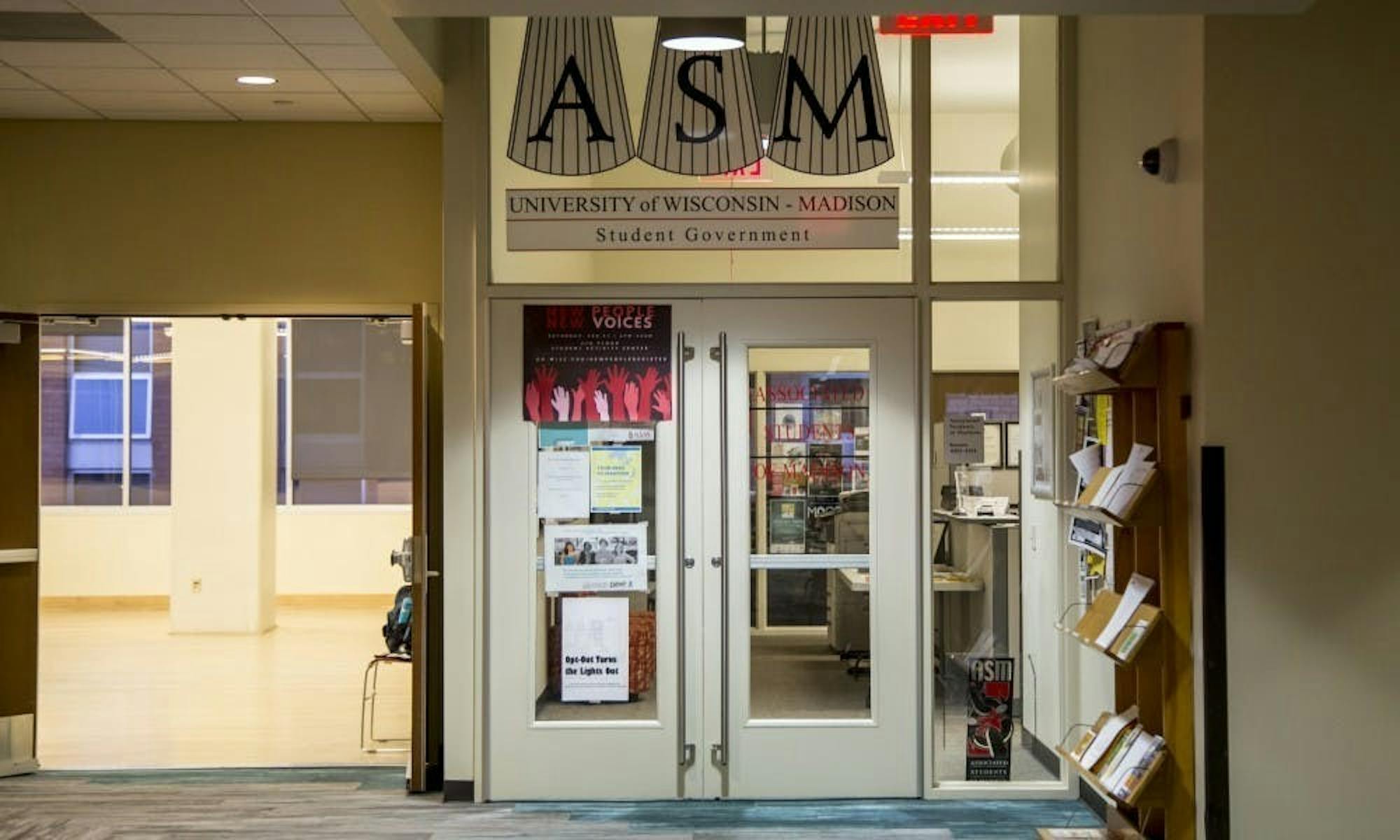
The Associated Students of Madison’s spring 2026 election had 4% voter turnout — 2,134 ballots out of 49,724 students — a two point decrease from last year. All 33 council representative seats and three Student Services Finance Committee seats were up for election.
ASM represents over 50,000 University of Wisconsin-Madison students and manages $75 million in segregated university fees. The student government has helped secure initiatives such as 24-hour libraries, mandatory pre-exam study days and caps on tuition increases. It also provides services for students by distributing bus passes, operating the Open Seat Food Pantry and helping fund Registered Student Organizations.
“It's important to know that the people that are in the room making these decisions and shaping the vision for this governing body has your voice in mind, because ultimately, it's a really huge responsibility that these ASM leaders hold, especially those on Student Council, because we talk about essential student services,” ASM Chair Landis Varughese told The Daily Cardinal.
Voter turnout in ASM spring elections has remained below 10% for nearly a decade. In comparison, other Big Ten institutions like the University of California-Los Angeles and the University of Michigan have reported turnout above 15% in recent years.
Varughese said ASM is different from some peer institutions because UW-Madison’s student government represents all students — undergraduates, graduates, professional students and others — rather than just undergraduate or graduate students. He said the campus’ large size can make it hard for students to see how ASM affects them directly, contributing to a general sense of “apathy” toward voting.
“We're all collectively under one body, and so it can be really hard for any one candidate to appeal to all students,” Varughese said. “Our needs are so vast.”
He noted that turnout increases when high-impact referendums, such as the vote to name Union South in 2010, are on the ballot, but said students may otherwise feel disconnected in other election cycles. Last year, ASM introduced five non-binding referendums asking students about securing bonding authority for the UW System, increasing funding to hire more mental health professionals at University Health Services, considering a potential sustainability Canvas course for incoming students, increasing passing time between classes and adding lights along Lakeshore Path.
Varughese also said changes to state law — and ASM’s diminished authority on campus — could be impacting turnout.
Act 55, signed by former Gov. Scott Walker in 2015 after passing the Republican-controlled state legislature, adjusted student governments’ role from “active participants” with a voice in policy development to a counseling body that could only advise the chancellor.
“The fact that our decision making authority was cut into definitely plays a role [in ASM’s influence], because it changes not only our operations, but it changes how we communicate about those operations to the everyday student,” Varughese said. “There's a huge difference between saying ASM has definite decision making authority versus ASM having an advisory role in decision making on campus.”
He added that students are more motivated when they have a direct say in decisions. Even with a referendum that passed this spring to install lights along Lakeshore Path, Varughese said that decision will be used as “a tool for advocacy” for student leaders.
“[Act 55] does limit the scope of what we can do and, in turn, how we can directly support students, and how we communicate our support to students,” Varughese said.
All UW-Madison students have the ability to vote for Student Council Representatives for their specific school or college, along with members of the Student Services Financial Committee, which is in charge of allocating the distribution of segregated fees.
“You yourself have the power to elect people and demand that those who represent you have your best interest in mind, and the most direct way to do that is to vote,” Varughese said. “Student Council is the primary legislative body that can dramatically change how these services are connected to you, and you deserve to have a say over what your day to day experience on campus looks like, and ASM is the place where that is most dramatically shaped.”
Zoey Elwood is the college news editor for The Daily Cardinal. She previously served as copy chief. As a staff writer, she's written in-depth on state and local budgets, protest coverage and Wisconsin politics. She has also written for state and city news. Follow her on X at @zoeyelwood.