Regent Street will get a makeover in 2027 as a part of a broader effort to accommodate new development and create a more pedestrian-focused corridor, but community members are questioning whether the project will drive up costs and accelerate gentrification.
The redevelopment will span the area between Randall Avenue and South Park Street and will include wider sidewalks and terraces, underground power lines and pedestrian safety improvements such as shorter crosswalks and potential raised crossings.
The street is popular with both locals and students, with many coffee shops, bars and longtime Madison establishments like Greenbush Bakery flanking the future construction zone.
District 13 Alder Tag Evers, who represents nearby Monroe Street, said the redevelopment could diversify the area beyond its current student-heavy focus at a community meeting last month.
“If we ever want to see Regent Street reach its full potential where we have housing that is not dominated simply by students, retail businesses that are not simply bars and a cultivated crowd around Camp Randall, it’ll take planning to get there,” Evers said. “The reconstruction of Regent Street itself is aligned with this vision.”
Greenbush Bakery, which opened in 1996 at the corner of Randall Street and Regent Street, sits at the edge of the planned construction zone. Owner Taylor Carlson said he fears the construction may cause people to avoid the area all together, costing them business.
“I think we just all hope the construction is able to get done in a timely manner, there is minimal effect in sales and people still come out to support local businesses during that time,” Carlson said.
Sam Brown owns three sister businesses on Regent Street: Leopold’s Book Bar Caffe, Fabiola’s Spaghetti House and Deli and Greenbush Bar. He also serves as president of the Regent Street Business Association. Brown told the Cardinal despite the reconstruction causing “a period of intense pain,” he is optimistic about the opportunities it will bring.
“The business association has been intricately involved in this whole process,” Brown said. “We have met with the city on numerous occasions, along with help from downtown Madison, Inc., and we're very happy with the direction the project has taken.”
Brown believes the project will ultimately revive the area, but he is concerned about the impact construction will have on his business in the short term.
“I think [construction] is going to have a tremendous impact,” Brown told the Cardinal. “The scale of this project is pretty vast. There's a tremendous amount of underground work that has to occur, and we don't really yet have a timetable on how long this project is going to take.”
Tom Mohr, the city’s project engineer, said the redesign will appeal to new businesses.
“We think this is the best option for future development,” Mohr said in a transportation commission meeting earlier this month. “[We want] to make this street as attractive as possible for future businesses, because there is going to be a lot of future redevelopment here.”
Brown said he sees the redevelopment as a positive step — as long as businesses are prioritized over housing.
“I've been part of the Regent Street group, which has been meeting since 2012, and we have kind of envisioned Regent Street as this kind of exciting entertainment district for the near West Side,” Brown said. “To see that dream occur, we have to make sure that any development has a commercial component or we're going to have a lot of really kind of uninteresting blocks with a lot of residential [buildings].”
Students who live or plan to live in the Regent Street area also expressed mixed feelings. Cecily Pabellon, a University of Wisconsin-Madison freshman who lives near Regent, told the Cardinal she was excited about the improved walkability, but worries about maintaining affordability.
“I think we definitely need more pedestrian spaces on Regent since it’s so central, but I feel like the construction is going to make the prices go up and cause issues,” Pabellon said. “That’s not doable for college students who are working on low-income budgets.”
Regent Street and the area around Camp Randall is popular for students looking for off-campus housing due to its cheaper rents and proximity to classes, cafes and bars.
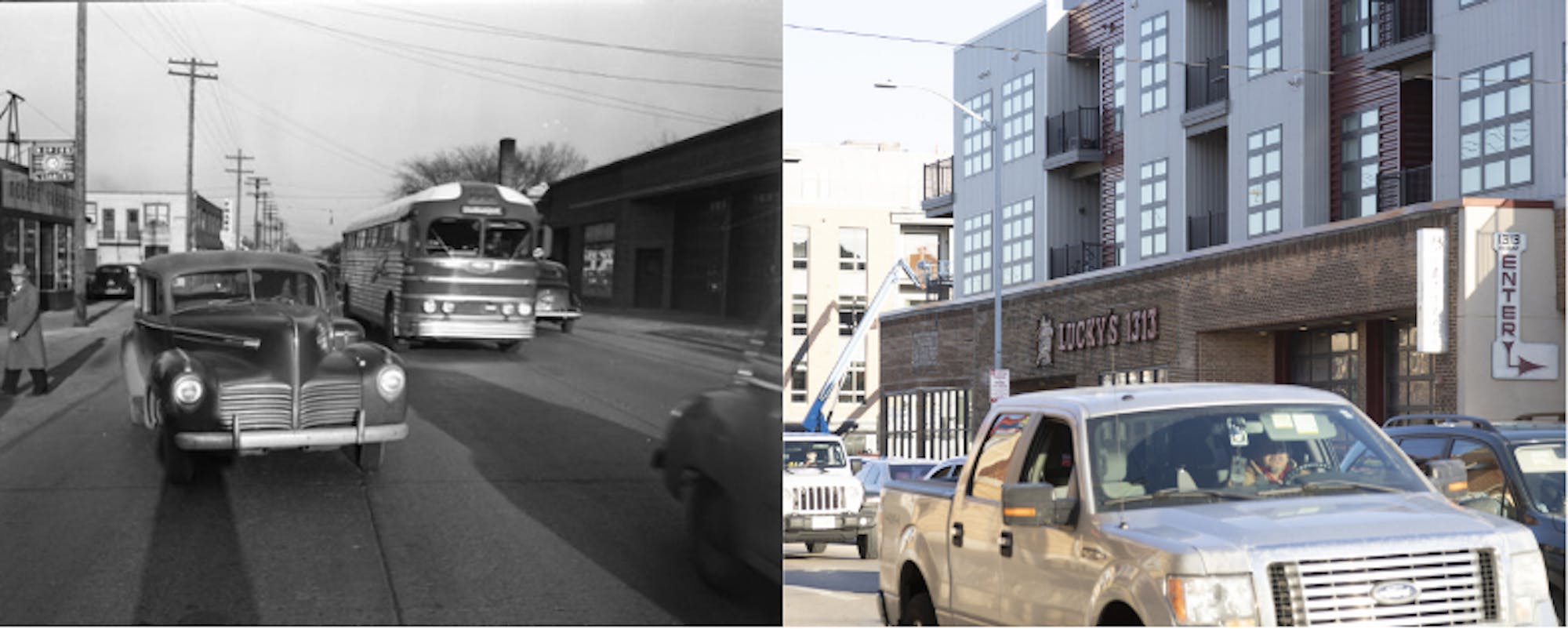
The redevelopment is unfolding in an area with deep historical roots as an immigrant community. The Greenbush neighborhood, which includes parts of Regent Street, has long been considered “Madison’s Ellis Island,” serving as an entry point for generations of immigrants — particularly Italian, Jewish and other working-class families — who built tight-knit, affordable communities near campus.
That history has also made redevelopment a sensitive issue. Much of the original Greenbush neighborhood was demolished during urban renewal efforts in the mid-20th century, displacing residents and erasing parts of the area’s cultural identity — a legacy that continues to shape concerns about whether new development could again threaten affordability and longtime businesses.
Local historian David Mollenhoff has similarly criticized past redevelopment developments in Madison, arguing they have led to the loss of historical character.
“Unfortunately, with this new density-powered recipe, mediocrity and developer profit are the winners, and Madison’s claim to be a special city loses,” Mollenhoff said in a Cap Times opinion article.
The proposed plan for Regent has also been a point of contention due to its lack of bike lanes — a feature Pabellon said should be reconsidered.
“So many college students live in the area and are not super close to campus, meaning they have the option of waiting for the bus, or riding their bikes,” Pabellon said. “It gets a little crazy down there so bike lanes would be nice.”
Between potential business disruptions, traffic changes and concerns about shifting the area away from its student base, Regent Street residents worry redevelopment could lead to higher prices and displace longstanding businesses.