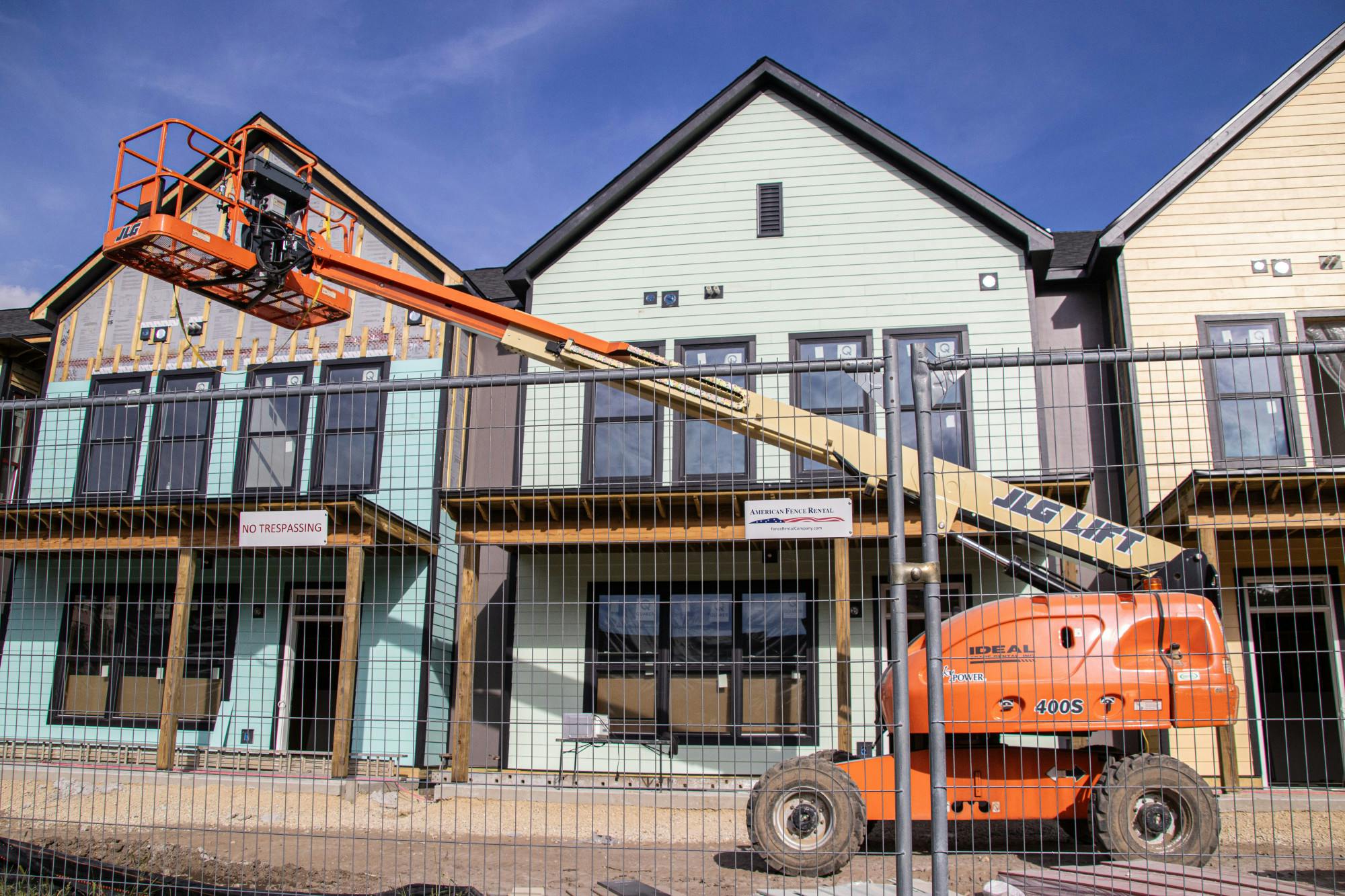
The Madison Common Council approved nearly $14 million for the Affordable Housing Fund in December to build 422 rental housing units for lower-income residents.
The funding will support four new projects across Madison: United Residence Senior Apartments, Yellowstone Apartments, Ridgeway Senior Apartments and Fair Oaks Apartments. Out of the estimated 422 rental homes, 263 will offer permanent and affordable housing for residents and 86 will serve as households for individuals who are currently experiencing or have experienced homelessness. The remaining 73 units will not have rent restrictions.
District 8 Alder MGR Govindarajan told The Daily Cardinal the new housing units are mainly for low-income residents — such as seniors on fixed incomes and single parents — rather than homeless individuals.
Affordable housing units are income-restricted based on Area Median Income (AMI). Govindarajan said AMI determines eligibility and rent prices by comparing household income to the city’s median income.
“If the area median income in Madison is $100,000 and you’re making $40,000 or less, then you would qualify for 40% AMI housing,” Govindarajan said. “The rent will be discounted as if you make $40,000 instead of $100,000, because market-rate housing is priced as if you’re making the median income.”
Govindarajan added that individuals experiencing homelessness are more often served through transitional housing programs rather than AMI-restricted apartments.
“The best type of housing for them is usually transitional housing,” he said, pointing to facilities such as Porchlight, The Beacon and the city’s new men’s shelter set to open later this spring.
The approval comes amid a push from the city to fund community-based housing projects, supplies and equal access, including $1.7 million for the Battalion homeless shelter, in their last budget.
Housing affordability remains one of the city’s most pressing challenges, Govindarajan said, though recent data suggests some improvement.
“When I got into office about two and a half years ago, the vacancy rate was around 2%. Now it’s up to about 6%, which is much healthier,” he said.
A vacancy rate above 5% is generally considered a tenant’s market, giving renters more leverage to negotiate rent prices or secure concessions.
“These AMI affordable housing units provide options for people who are income-restricted,” Govindarajan said. “They don’t have to fight for market-rate housing in the general market.”
The city received backlash from residents in September for shutting down two homeless encampments — Dairy Drive and an unsanctioned encampment near Capitol Square. Govindarajan said the closures were unrelated to the Affordable Housing Fund.
“This is a completely different program,” he said. “Dairy Drive was a temporary site that relied on federal funding during the COVID-19 pandemic. That funding ran out, and the structures were only built to last two years.”
In response to the closure, city officials announced more funding for homelessness services in 2026.
The city has used a competitive request for proposals process in the past to expand housing for households earning less than 60% of the AMI, with additional emphasis on units for very low-income residents earning up to 30% AMI.
In Dane County, the AMI is $90,900 for a single person and $116,900 for a household of three. At 60% AMI, that equals annual incomes of up to $54,540 for one person and $70,140 for a three-person household. At 30% AMI, eligible incomes are $27,270 for one person and $35,070 for a three-person household.
The funding will be distributed as a loan once developers secure additional financing, including Low-Income Housing Tax Credits from the Wisconsin Housing and Economic Development Authority, as well as all necessary land use approvals and permits from the city.