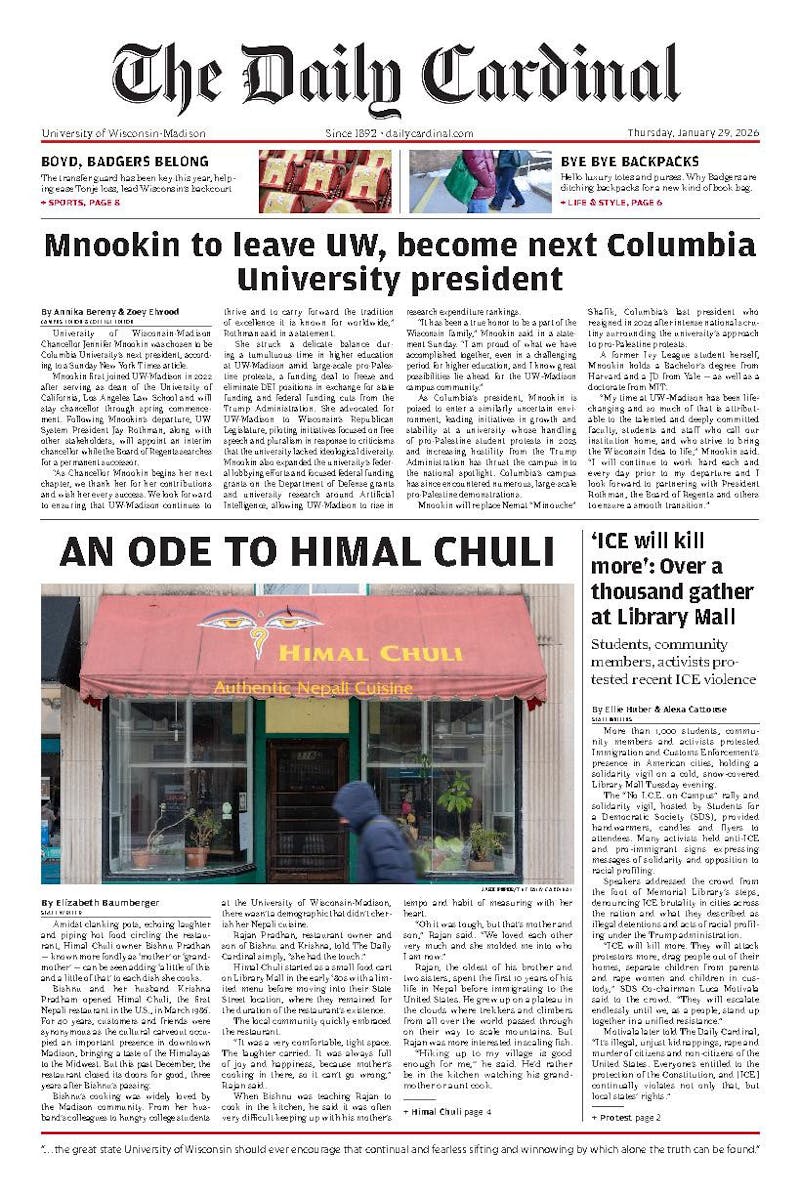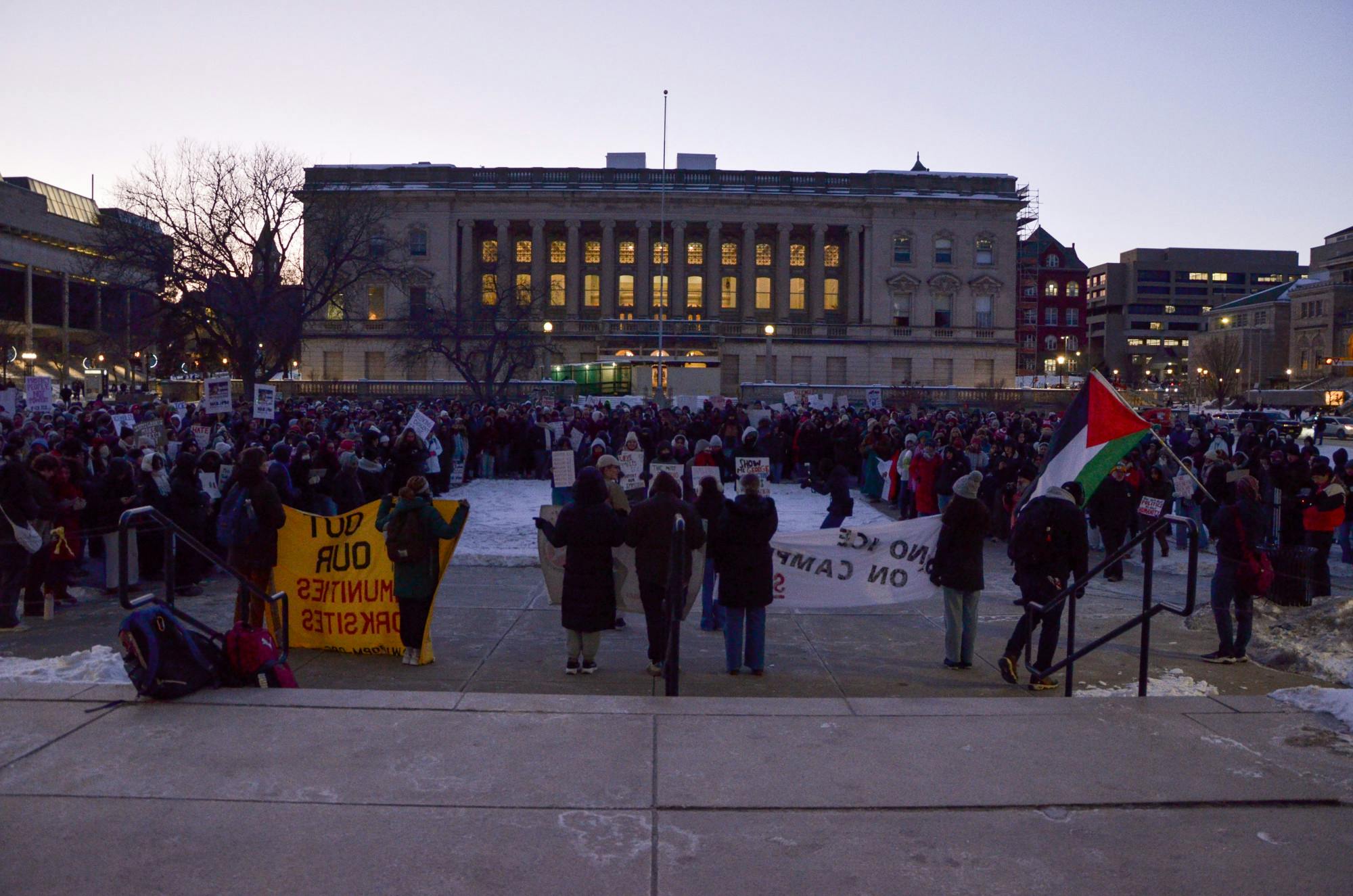
On January 23rd, a massive general strike in Minneapolis took place, with the biggest demand being that ICE leave Minneapolis (https://www.nytimes.com/2026/01/23/us/minnesota-businesses-protest-ice.html). This follows the recent surge of ICE-related incidents, including public and often violent detainments (including at times of citizens), as well as multiple fatalities. With each new incident it is undeniable that there is a growing discontent on how immigration is enforced. In fact, a 2026 New York Times poll showed that combined, ~61% of people indicated that ICE has gone too far in its enforcement and tactics (https://www.nytimes.com/2026/01/23/us/politics/poll-ice-immigration.html).
However, this increased tension has led to increasing contradictions on how to deal with undocumented immigration. On one hand, many people are rightfully distressed with how ICE treats detainees and publicly makes its presence. On the other hand, polling has consistently shown that border security and undocumented immigration ranks high on the priorities of the average voter. The 2024 presidential election map shows some of the strongest swings for Donald Trump being at districts in the US-Mexico border, most pronounced in Texas and California (https://www.nytimes.com/interactive/2025/us/elections/2024-election-map-precinct-results.html). Additionally, Blue Rose Research, an election research and consulting firm, suggested that naturalized citizens, i.e. legal immigrants, may have even voted slightly more for Trump than Kamala Harris (https://data.blueroseresearch.org/hubfs/2024%20Blue%20Rose%20Research%20Retrospective.pdf). I saw in my own community with the people that I knew that, while being weary of Trump, had generally disapproved of how the Biden administration had dealt with the border and with undocumented immigration.
This problem is being muddied by increasingly radical and out of touch rhetoric from both staunchly anti and pro-immigration (of both types) voices. While the alt-right spews genuine hatred and xenophobia, radical progressives are increasingly pushing the line for more uncontrolled immigration via policies like removing border enforcement, eliminating any sort of immigration enforcement, or decriminalizing illegal entry. Sentiments and phrases such as “No human is illegal", or the idea that migration to anywhere is a human right are, while made with good intentions, ultimately unhelpful and over-moralizes a complex but logically solvable issue.
Similarly well-meaning but similarly out of touch people have also worsened the situation by enforcing unnatural language that people ultimately don’t use, most prominently by not qualifying what type of immigrant one is talking about. For example, in a 2025 poll, Gallup asks Americans how they feel about rates of "immigration" (https://news.gallup.com/poll/692522/surge-concern-immigration-abated.aspx). Caught that? Just “immigration”. This is extremely vague and for many people can raise more questions about what type is actually coming in. This by itself can put poll results and discussions into doubt due to the lack of qualifications. I have seen this firsthand speaking with my parents and other (legal) immigrants, who have all been annoyed at the constant use of “immigrant” or “immigration”, when it is primarily illegal immigration being discussed. In fact, for many people that I know, “immigrant” on its own usually implies a legal immigrant who came via proper channels, with qualifiers like “undocumented” or "illegal" to note otherwise. Even similarly-reputable organizations such as the Pew Research Center have used such clickbaity titling, such as “Growing shares say the Trump administration is doing ‘too much’ to deport immigrants in the U.S. illegally” (https://www.pewresearch.org/short-reads/2025/12/15/growing-shares-say-the-trump-administration-is-doing-too-much-to-deport-immigrants-in-the-us-illegally/). While this title at least qualifies what type of immigrant in the last word, this style of writing still enables the confusing language mentioned earlier.
But despite the rhetoric of both extremes, there still underlies some sort of consensus. In general, people agree on the need to secure the US/Mexico border, especially those who live closest to it (https://www.csmonitor.com/USA/Politics/2026/0123/trump-ice-polls-immigration, https://www.nytimes.com/2026/01/22/us/politics/trump-poll-second-term.html). As the DoW/DoD’s 2026 National Defense Strategy document states, “Border security is national security” (https://media.defense.gov/2026/Jan/23/2003864773/-1/-1/0/2026-NATIONAL-DEFENSE-STRATEGY.PDF). This makes sense. The main reason why undocumented immigration is bad is because people are not filtered for entry. While many undocumented people are legitimately decent and hard-working people who are desperate, porous borders are also ripe for exploitation by drug and human-trafficking organized crime, terrorist organizations, and foreign intelligence.
These dangers are not trivial. It is a fact that most illicit fentanyl does come through the US/Mexico border via drug cartels (https://www.pnnl.gov/explainer-articles/fentanyl-analogs). Additionally, people crossing the US/Mexico border literally come from all over the world, raising more concerns over gaming the immigration system and more importantly espionage. This is also not trivial, as Mexico is a well-known hub for spies around the world due to its proximity to the US and its easy cover due to tourism. In fact, the CIA has repeatedly warned Mexican president Claudia Sheinbaum of the presence of intelligence operatives from Putin’s regime in Russia, even providing lists of said agents and their covers (https://www.nytimes.com/2025/12/08/world/americas/mexico-russia-spies.html). Sheinbaum has been refusing to expel them, a fact that would be exponentially more dangerous with the presence of an insecure border. Beyond security, large undocumented populations can also make allocating welfare more complicated, and foments legitimate worries over undocumented voting.
But despite this, most people are also cognizant of the complicated situation of many undocumented families. According to the Brookings Institute, an estimated ~6.7% of all US citizen children live with at least one undocumented parent. There are also many people who were brought into the country illegally as minors, and may not have any ties or knowledge of their original country outside of family. Most people also strongly dislike the prospects of family separation, as well as illegal immigration enforcement at schools and places of worship. For these types of situations, some type of path for citizenship could and should be implemented.
However, how can we prevent this cycle of overcompensation in the future? The answer lies in a proposed bill known as the Comprehensive Immigration Reform Act of 2006 (S.2611) (https://www.congress.gov/bill/109th-congress/senate-bill/2611). There are three main parts to this bill: 1). Fully securing and monitoring the border, including more stringent visa requirements, 2). A path for citizenship for undocumented immigrants who have been in the country for a sufficient time and have contributed positively to the country, 3). A tiered workforce that introduces a new temporary work visa known as the H-2C visa, aka the “blue card”.
The third policy is the most important for sustainable immigration. In the bill, there would essentially be a 3-group workforce: 1). The default and largest, where citizens, green card holders, and those in process are able to work as normal, 2). Circumstantial workers, such as F-1/CPT/OPT student work visas and H-1B, O-1, and EB-2/EB-3 for high-merit specialized workers, and 3). “Blue card” temporary seasonal workers. This type of grouping is good, as it allows for filtering of those who come in, while providing for sectors that need workers and providing employment for honest people who need to support their families back home. Additionally, it does not jeopardize opportunities for high-skilled workers and university students whose knowledge and expertise will benefit the country and enable a strong economy.
The current state of immigration is distressing for many and emotions are high, but this can ultimately be solved. In general, being sympathetic but realistic and listening to broad public opinion provides a bipartisan base for specific, actionable policies that can be discussed and lobbied for.
Editor’s note: Letters to the Editor and open letters reflect the opinions, concerns and views of University of Wisconsin-Madison students and community. As such, the information presented may or may not be accurate. Letters to the Editor and open letters do not reflect the editorial views or opinions of The Daily Cardinal