Once upon a time, there was a collective belief in empathy in the United States. Compassion was a virtue and a widely accepted one at that. If someone was in danger, you helped them, or at least felt bad for them. Many people would have stepped in if they saw wrongdoing because harm demanded a response. That instinct — to intervene, protect and care — has always been treated as a social good, a marker of shared humanity.
Today, it has been framed as criminal behavior. This shift is not a coincidence; it is the product of an immigration enforcement strategy that weaponizes fear to suppress public empathy and resistance.
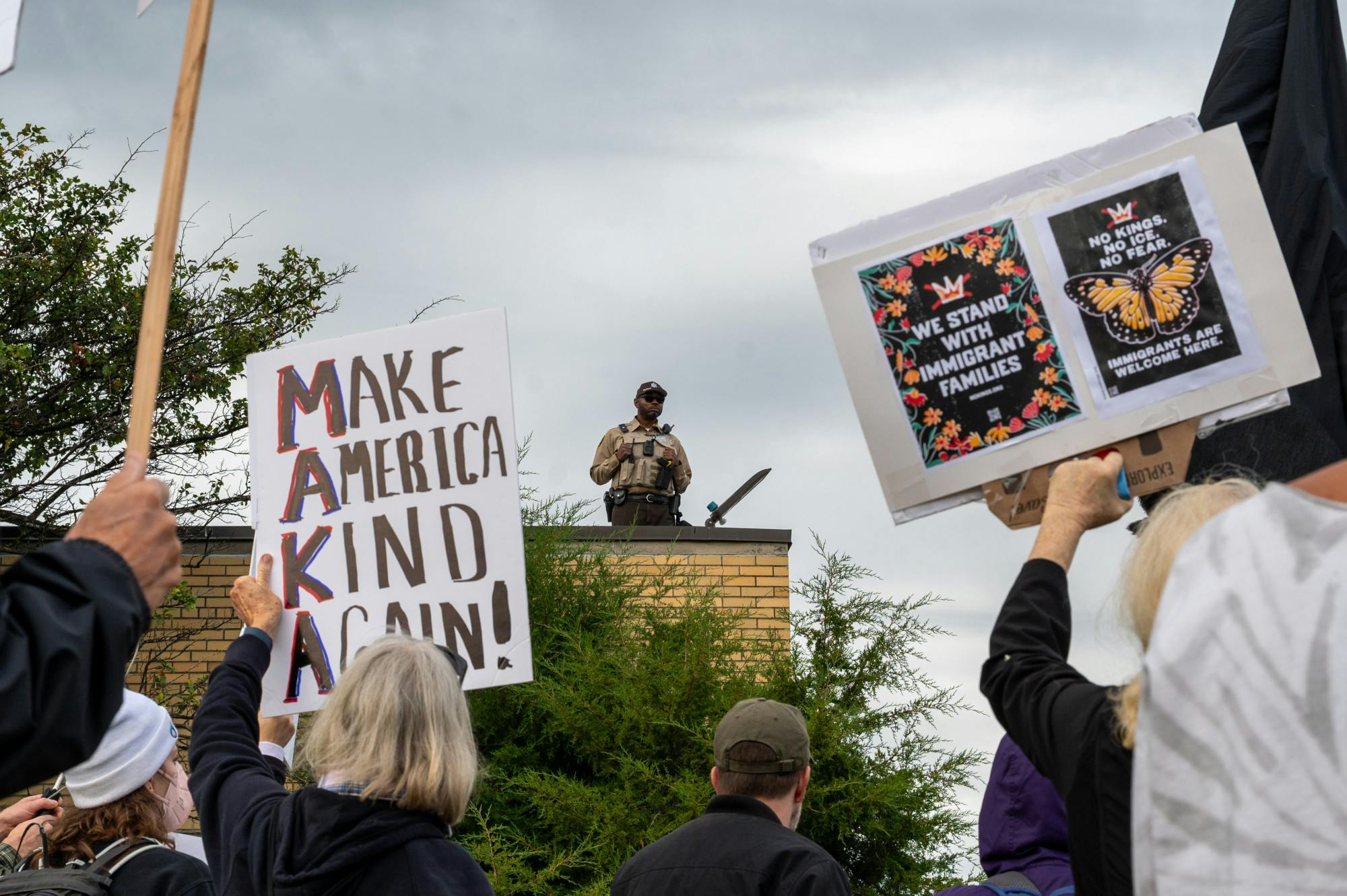
In recent years, empathy has come under suspicion. To step in, document, assist or ask questions can now be interpreted as obstruction. The act of witnessing state violence is no longer neutral, but seen as interference. Under the guise of law and order, the United States has begun punishing not just immigration status, but the actions of good samaritans.
The United States has often been celebrated as a nation founded by immigrants, but the way it has treated them in recent years tells a very different story. Now, America is being praised as a nation run by billionaires while simultaneously relying on immigrants to sustain it. From its very beginning, its greatest strength has been diversity, not alienation. But under Donald Trump’s political vision, immigration has been redefined as a crisis to be controlled. The means of this policy include whatever means he deems necessary.
This shift has not only targeted immigrants, undocumented or legal, but even natural born people of color. This has reshaped how society understands morality. In Trump’s America, empathy is no longer neutral. It is grounds to suspect someone and seen as obstruction. To bear witness to a crime is to invite punishment to your doorstep.
Support for such aggression and harsh immigration enforcement has citizens arguing that citizens should sit back and let them “do their job.” When Rep. LaMonica McIver appeared in court, charged with obstruction following intervention with an ongoing arrest, her case sent a clear message: if an elected official can be criminalized for stepping in, ordinary citizens don’t stand a chance. Her fear of being reprimanded didn’t prevent her from stepping in. The goal is not order, it’s deterrence.
But from the beginning, Trump’s approach to immigration relied on this fear. Immigrants were cast as dangers to public safety, economic stability and cultural identity. This narrative did not emerge by accident, it was cultivated. Fear is a strategic political tool, and immigration enforcement has become less about protection and instead a tool for dominance.
ICE agents recently arrested workers at a Mexican restaurant after first stopping to eat dinner there. Two weeks ago, Renee Nicole Good, a white woman and mom of three, was killed trying to help her neighbors. It has no longer become a question of color, but rather of belief. While a doctor attempted to help her and enter the scene, ICE agents screamed refusals while she bled to death. These agents are relying on fear in all citizens so they never want to intervene again.
This radicalization of simple humanity is the reason for such destruction. With a facade of protection, communities have seen an uptick in violence. ICE’s power is most effective not when it acts visibly, but when harm is normalized, dispersed and made inevitable.
By alarming citizens into silence, through brutal force, quiet threats and intimidation, the very essence of our society is being destroyed. The cultures and values that built our country are being tarnished.
ICE does not need to act to be dangerous. It just needs to instill enough fear to hold power over others. It’s dangerous precisely because it’s embedded into the way society functions now. This suppression of empathy is framed for public safety, even though it dismantles it. The collective refusal to stay silent and reject fear is the only way to keep empathy among us.
Safa Razvi is a sophomore studying journalism and serves as the Opinion Editor for The Daily Cardinal. Do you believe the right to live freely is not a political issue? Send all comments to opinion@dailycardinal.com