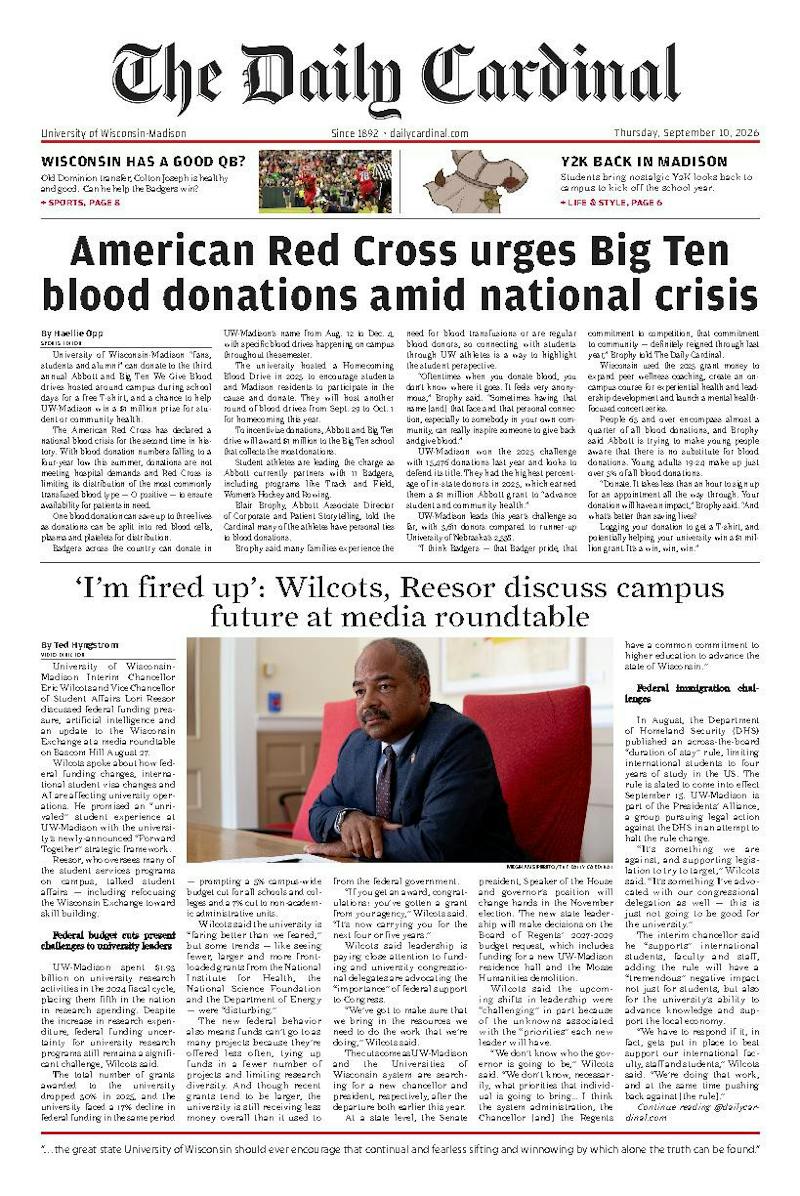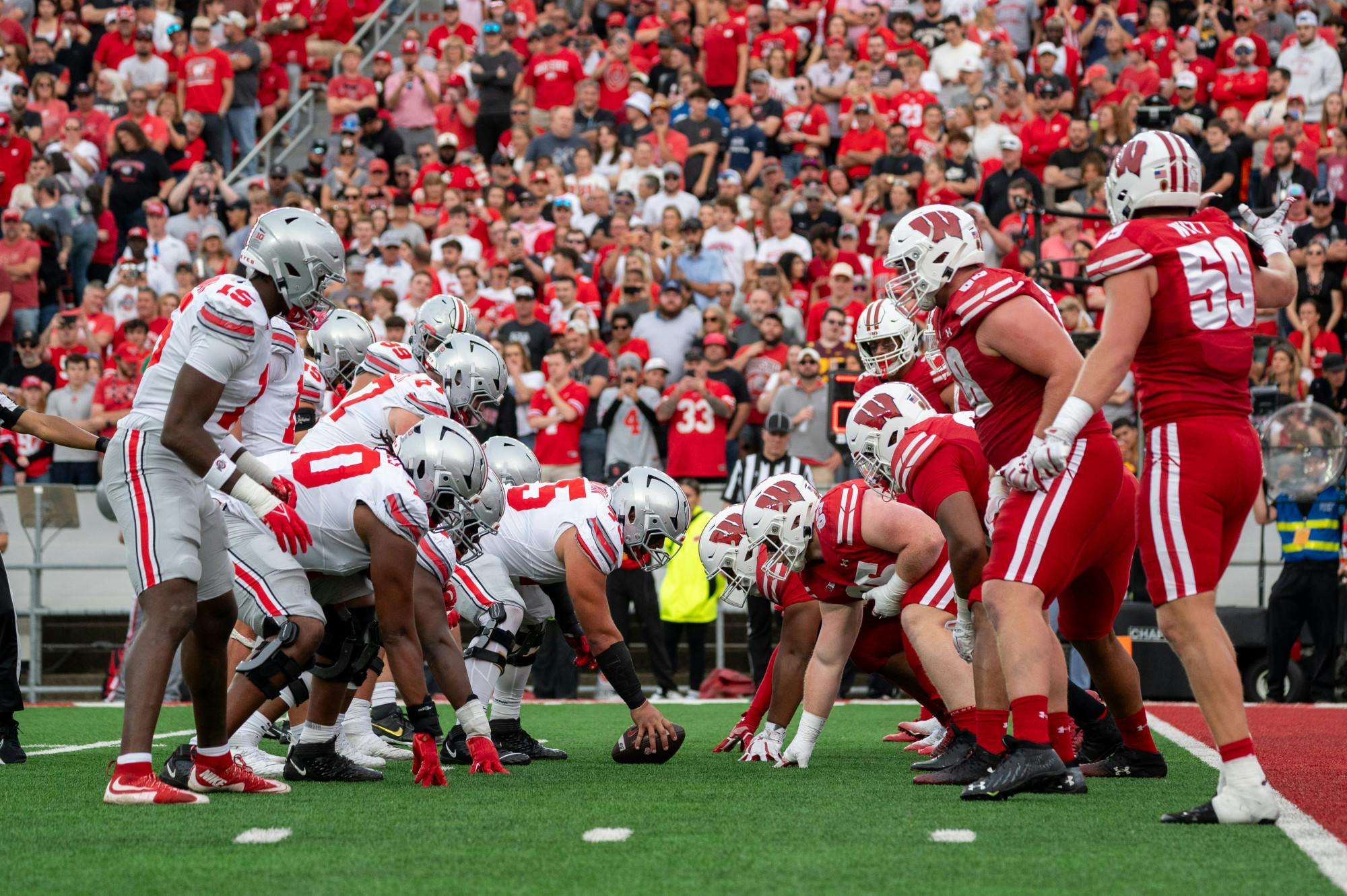
After closing the 2025 season with a 17-7 loss against rival Minnesota Golden Gophers in the yearly Axe game, the Badgers ended with a disappointing 4-8 record — their worst in 30 years. For a program that once had an impressive streak of 22 consecutive bowl games from 2002-23, its results this season fell well short of expectations.
As Wisconsin gears up for the 2026 season, their focus shifts toward rebuilding the core aspects of Badger football: a strong run-game and dominant defense. The Badgers hope to put one of their most difficult seasons behind them and improve to a winning record this year.
In the Luke Fickell era of Wisconsin football, the team has continued to trend downward. What started as former Athletic Director Chris McIntosh's first and largest hire, turned into an overall team record of 17-21 with Fickell as head coach. Struggles under head coach Luke Fickell, significant roster turnover, offensive production and an inconsistent defense have emerged as the team’s biggest problems.
Football under Fickell
Fickell’s original seven-year, $7.8 million a year contract was set to end in 2029, but despite last seasons’ poor results, he still received contract extensions in 2023 and 2024, lengthening his contract to 2032.
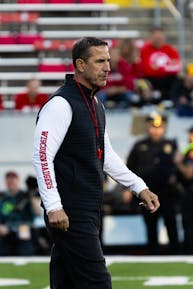
Luke Fickell
After the 2025 season, Fickell requested to not receive another contract extension. There has yet to be any discussion about buying out his contract as both Fickell and the athletic department have high hopes for the 2026 season.
The Badgers’ offense struggled last season, finishing 14th in the Big Ten with a 2-7 record in conference play, and two back-to-back shutouts to The University of Iowa and Ohio State. The team averaged 12.8 points per game, scored only 19 touchdowns and ended the season No. 4 in the conference in rushing yards allowed per game.
After the rough start to the 2025 season, Athletic Director Chris McIntosh issued a message to fans acknowledging the program’s struggles while reaffirming his support for Fickell and increased funding for the program.
“Athletics is committed to elevating the investment into our football program to position us to compete at the highest level,” McIntosh said in the statement. “As a department, we must provide our coaches the tools necessary to succeed.”
McIntosh pointed to infrastructure, staffing and recruiting as key areas for investment as the program works to return to contention in the Big Ten.
New offensive recruits
In an effort to revitalize the offense, the Badgers acquired quarterback Colton Joseph from Old Dominion. The Sun Belt Offensive Player of the Year threw for 2,624 yards and 21 touchdowns, and rushed for 1,007 yards and 13 touchdowns for Old Dominion last season. Joseph has the potential to make a difference for Wisconsin, providing the dual-threat output the Badgers have been looking for.
Along with Joseph, the Badgers’ offseason additions include running back Abu Sama III from Iowa State and the University of Minnesota’s (UMN) wide receiver Malachi Coleman. Sama III rushed for 732 yards and 5 touchdowns last season, helping the Cyclones to an 8-4 record. Coleman averaged 16.6 yards per reception for the Gophers last year.
New running backs coach Jayden Everett helped recruit Sama III to Wisconsin, adding an experienced playmaker to a backfield looking to rebound in 2026. Everett joined the Badger coaching staff in January 2026 after coaching at The University of Michigan and UMN.
Injuries have plagued Wisconsin football. In 2023, Tanner Mordecai broke his throwing hand and missed a few games. Early in the 2024 season, Tyler Van Dyke tore his ACL and was out for the year. Last year, Billy Edwards Jr. only appeared in two games after getting hurt in the opener.
A defense in need of attention
The Badgers biggest area for improvement is their pass defense. Last season, the Badgers ranked No. 13 in the Big Ten in passing yards allowed per game. To address those struggles, the Badgers added cornerbacks Cai Bates and Javan Robinson through the transfer portal.
Bates appeared in seven games for the Florida State Seminoles, and entered college as a four-star recruit and a top-20 cornerback prospect for the 2024 class. Robinson spent the last two seasons at Arizona State where he posted a career-high 42 total tackles in 2025.
Also joining the Badgers’ defense is senior safety Marvin Burks Jr. from Missouri and Justus Boone, a redshirt senior at the University of Arkansas. Burks adds experience to a young safety room, recording 131 total tackles in three seasons. Boone lacks the same experience, but as an edge defender, he adds the build the Badgers are looking for to improve on the rush.
Beyond 2026, class of 2027 four-star recruit Mekhi Williams committed to Wisconsin after decommitting from Florida State. Williams is the No.1 ranked safety in Florida and ranks 107 nationally.
On the other side of the goal line, there were a few bright spots, particularly late in the season. In a win over the University of Washington, the defense held the Huskies to just 10 points, never allowing them to establish a consistent rhythm. The Badger defense also held Oregon, Illinois and Minnesota to below 20 points with minimal yardage.
Returning linebackers Mason Posa and Cooper Catalano will lead the Badgers defense once again. The duo served as the foundation to Wisconsin’s defense and will be counted on to provide leadership and stability in 2026.
Significant roster turnover
The Badgers experienced significant roster turnover following the 2025 season, with 23 players departing the program, including wide receiver Vinny Anthony II, tight end Tucker Ashcraft, running back Dilin Jones and offensive lineman Joe Brunner.
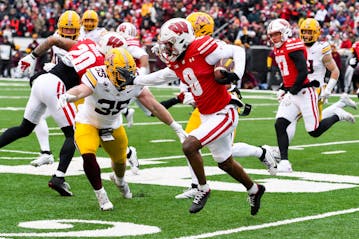
Fickell and the Badgers brought in one of the largest recruiting classes in program history with 34 new additions to the roster. With the funding increase, they were able to outbid teams for many top players, creating plenty of opportunities for the Badgers’ next season.
Former Jacksonville Jaguars coaching fellow Ari Confesor and former NFL special teams coordinator Big Ligashesky are also joining Everett on Wisconsin’s coaching staff ahead of next season as the new receivers coach and special teams coordinator, respectively.
The Badgers marks Ligashesky’s the seventh college program where he has held a special teams role.
Off-campus investments
To help grow Wisconsin’s football program, Wisconsin Gov. Tony Evers signed a new name, image and likeness (NIL) bill into law on April 8, 2026, which provides University of Wisconsin-Madison with $14.6 million in taxpayer money annually as the NIL market grows in college athletics.
In response to the expanding NIL market, in 2025 the UW Athletic Department and Learfield’s Badger Sports Properties collaborated to create Badger Athlete Partners. The initiative adds five NIL staff positions to help Wisconsin student-athletes secure and manage endorsement opportunities, create content and manage their personal brands, providing athletes with greater access to NIL opportunities while competing at Wisconsin.
The Badgers draw one of the easier schedules in the Big Ten giving them a better outlook ahead of next season. They will face off against Rutgers, Maryland and Purdue, avoiding high-ranking teams like Ohio State, Michigan and Oregon. An early win against Penn State could give them the trajectory needed to reach contention next season.
The Badgers will face Notre Dame on Sept. 6 at Lambeau Field in Green Bay for the 2026 season opener.
Staff Writer