The University of Wisconsin-Madison Bat Brigade meets weekly at sundown from April to October to walk through lakeshore paths with an echometer, a specialized microphone used for wildlife research, to track and collect data on Wisconsin’s bat populations.
The Bat Brigade’s weekly surveys provide valuable information to researchers while allowing community members to participate in science. With four of Wisconsin's eight bat species' populations threatened, these surveys help researchers monitor how the local bat population responds to disease outbreaks like white-nose syndrome (WNS).
“It can happen pretty fast. You can have a 90% decline of the population in one season,” Makeela Magomolla, a bat brigadier and master’s student in the Nelson Institute for Environmental Studies, told The Daily Cardinal.
Bats are a vital part of Wisconsin’s ecosystems and are major consumers of agricultural and forest pests, according to the Wisconsin DNR. They are capable of eating up to 1000 insects an hour.
“They’re definitely misunderstood. Most people overlook them because people aren’t usually out at night,” Magomolla said.
Because bats play an important role in controlling insect populations, their decline has become a growing concern for researchers. The U.S. Geological Survey's National Wildlife Health Center in Madison is working on a vaccine to help bats fight a more recently found fungus.
“They hope to use vaccine efforts to help bats in western states, where populations haven’t developed immunity,” Magomolla said.
Much of this concern is related to White-nose syndrome. The fungal disease discovered in Wisconsin in 2014 is characterized by white fuzz on bats’ noses and wings. It disrupts hibernation by causing bats to wake up more often, burning through their fat reserves and leading to high winter mortality rates.
The Bat Brigade collects data such as locations of specific bat calls with echometers, and later sends this data to Wisconsin’s Department of Natural Resources (DNR).
Magomolla and other members of the Bat Brigade have found seven of the eight bat species in Wisconsin within the Lakeshore Nature Preserve, and are still searching for the last one, to better survey the species.
“It’s like the last Pokémon we need to get,” Magomolla said.
The recordings from an echometer can help identify bat species that are present in the area, but they cannot determine how many individual bats there are. It is impossible to tell whether multiple calls come from different bats or just one bat calling repeatedly.
There have been acoustic recordings suggesting the presence of the eighth species within the Lakeshore Nature Preserve, but confirming its existence is more complicated.
“The only way to be 100% sure would be to set a trap and verify by hand, so it’s not official yet,” Magomolla said.
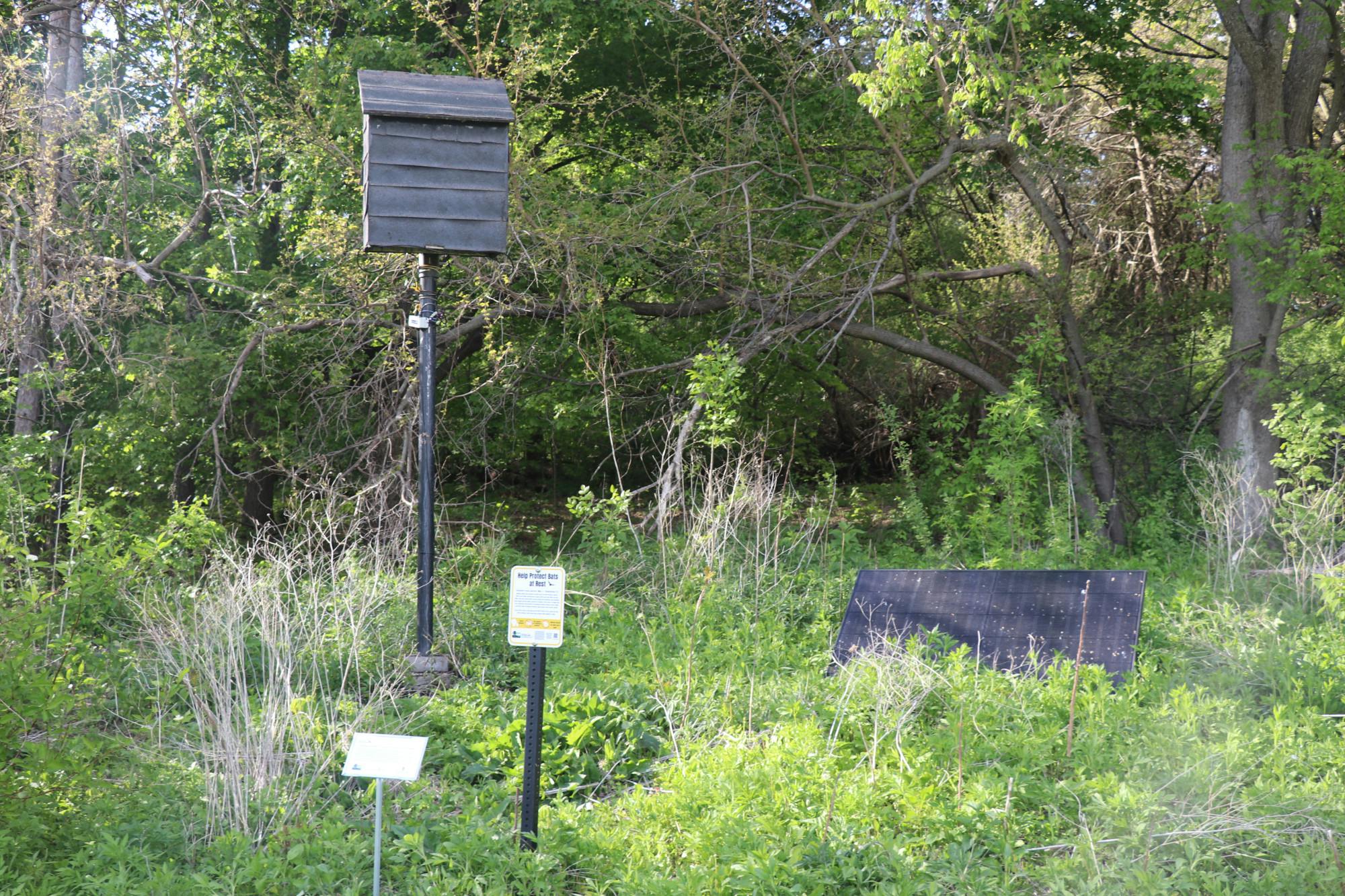
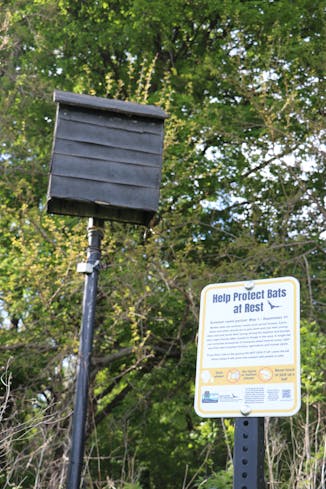
Besides acoustics, the Bat Brigade is able to track bat populations with bat boxes placed on the trail to Picnic Point within the Lakeshore Nature Preserve. The number of bats peaked around 360 in 2014, but dropped below 100 from 2017 to 2021 due to white-nose syndrome, according to the Bat Brigade.
Since WNS was found for the first time in New York in 2006, it has spread to most U.S. states and Canadian territories, causing the little brown bats, northern long-eared bats and tricolored bats’ population to decline by over 90% according to the National Park Service — all of which are common in Wisconsin.
Over the last several years, some bat populations around the U.S. have started to develop a natural resistance to WNS, according to the U.S. Geological Survey. They hope to use vaccine efforts to help bats in western states where populations haven’t developed immunity.
In addition to the scientific value provided by the research, the Bat Brigade gives students and community members a chance to participate in conservation work.
“I came to an info meeting and was like ‘I’m not affiliated with the university, what can I do?’ and was told ‘everything’” Magomolla said, referring to her experience before starting her master's program.
Other members said some volunteers travel from nearby cities like Chicago and Minneapolis, because there are no similar programs in the Midwest.
As bat populations continue to recover and monitoring efforts expand, the Bat Brigade offers scientists and community members alike a chance to contribute to wildlife research in their own backyards.