The first dementia villages in the United States will open in Sheboygan in July and Fitchburg in the fall of 2027, offering dementia patients an alternative to traditional nursing homes and memory care facilities.
The first two U.S. villages are Dementia Innovations' Livasu in Sheboygan and Agrace's Ellen and Peter Johnson Dementia Village in Fitchburg. Both villages were inspired by BeAdvice's Hogeweyk in the Netherlands, the world’s first dementia village, and both facilities worked closely with BeAdvice for several years to build villages in the U.S.
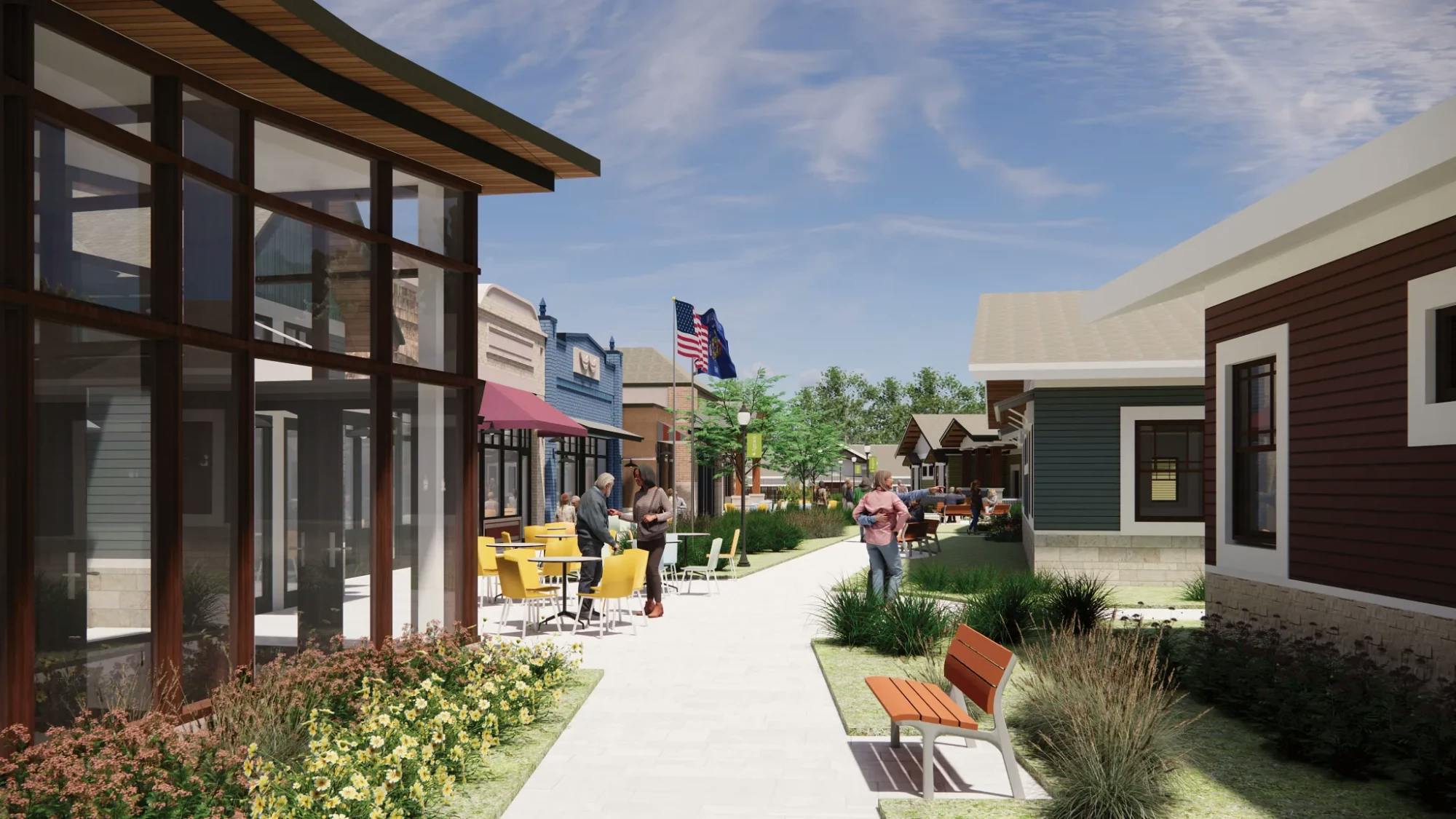
Dementia villages are care facilities where dementia patients live in communities with familiar amenities like grocery stores, salons, spas and theatres staffed by specially trained staff devoted to making residents feel at home.
Dementia is an umbrella term for symptoms affecting memory and thinking, with Alzheimer's disease being the most common form. About 110,900 Wisconsin residents aged 65 and older have Alzheimer's, while more than 55 million people across the world live with dementia, with that number predicted to double every 20 years.
Lynne Sexten, Agrace’s president and CEO, told The Daily Cardinal the dementia village model took time to reach the U.S. because it requires significant investment while challenging traditional approaches to memory care.
"The dementia village model challenges how care is designed, financed and regulated in the United States," Sexten said. "Memory care systems in the U.S. tend to favor rigid structure and efficiency. They are built around clinical care and risk control…Good dementia care is not only clinical excellence. It is creating moments of connection, familiarity and joy.”
Eloy van Hal, Hogeweyk co-founder and BeAdvice senior managing advisor, told the Cardinal Hogeweyk was created to provide people with dementia a normal life instead of an institutional one.
"People with dementia are people first, and they respond normally like you and me," van Hal said. "That's what we have to realize first and learn more about."
Despite initial skepticism, Hogeweyk has operated successfully since opening in 2009. Fifty percent of patients received antipsychotic drugs when the facility operated as a nursing home in 1993, compared to 8% in 2015. van Hal said there’s a difference when it comes to how the Netherlands and the U.S. operate their care facilities.
“When you move in [the Netherlands], you average a use of eight different kinds of medications,” van Hal said. "Since people are living in the last phase of life we focus on quality of life in these last years, not extending to all costs with medical interventions."
van Hal said creating the village showed how difficult it’s been to change the current clinical and medical model.
"Many people said, 'You're crazy’… but after the opening, many people became inspired," van Hal said. “It became a bigger success than we ever hoped.”
Agrace’s village will consist of eight households organized around residents' lifestyles and values, according to Liz Kopling, Agrace's assistant vice president of marketing and communications.
"It will be as close to home as possible,” Kopling told The Cardinal. “We're trying to make that possible by building a village that is just like an average home that you would see here in the greater Madison area, so they can experience life the way that they would be living it at home with lots of access to nature.”
Sexten said she hopes the model changes how society views dementia patients and care.
Agrace’s campus will be staffed by specially trained caregivers and healthcare students in exchange for subsidized workforce housing, and offer a day club to adults with dementia still living at home.
"We de-institutionalized a nursing home and offered people a neighborhood instead of an institution," van Hal said. "The doctors are here, the nurses are here, but you don't see them because they're not dressed like doctors. They still are doctors, they still are nurses, but people receive the support and care they need in a much more normal way."
While both villages follow Hogeweyk’s model, affordability remains a challenge. Kopling said Agrace intends to match costs to other memory care offerings in Madison while supporting partially subsidized care based on financial need, while Livasu's prices range from $95,000 to $175,000.
van Hal acknowledged that bringing the Hogeweyk model to the U.S. presents challenges. While the Dutch dementia village is donation-funded, American dementia care is often more expensive and privately funded.
As the first U.S. dementia villages prepare to welcome residents, Kopling said she hopes the villages will change not only how dementia care is offered, but how people living with dementia are perceived.
“We can give people humanity and dignity by just treating them as people,” Kopling said. “The dementia village at Agrace is going to give people hope that there is a wonderful life to be lived.”