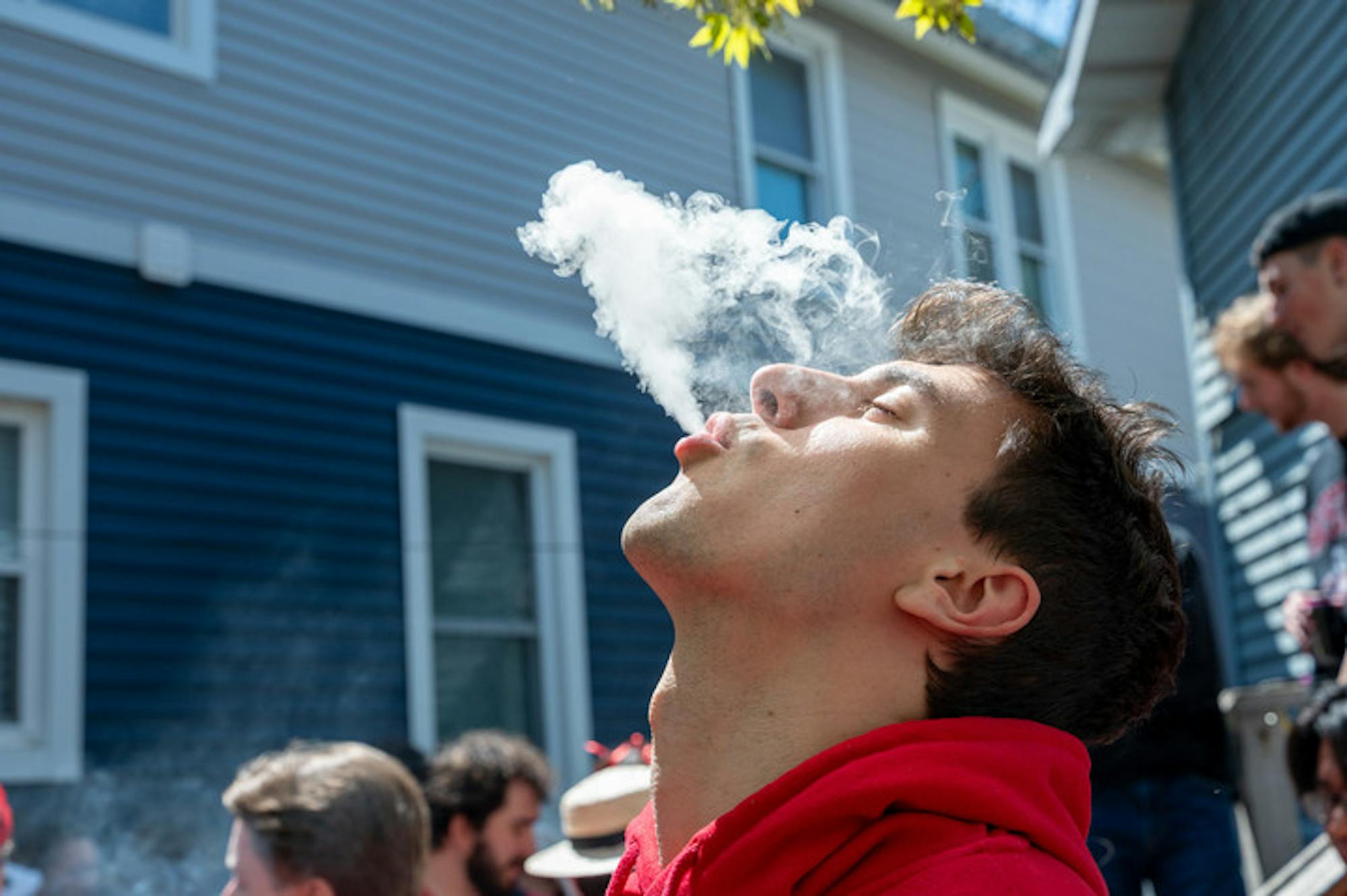
With a cigarette gingerly perched between his lips, Gabe Diazmontes, a University of Wisconsin-Madison sophomore, takes a long, hearty drag. “Y’know, I always wanted to be able to smoke like Matthew McConaughey in True Detective,” he said. “Now I finally can.” It’s his third cigarette this week.
Diazmontes, like many UW-Madison students, has started repeating an oft-heard phrase: “It’s just a drunk cigarette. It doesn't count.”
Semester-by-semester, this phrase seems to become more common on campus. You might have heard your friend say it on a night out, maybe from a stranger looking to bum a smoke, or maybe you’ve even said it yourself.
But coming from a generation raised on smoking awareness campaigns, and a bombardment of pictures and videos of the lived consequences of smoking, where has this resurgence of smoking come from? And more importantly, how bad is one drunk cigarette, really?
One answer to smoking’s resurgence might lie in cigarettes’ comeback on the silver screen. In the past year, TV shows like “The Bear” have brought smoking back to Hollywood. Jermey Allen White, frontrunner of the show, can be seen perpetually sucking in smoke both on and off the screen.
In 2023, 41% of the top grossing movies released contained tobacco use, according to a study by Truth Initiative, a nonprofit dedicated to reducing the rates of teen smoking. The study also found smoking depictions in movies increased by up to 70% when compared to 2022.
Jesse Kaye, a scientist at the UW Center for Tobacco Research and Intervention, has noticed the rise in celebrity smoking as of late.
“In the past few years there seems to be an increase in celebrities and media figures smoking again and seeing it as sort of ‘made cool,’” Kaye said. “And so there is some concern that might increase the likelihood — particularly among young people — that they’re going to smoke.”
With this uptick in smoking, many health professionals like Kaye are concerned about the latent consequences of smoking on younger generations.
According to a study funded by the California Air Resources Board, “relative risks of cigarette smoking were larger for younger and middle-aged individuals than for the elderly.” The board found “very light active smokers” who consumed three cigarettes or less a day have nearly the same relative risk of heart and lung disease as those who smoked a pack or more a day.
Yet while the health effects of smoking seem apparent to most, a majority of college students either don’t seem to care — or simply brush off — the long-term effects of smoking.
“[Smoking] is a vice, and I enjoy it, but it will still lead to my demise eventually,” Corbin, a UW-Madison sophomore, told the Cardinal, “but it’s better than my liver exploding.”
Corbin, like many other students interviewed, first started smoking intermittently toward the end of high school before — over time — they gradually started smoking more and more. Now they’ve become daily users.
“90% of people who smoke cigarettes regularly as adults started before the age of 18,” Kaye said.
“It’s addictive. Point blank,” Corbin said. “But I enjoy them, so drunk cigarettes don’t count, and sober cigarettes don’t count either.”
While most interviewees acknowledged their dependence and the harm of cigarettes, they also waxed poetic about the memories and community smoking has given them.
“Y’know, I actually met my girlfriend through smoking,” one UW-Madison junior said. “I mean, yeah, it’s so cool that we connected over something we both love, but now that we’re together, we’ve started smoking so much more.”
On college campuses especially, the prevalence of what Kaye called “triggers” for smoking and relapse like friends, bars or the pressures of academic life, can be a danger for those who want to stay “in line with their long-term goals for their own health.”
Diazmontes finishes his cigarette. The warm, sooty air tumbling upwards into the cold night sky. “When I’m actually drunk, there is something — that charm — about a cigarette,” Diazmontes said. “I know they might be bad for me in the long run, but hey, who cares. Drunk cigarettes don’t count, right?”
Editor’s Note: The author of this article is an avid cigarette smoker.