

Marvel has to stop treating mass surveillance like a superpower
By Andrew Holton | Sep. 17As Insomniac Spider-Man asserts, “We don’t spy on people.”
As Insomniac Spider-Man asserts, “We don’t spy on people.”

As more social spaces become commercial, simply spending time with friends can start to feel like another expense.

While Dolly Parton may have been nonpartisan, she was certainly not apolitical.
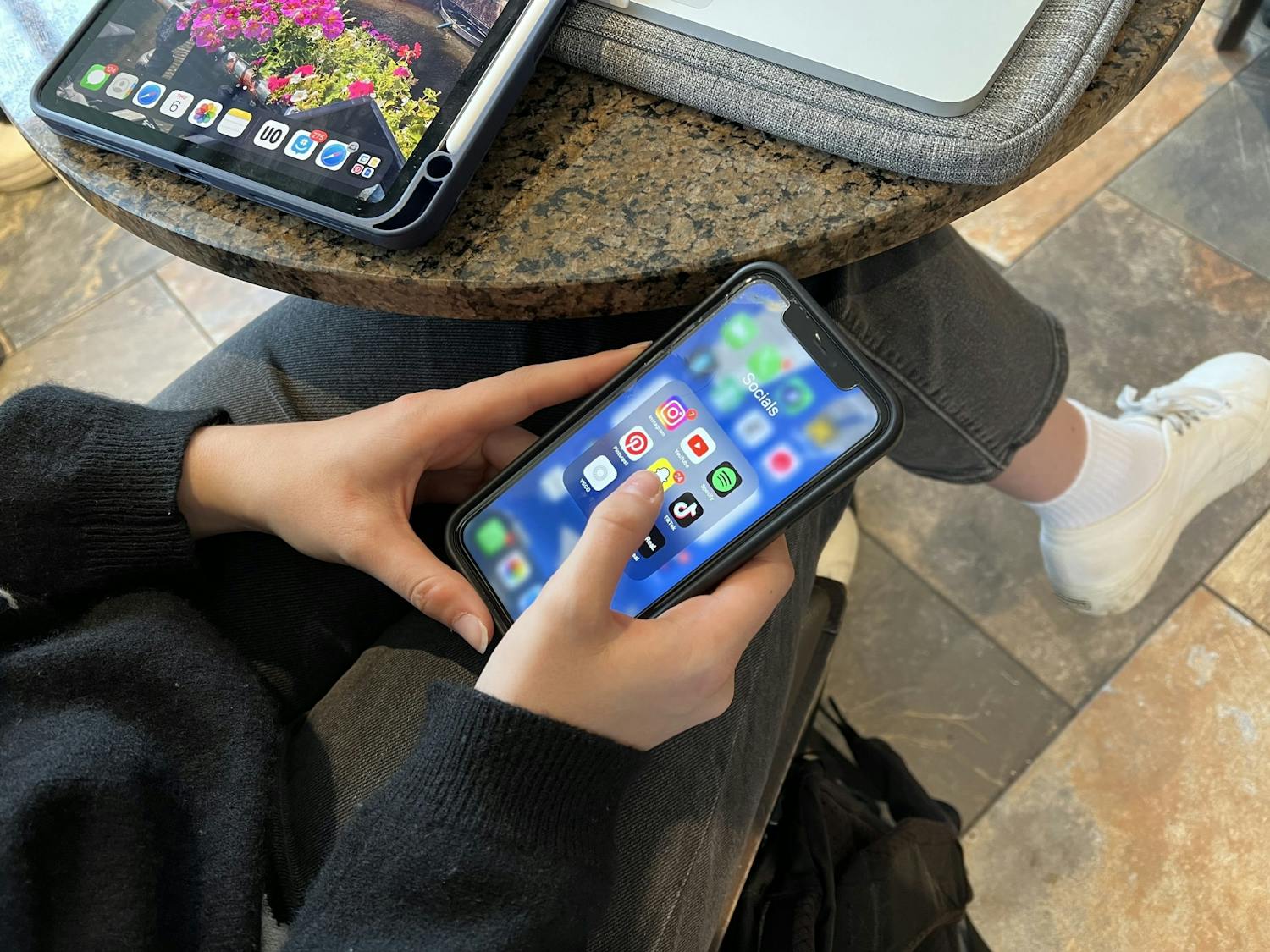
The pressure to pursue a degree in an overly-aestheticized manner entirely defeats the purpose of higher education.

Conservative counter-feminism coming from female public figures both exacerbates and normalizes implicit hatred towards women.

Democrats cannot keep calling progressive candidates “unelectable” while refusing to let them compete on an even playing field.

A meaningful life cannot be reduced to a salary, title or perfectly planned future.

How social media’s micro-trends, such as Carolyn Bessette’s 90’s minimalism, fuel the departure of individualism and self-expression.
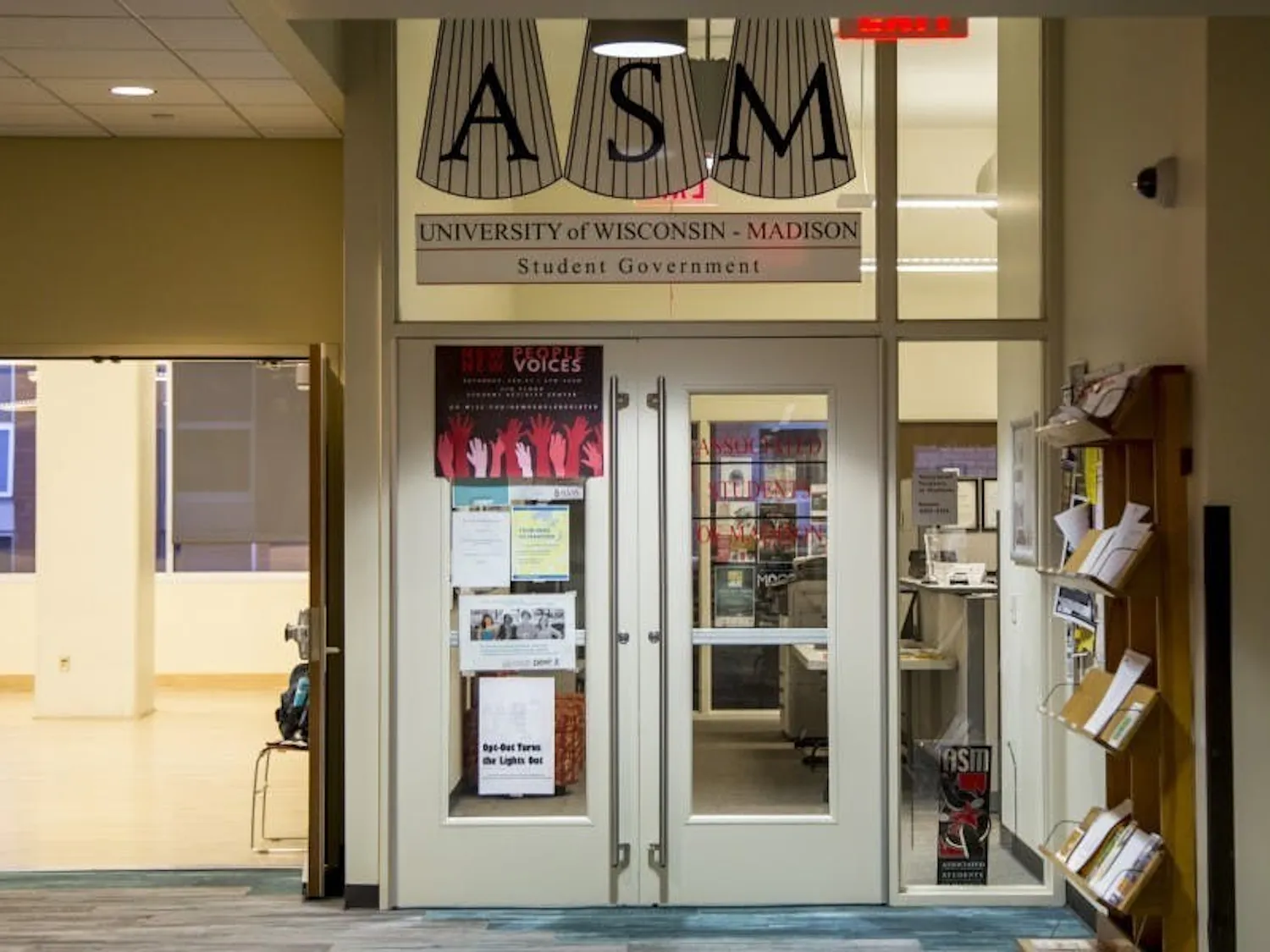
Editor’s note: Letters to the Editor and open letters reflect the opinions, concerns and views of University of Wisconsin-Madison students and community, may or may not be accurate and do not reflect the editorial views or opinions of The Daily Cardinal
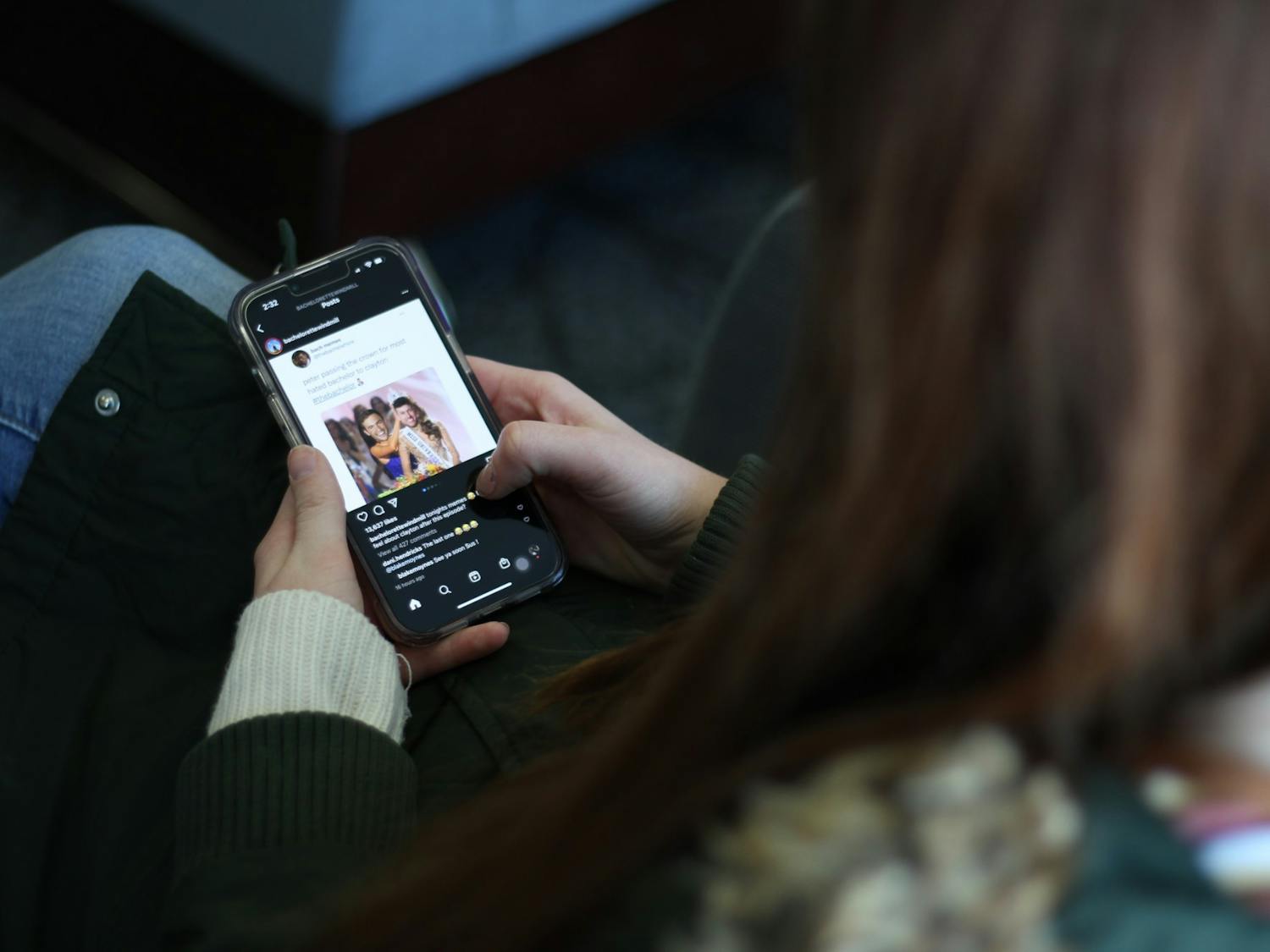
More interestingly, digital footprints are increasingly prevalent in politics as Gen Z has started running for public office. This past year, old tweets containing offensive language from NYC Mayor Mamdani’s wife, Rama Duwaji, came to light, resulting in her public apology. Closer to home, a Daily Cardinal article addressed old messages from local politician Bobby Gronert, featuring his apology just hours before the polls opened, begging the question: how will internet culture and records change the game for Gen Z’s political future?

With continuous leadership turnover across the University of Wisconsin System, the deeper issue is not who leads — but what they are leading toward.

As a leading research institution, UW-Madison has an opportunity to shape how AI is integrated into higher education rather than react to it. AI is already embedded in academic and professional environments, and the greater risk lies not in the technology itself, but in policies that fail to evolve alongside it. The question is no longer whether AI belongs in education, but whether universities will define its role — or allow outdated policies to define it for them.
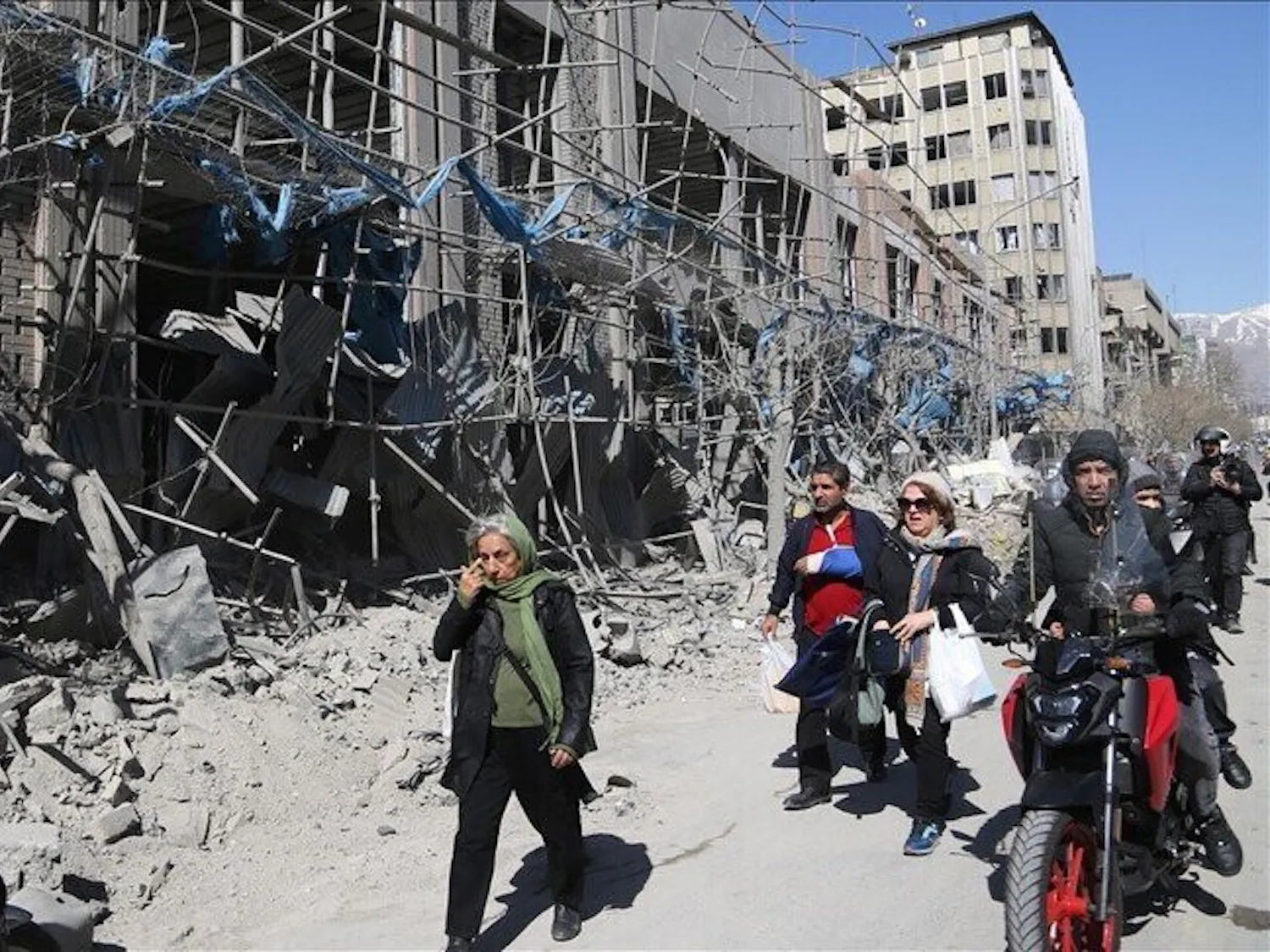
I think it was the orange explosion that changed me. It wasn’t only that my ears heard the blast or that my body felt the shake. My eyes saw it, the color. A sudden, overwhelming orange, as if the fire itself had exploded just in front of my windows. Looking back now, it was one of the most frightening moments -- though not the only one -- that I have lived through since the US-Israel war on Iran.
Editor’s note: Letters to the Editor and open letters reflect the opinions, concerns and views of University of Wisconsin-Madison students and community, may or may not be accurate and do not reflect the editorial views or opinions of The Daily Cardinal

Editor’s note: Letters to the Editor and open letters reflect the opinions, concerns and views of University of Wisconsin-Madison students and community, may or may not be accurate and do not reflect the editorial views or opinions of The Daily Cardinal

Editor’s note: Letters to the Editor and open letters reflect the opinions, concerns and views of University of Wisconsin-Madison students and community, may or may not be accurate and do not reflect the editorial views or opinions of The Daily Cardinal
There is no straightforward answer. Who you are, where you come from and what you want all shape whether college is worth it. The question isn’t just if college pays off. It’s for whom and under what circumstances.
A university that encourages independence must also ensure students are equipped to succeed within that independence. Clearer communication of requirements, more proactive advising and improved accessibility to academic support systems are not luxuries. They are necessities. Independence should not mean isolation.
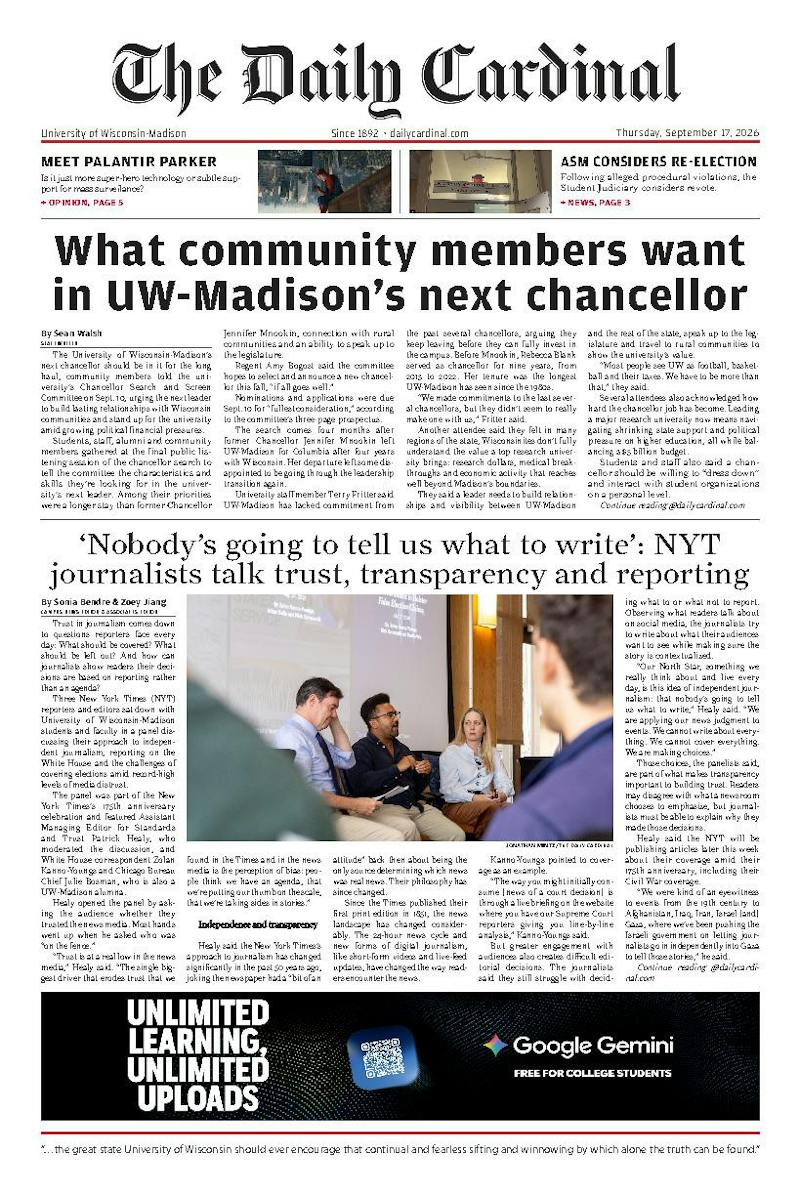 Read on Issuu
 Solutions by The State News

